Why Romania needs lobbyists and external experts in the negotiations with Pfizer. “It's an economic textbook disaster”

The government has only two months to pay a debt of 680 million euros to the pharmaceutical giant BioNTech-Pfizer, an amount penalized daily with a huge interest of 81,000 euros. Although the negotiations are still ongoing and no agreement has been reached, Romanian officials are trying to mitigate the budgetary impact on two fronts: they are asking for staggered payments and proposing to transform the debt into drug supplies. Analyst Adrian Negrescu says that the Romanian state has taken the wrong approach and that the only realistic solution is the involvement of specialized negotiators.
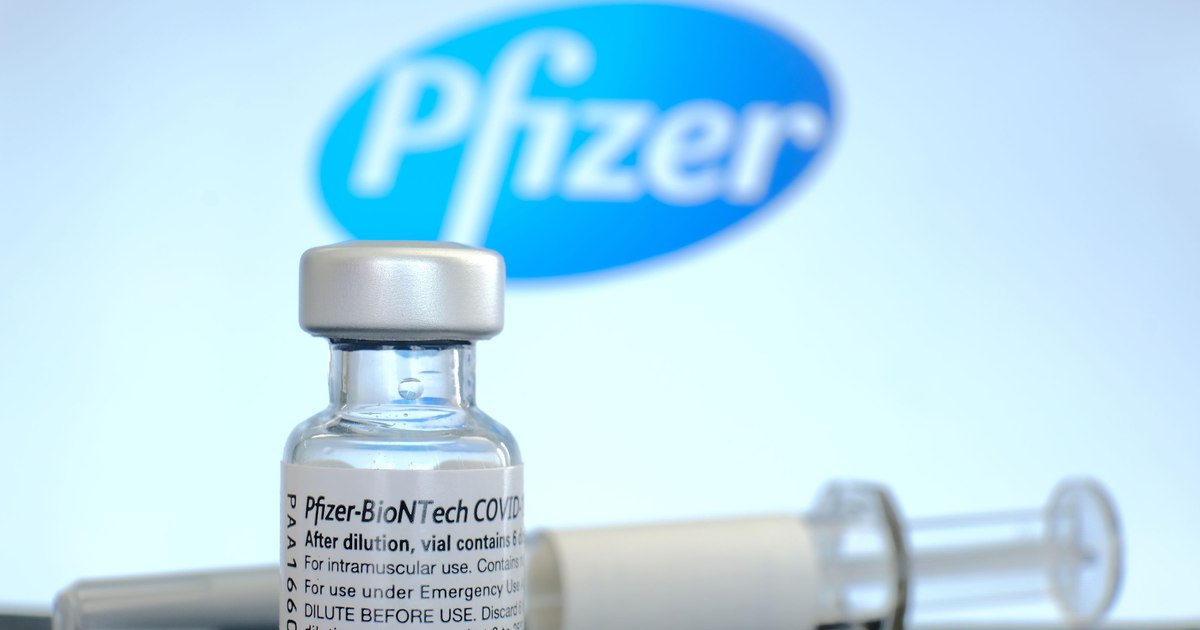
Anti-COVID vaccine produced by Pfizer-BioNTech Photo: Shutterstock
Economist Adrian Negrescu explained to “Adevarul” the mistakes that Romanian officials make in recent negotiations. The analyst says that the main problem is that the political situation could block the talks due to a lack of representatives to decide the best direction.
“The worst scenario is to do nothing. It is the worst scenario that the new government, which will eventually arrive at the Victoria Palace, is concerned with other things than this extremely important topic of negotiation for the Romanian state, given that this compensation represents 0.2 percent per day, from interest, 2.5 million euros that we have to pay every month.
Why do I say negotiation? Because, after all, in this contract, even Pfizer did not deliver those vaccines to us.
In other words, he did not deliver the goods for which he is asking for this money. That's why we have a margin of negotiation, in the sense of trying to use this money to buy a lot of medical treatments from Pfizer, especially extremely rare ones, such as those for cancer patients, for the extremely rare diseases that Pfizer produces, to use this money to purchase some things that we need in the public health system.”says the economist.
“It's a case similar to what happened with the Bechtel deal”
He compares the seriousness of the situation with the “Bechtel Affair”, the largest infrastructure contract and one of the most controversial corruption scandals in Romania, which concerned the construction of the Transilvania Highway (Brașov-Borș) by the American company Bechtel Corporation. The Romanian state lost 500 million euros from penalties and abandoned works, from a contract awarded directly in 2003, worth 2.2 billion euros.
“If we just pay this money without trying to get anything out of it, it would be a performance worthy of the economic history books, the economics books. It is such a financial disaster, which can stand as proof for those who want to learn economics, especially political economy. It is a case similar to what happened with the Bechtel business, in which the Romanian state seems to be the victim of the service and in which one aspect stands out.
The contract with Pfizer, from how it is presented in the public space, did not contain any provisions that would benefit the Romanian state, that would allow it to get out of this agreement in case the pandemic ended or we no longer needed so many vaccines. That it was understanding, that it was stupidity”says Negrescu.
After signing the contract, the Romanian authorities conveyed the fact that at the time of the negotiation the member countries received a quota of vaccines and the negotiation was done for all states at the level of the European Commission. The analyst says that beyond these negotiations, the actual signing of the contract could include clauses that would be in favor of Romania.
“One is the negotiation, another is the signing of a contract by the Romanian authorities. In other words, we could introduce some safeguard clauses, exit from this contract, if we really had specialists capable of generating such behavior in the relationship with Pfizer.
We probably didn't have or didn't want to have a say in this extremely important file, which, here, is currently costing us some downright historic damages.”
Ministry of Health Photo: Inquam Photos/Octav Ganea
“Perhaps we should also resort to an external expertise, on the model of the lobbying company that the Presidency chose”
Given that Romania has only two months to pay this amount, the negotiations seem blocked at the moment, without a clear solution, although Alexandru Rogobete traveled to the United States and met with representatives of the company, without visible results, as evidenced by the invoice that must be paid urgently. Minister Nazare describes the situation as the most difficult contract that Romania has ever had to negotiate, and the interim Minister of Health claims that no details can be made public due to the extremely sensitive and confidential nature of the file.
“If this file is so difficult, maybe we should resort to an external expertise, on the model of the lobbying company that the Presidency chose in the relationship with the United States. Maybe we also hire a firm specialized in consulting, in commercial disputes, to at least help us in the negotiation process.
Yes, we will have to pay the amount, but maybe we can manage, with the help of specialized legal assistance, to get at least something from this money that is being lost and which we did not take into account when constructing the budget.
The legalization of lobbying is an extremely important process for Romania, especially since we see, unfortunately, more and more examples of public contracts made with private companies, in which the state, unfortunately, takes the position of victim from the start, in the context in which I do not know to what extent the level of expertise at the level of public authorities is still at the same level as, let's say, ten years ago. It seems that expertise in the legal field, especially in some state institutions, leaves much to be desired, and we all pay for the damages, after all, from fees and taxes.”concludes the analyst.