According to reports, in this way OpenAI wants not only to attract new business customers, but also to prepare for the challenges related to the planned entry to the stock exchange.
The situation is unique because both companies – OpenAI and Anthropic – are burning huge resources to develop computing infrastructure, while at the same time fighting for a dominant position among enterprise users. Reductions in the prices of tokens, i.e. accounting units corresponding to text fragments processed by AI models, may benefit customers, but at the same time increase financial pressure on the companies themselves.
OpenAI's plans to reduce token prices
OpenAI is considering significant token rate reductions across its products, including ChatGPT and its API programming interface. Tokens are the basic settlement mechanism in generative artificial intelligence systems, and the cost of the service depends on their number.
Sam Altman
|
Antonello Marangi / Shutterstock
According to the latest information, Sam Altman's company wants to respond to the growing dissatisfaction of business customers with the high costs of implementing and maintaining AI-based solutions. In many organizations, spending on artificial intelligence has already begun to exceed traditional employment costs, prompting companies to look for cheaper alternatives. Altman himself publicly admitted that costs are currently one of the biggest problems for the industry and announced that OpenAI will look for ways to deliver more value at lower user costs.
Anthropic will most likely respond with similar reductions, which could lead to a broader price war in the market. The goal is not only to retain current customers, but also to attract new ones, especially those who are currently testing competitor solutions or limiting their budgets for advanced AI models.
Why is OpenAI considering price cuts now?
A key reason why OpenAI is considering aggressive token price cuts is the growing competitive strength of Anthropic and their Claude model. Anthropic has seen significant revenue growth in recent months, primarily due to the popularity of its programming aid tool called Claude Code. This solution has become particularly attractive to software engineers and development teams who appreciated its high quality in tasks related to writing, analyzing and debugging code. As a result, Anthropic managed to attract a significant portion of customers who previously mainly used OpenAI solutions.
- Read also: Anthropic wants to leapfrog OpenAI. The game has an astronomical valuation
This success directly translated into the company's market position. For a time, Anthropic even managed to exceed OpenAI's valuation, which was a clear signal that the market leader needed to respond. OpenAI has not remained passive and is working on its own coding tool called Codex, however, according to available information, it is still lagging behind its competitor in this particular segment. Competition in the area of tools supporting programmers has become one of the most important battlefields in the entire generative artificial intelligence market.
An additional factor accelerating OpenAI's decisions is the fact that many companies have started to limit spending on advanced AI solutions. In some organizations, such as Uber, budgets for AI projects have already been largely exhausted, prompting customers to look for cheaper options.
However, both OpenAI and Anthropic incur very high costs related to computing infrastructure. Training and running advanced models requires huge amounts of computing power, which generates losses amounting to billions of dollars annually. In such an environment, a price war becomes a risky but necessary strategy to defend market position. OpenAI recognizes that further loss of customers to Anthropic could weaken its position not only in the developer tools segment, but also in a broader range of business applications.
OpenAI and Anthropic's plans to go public
OpenAI's decisions regarding possible price reductions take on additional importance in the context of the company's planned listing on the stock exchange. In early June 2026, the company filed a confidential filing with the U.S. Securities Exchange Commission, known as Form S-1. This is a standard preparatory step before an initial public offering, or IPO, which allows the company to sell shares to a wide range of investors on the stock exchange market. OpenAI's potential valuation is estimated at between $850 billion. up to one trillion dollars, which would make this debut one of the largest in the history of the capital market.
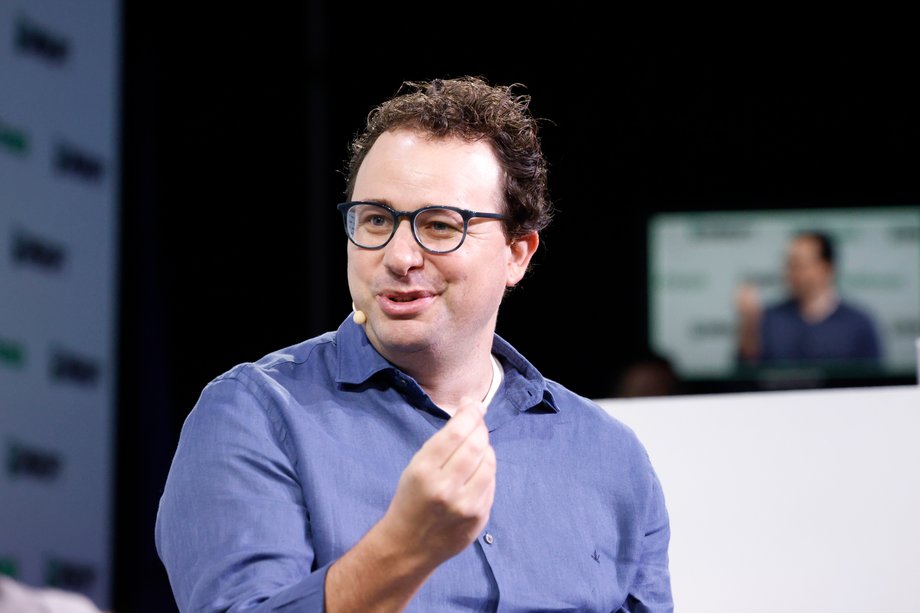
Dario Amodei – founder and CEO of Anthropic
|
Kimberly White/Getty Images
A similar step was taken by Anthropic, which filed its confidential S-1 filing a few days earlier, on June 1, 2026. Some analysts indicate that Anthropic may debut on the stock exchange even slightly earlier than OpenAI. In recent months, the valuation of this company exceeded OpenAI's level at one point and reached approximately USD 965 billion. Both companies are therefore in a similar phase of transformation, moving from the model of a private startup financed by venture capital investors to the structure of a public company, which must meet much more stringent reporting requirements and demonstrate real profitability.
- Read also: Anthropic worth $1 trillion. on the secondary market. It outperformed OpenAI's valuation
The main challenge in this fight remains the very high costs of computing infrastructure. Both OpenAI and Anthropic invest billions of dollars in developing and maintaining powerful data centers and specialized processors. These expenses generate significant operating losses, even as revenues grow. In such a situation, aggressive token price cuts can further erode profit margins, making this strategy resemble a classic war of attrition. Each side tries to gain a larger market share, hoping that the competitor will be the first to withdraw from further cuts or will not be able to withstand the financial pressure.
Market analysts point out that the escalation of the price war just before the planned stock exchange debuts carries significant risks. Stock market investors evaluate companies not only in terms of revenue growth, but primarily in terms of profitability and the ability to generate profits in the long run. Further price reductions could negatively impact the perceived value of both companies at IPO by lowering potential margins and extending the time to profitability.