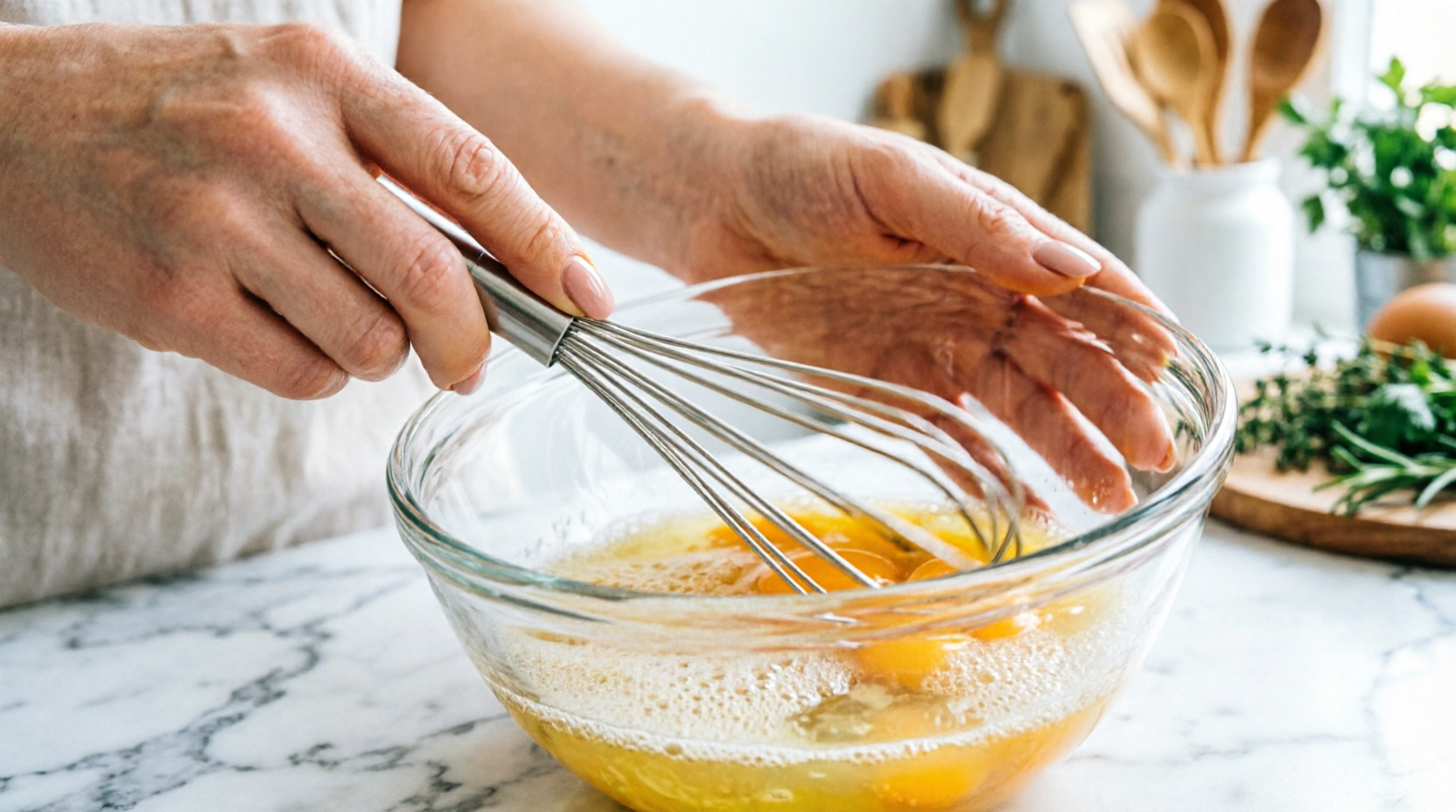
Making a fluffy omelet requires attention to detail, not just culinary talent. It is important to take into account the physics of heating the dishes and the degree of baking of the mass so that the dish does not turn into a flat cake.
The main goal is to get a golden brown and fluffy texture without a burnt crust. By following simple rules, you will turn an ordinary breakfast into a culinary masterpiece, says Elena Tarasova, author of the blog “Culinary College” (18+).
Pan heating control
Avoid overheating the cookware. If you pour the mixture onto a hot surface, the bottom will instantly burn, but the middle will remain raw. Heat the pan over medium heat. If you see a slight smoke, remove the container from the stove for 2 minutes to cool, and only then pour in the egg mixture.
Cooking under the lid
Omelette tends to rise high in the pan, but falls sharply when transferred to a plate. This is a signal of insufficient baking. To maintain fluffiness, cook the dish longer than usual. Wait for the top to thicken, then keep the omelette on low heat, covered, for another 4 minutes.
Key rules of pomp:
- Use a warm pan, not a cold pan.
- Do not open the lid for the first 3 minutes.
- Do not turn off the heat immediately after the mass has risen.
Serving dish temperature
Omelette reacts critically to sudden temperature changes. A cold plate instantly absorbs heat, causing the pores to collapse and the dish to fall. Always preheat serving utensils until warm.
Conclusion
The combination of three factors – moderate heating of the pan, long simmering under the lid and a warm plate – guarantees a high, stable omelette without loss of volume.
Personal experience
For a long time I was upset about thin “pancakes” instead of a sumptuous breakfast. The solution turned out to be simple: after turning off the stove, I leave the omelette in the hot frying pan, covered, for another minute and serve on a warm saucer. The result was consistently perfect.