Failure in the Kremlin. He was supposed to guard Russia's state secrets. He made childish mistakes

FSB counterintelligence is sounding the alarm. According to a document marked “top secret” seen by The Insider, in recent years the number of “attempts to get close to” Russian “bearers of secrets” has increased several times.
“In the period from 2022 to the present, security authorities have detected 2,874 intelligence actions of foreign secret services, while in the years 2017–2021 only 1,953 intelligence actions of the enemy were recorded,” the document reads.
Further, its authors report that during this period, the greatest number of intelligence activities against people having access to state secrets were carried out by the Ukrainian secret services – 1960, which is over 50%. their total number and indicates an increase in the activity of Ukrainian special services by 7.5 times compared to the years 2017–2021.
The objects of intelligence activities of the Ukrainian special services were soldiers of the Russian Armed Forces, employees of the defense industry and the nuclear weapons complex, employees of executive authorities, federal services and the diplomatic corps, the transport sector, representatives of science and education and communications.
According to FSB estimates, “recruitment campaigns” are currently conducted mainly via the Internet (90 percent now, while in 2017 it was only 6 percent). Foreign secret services show particular interest in Russian citizens traveling abroad. As can be read in the secret document:
“In the foreign travel channel, U.S. intelligence services and their NATO allies conducted intelligence operations against individuals:
- staying on long-term or short-term delegations abroad,
- employed in Russian organizations subject to sanctions and having access to sensitive information.
The enemy collects information about Russian citizens using intelligence data, open source monitoring, the electronics industry and corporate resources. Using information from booking systems for flights, hotels and international events, US intelligence agencies track the arrivals of Russian citizens of interest to the intelligence community and actively create conditions for their recruitment. Priority is given to people who regularly travel for business.
To establish personal contacts, U.S. intelligence agencies use border and immigration checkpoints at airports staffed by local personnel. During border control, people are subjected to “rigorous” interrogation to check their professional activities. The interrogations include the forced collection of biological material, confiscation of documents, communication and computer equipment, as well as demands for passwords and login combinations to devices and e-mail accounts.
Recruits are given specific incentives to cooperate confidentially, such as assistance in obtaining a US visa, or are forced to cancel their visas. After a comprehensive analysis of the candidates' personal and behavioral profiles, a decision is made on the possibility of further development, including recruitment.
FSB observations show that recruiters actively use unclassified data that “secret holders” publish about themselves on the Internet in order to use it during recruitment.
It is difficult to deny the conclusions of the FSB. People with access to the most important state secrets in Russia indeed leave many digital traces — sometimes unintentionally, and sometimes completely consciously, by posting information about yourself on social media. This applies not only to rank-and-file officials and secret service officers who have access to state secrets, but also to the highest-ranking people whose direct responsibilities include exercising control over classified documents. For example, the heads of Putin's office. Until June 12, this position was held by Andrei Kazakov.
Secret from the world
In conversations with relatives, Kazakov called himself the main keeper of Kremlin secrets. And it was true – Kazakov, like no one else, knew all the behind-the-scenes affairs of the Kremlin, the mechanisms of making secret decisions and the people involved in them. He learned about new appointments and high-profile resignations before anyone else. Kazakov demanded strict adherence to confidentiality rules from his subordinates. At the same time, he did not do it himself – even the most cursory searches allow us to find out all possible information about him.
TheInsider
Andrei Kazakov with his wife
Kazakov was born in 1958 in the Belarusian town of Osipovichy near Mazyr. After moving to Moscow, he graduated from a military school and served as a “secret agent” in the Main Directorate of International Military Cooperation of the Ministry of Defense, closely linked to the Main Intelligence Directorate (GRU). There, he was noticed by Putin's long-time associate from the First Main Directorate of the KGB of the USSR (responsible for foreign intelligence), Sergei Ivanov, who at that time headed the Ministry of Defense.
Kazakov's career gained momentum. He was promoted to the position of deputy chief of staff of the Minister of Defense and already in 2010 he could afford to live in the elite premium housing complex Smolenskaya Zastava on Ruzhein Street in the Khamovniki district.
In 2011, Ivanov took over as head of the Presidential Administration and soon appointed Kazakov as deputy head of his secretariat. Three years later, Kazakov bought and registered an even more expensive and spacious apartment in the Barkli Park residential complex for his daughter (real estate prices here range from 100 to 500 million rubles, from PLN 5 to 25 million). Not only he himself, but also his relatives purchased expensive cars.
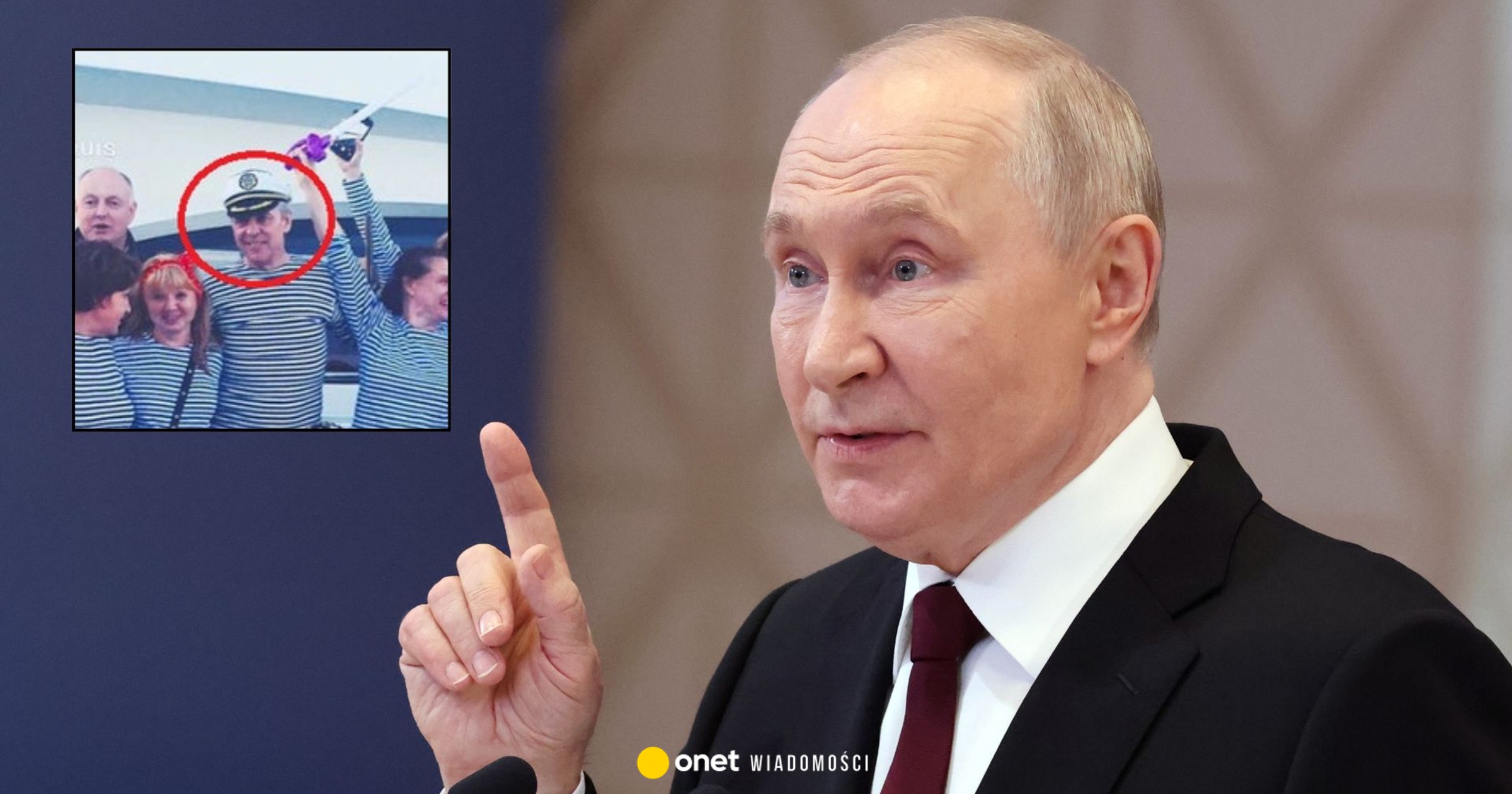
He built a residence near Mytishchi in the Moscow Oblast. In his garage there, he keeps rare models of Moskvich and Zhiguli cars (known for export as Lada), which he proudly shows to guests. For the New Year, the whole family gathers at the residence, and in the summer they spend time on a yacht on the Pirogowski Reservoir.
In 2016, Kazakov moved to the president's office, where in 2020 he replaced the long-time head of the chancellery, Alexander Golublev, who died of COVID-19. According to The Insider's source, from the first days in office, the new head of the office began to demand increased vigilance from his subordinates. — Andrei Anatolyevich is simply obsessed with mystery. We all signed a confidentiality agreement, but there are still inspections. The atmosphere in the office is extremely tense, and informing has become the norm. And there is no one to complain to – only the president is higher – says The Insider's interlocutor.
Just use ordinary search bots to learn all the details of his private life – from his culinary preferences (his family tries to buy lactose-free milk, for example) to his personal dentist. By the way, it is Dmitry Sergeev from the Central Military Clinical Hospital. PW Mandryka of the Ministry of Defense of the Russian Federation.
The family of the keeper of state secrets
Kazakov also publicly shared photos from family holidays in NATO countries. However, it must be honestly admitted that after Russia's invasion of Ukraine, the Kazakov family began to spend their holidays in Russia: in the Primorie hotel in Gelendzhik, Rosa Springs in Sochi or the five-star “Grand Palace” in Svetlogorsk.
The last time Kazakov's family traveled abroad was four days before Russia's invasion of Ukraine – on February 20, 2022. He flew to Serbia with his wife, daughter and granddaughter. Apparently, the official with access to all state secrets understood that this was his last chance to travel abroad.
Incidentally, the Kazakov family is also involved in keeping state secrets. His son Konstantin is an employee of the Federal Protective Service. He heads the Department for the Protection of State Secrets at the Ministry of Finance, which corresponds to the position of a general.
His son's wife, Daria, also signed a pledge not to disclose state secrets. She is a doctor by profession, but in 2022, her father-in-law hired her as a consultant in the secret documents department of the president's office for state decorations. Therefore, hundreds of secret decrees pass through her hands regarding the decorations of generals of the FSB, the Foreign Intelligence Service, the Ministry of Defense, “heroes” of Putin's special military operation and spies carrying out secret operations abroad.
Despite FSB warnings about the risk of recruitment during foreign business trips until 2025, she fearlessly published photos from her trips to Italy, Germany, Switzerland and Spain online. Together with her husband, whose identity is kept secret.