Trump's plan that weakens Europe's defense: US prepares to withdraw a third of fighter jets assigned to NATO

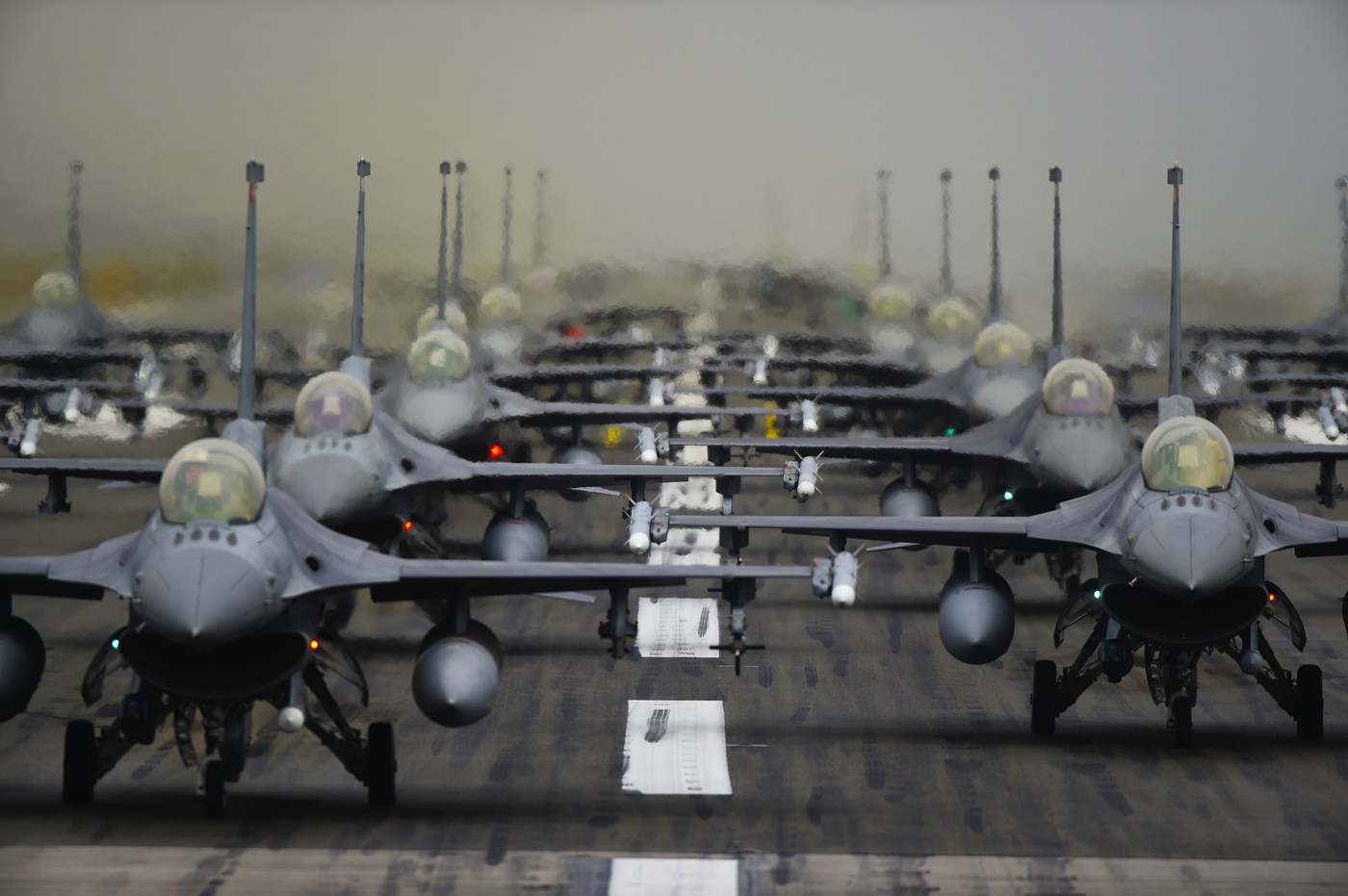
A significant reduction in the number of US aircraft and warships in Europe is planned to take effect very soon, according to a document seen by The New York Times.
The plan, presented by officials and set out in a written document, provides particular clarity on the extent to which the Trump administration intends to reduce its commitment to NATO.
The United States plans to significantly reduce the number of aircraft and warships it makes available for NATO operations in Europe, according to two senior European officials, accelerating US efforts to reduce the level of protection it has provided European allies for eight decades.
The decision, communicated to allies in early June in a document, would limit NATO's ability to launch long-range strikes and conduct surveillance operations.
List of NATO cuts
The plan envisages a series of radical reductions in the forces made available to Europe:
- Reducing the number of F-16 and F-15E fighter jets from about 150 to 100;
- Reducing the number of maritime reconnaissance aircraft from 26 to 15 and eliminating all eight aerial refueling aircraft previously available in Europe;
- Redeployment of a missile-launching submarine and an aircraft carrier, along with several warships and dozens of aircraft joining the carrier's missions;
- Reallocation of one of the two bomber groups previously assigned to the defense of Europe.
Details of the cuts were first published by German publication Die Welt and provide the clearest picture yet of the extent to which the Trump administration plans to reduce its commitment to NATO.
The Pentagon declined to comment on specific figures in the document and referred only to a general statement by its European Command on reducing commitments.
American officials have indicated that the withdrawal will take effect very soon, much sooner than their European counterparts were preparing.
The sudden withdrawal of US forces would affect NATO's ability to, for example, monitor Russian submarine traffic or launch long-range Tomahawk missiles deep into Russian territory.
Although the Europeans have similar missile-launching capabilities, experts say these weapons have a stronger deterrent effect on Russia when used by the United States, as partners on the continent may be more reluctant to use them.
Giuseppe Spatafora of the European Union Institute for Security Studies, a Paris-based think tank, explained the cumulative impact of these measures: “While each of these cuts can be managed individually, together they represent a significant shift in position and pose challenges to Europe's deterrence capacity across the spectrum.”
“There is no longer any confidence that the US would come to the rescue”
The US president has complained for years about the burden the United States carries in its contribution to NATO. He has repeatedly called on Europe to do much more to defend itself without American support and has threatened to leave the alliance altogether.
But the Trump administration followed through with only sporadic announcements of relatively small withdrawals from individual countries — until the June document detailing sweeping cuts to US support for NATO as a whole.
The cuts will be tempered by the fact that US troops in Europe will remain one of the largest NATO forces on the continent. The effects of the drawdown will also be mitigated by the fact that European leaders, aware of the need to rely less on US support, were already in the process of rearming their countries.
But Britain's defense minister resigned on Thursday, accusing the government of underfunding the military. And Europe is facing difficulties in coordinating the rearmament process; on Tuesday, Germany confirmed its withdrawal from a project to build a new fighter jet with France and Spain.
For some Europeans, the actual number of US resources committed to Europe is less important than the question of whether Donald Trump is willing to use any of them in combat.
Anton Hofreiter, a German lawmaker, said: “NATO's main problem is that as long as Trump is president, there is no longer any confidence that the US would come to the aid of Europeans in an emergency.”
The drone attack in Romania, mentioned by the NYT
The downsizing comes at a particularly tense time for Europe. At the end of May, a Russian drone hit a residential block in Romania, being the first attack of this kind in an important urban area on NATO territory, writes the American publication.
On May 29, 2026, a Russian drone crashed on a block of flats in Galati, causing a fire and injuring two people. The incident was strongly condemned by NATO and its European allies, while the US immediately reaffirmed its commitment to Romania's defense, but avoided naming Russia directly in its first official statements.
This incident, along with other Russian drone incursions into NATO airspace, has heightened European fears that Russia may expand its aggression beyond the invasion of Ukraine.
Regarding the military impact, Ed Arnold, of the Royal United Services Institute think tank in London, said that while this US withdrawal could have been more serious, “it will have the effect of focusing attention”.
Details of the reduction have been communicated privately, while senior US defense officials have spoken publicly of their intention to reallocate forces to defend US interests in the Indo-Pacific region.
The head of the Pentagon's European Command, Gen. Alexus G. Grynkewich, said in early June: “Within the NATO force model there has been an unhealthy co-dependence on American forces.”
The general, who is NATO's supreme military commander, added: “President Trump, Secretary Hegseth and others have made it clear that this must and will change. The potential reality of a simultaneous conflict in multiple theaters of operations demands it.”