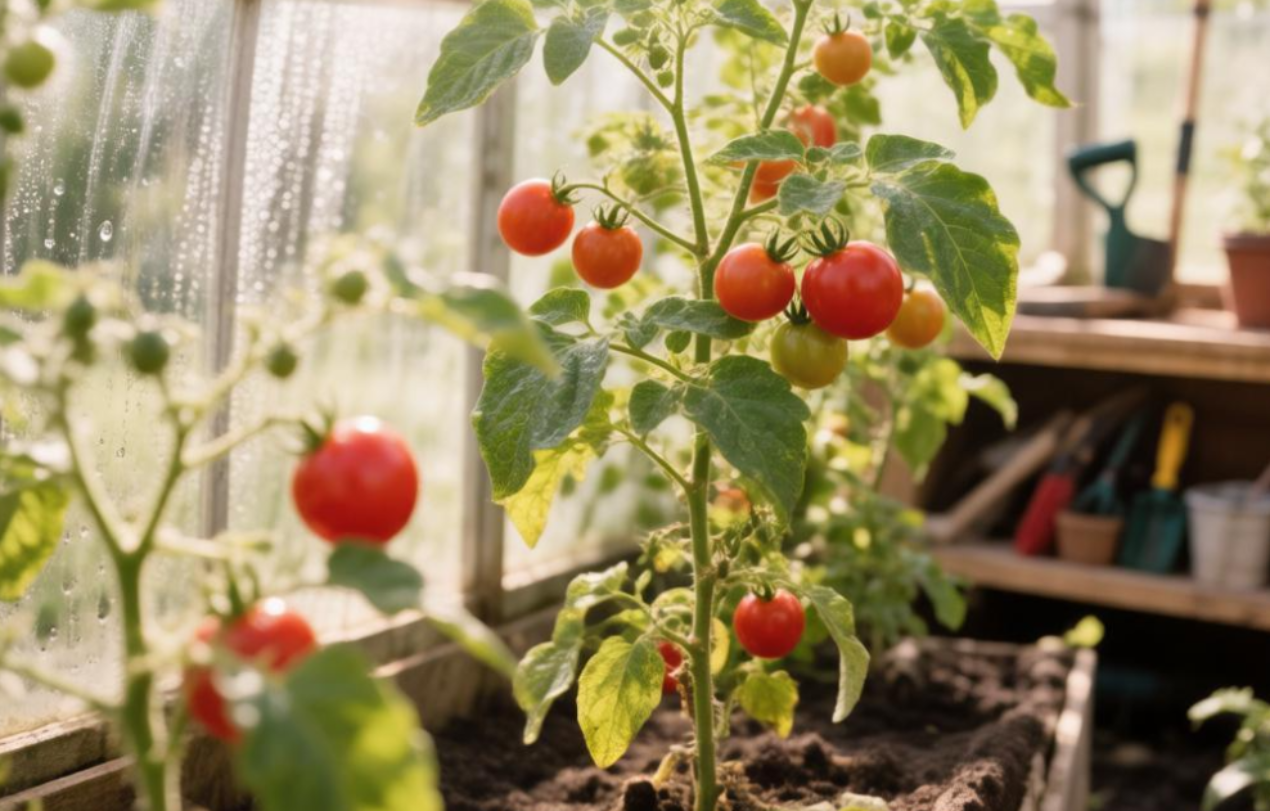
If you go into the greenhouse and notice that the tops of your tomatoes are curled into a tube, just like “ram’s horns,” don’t panic right away. This problem can be easily dealt with if you understand its nature in time. The author of the Zen channel “Victoria Radzevskaya – Country Secrets” (12+) spoke about why this happens and how to quickly help plants, sharing proven tips.
Reason 1. Overfed with nitrogen
This is the most common mistake. If the bed is on rested, oily soil, and a lot of humus or nitrogen fertilizers have been added to the soil, the tomatoes begin to “fatten”. The stem becomes unnaturally thick, the leaves are huge, and the tops curl.
What to do: Completely eliminate nitrogen fertilizing. Give plants phosphorus and potassium. Actively pluck and tear off the lower leaves so that the bush understands: it’s time to grow fruits, not tops.
Reason 2. Lack of phosphorus
The picture is very similar to an excess of nitrogen: the leaves on the top curl up precisely because of phosphorus starvation.
What to do: Be sure to feed the tomatoes with phosphorus fertilizer before the first cluster blooms. This important step cannot be skipped.
Reason 3. Heat and stuffiness in the greenhouse
When the temperature in closed ground goes off scale, tomatoes experience severe stress. Even with the correct application of fertilizers, the roots simply do not absorb nutrients in such conditions, and the leaves curl.
What to do: Adjust the microclimate. Ventilate the greenhouse more often and be sure to shade the bushes during the hottest hours of the day.
Reason 4. Pests
You need to turn the problem sheet over and carefully examine the underside. If aphids, spider mites or other insects are sitting there, the cause has been found.
What to do: The bushes will have to be processed. Before flowering, in case of severe damage, it is permissible to use chemicals, but it is better to start with safe folk remedies or biological products.
Reason 5. Feature of the variety
Sometimes a bush will curl its top simply because of its genetics. For example, old proven varieties like “Bull's Heart” often do this while other tomatoes in the greenhouse stand with absolutely even leaves.
What to do: Nothing. If the plant looks healthy and there are no pests, this is its varietal norm.