Romania is going through the most difficult period after the successive pandemic and energy crises

After years in which population consumption was the main driver of the economy, the first clear signs of cooling appear. Data analyzed by Erste economists show that retail sales have entered a phase of sharp contraction, and the fall in spring is the strongest recorded after the shock caused by the COVID-19 pandemic.
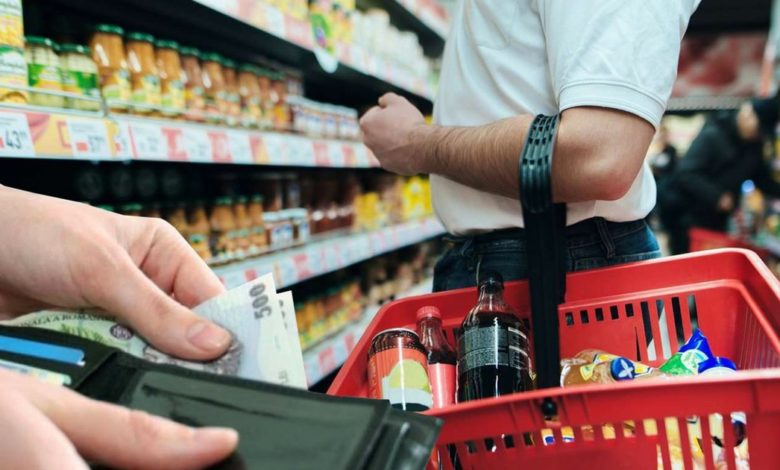
Erste: Romania recorded the biggest drop in consumption in the last six years. Archive photo
The data on retail trade confirm what economists have been warning for months: the main engine of the Romanian economy is starting to lose speed. After Romania officially entered a technical recession and inflation returned above the 10% threshold, Erste's analysis shows that retail sales recorded the steepest drop since the pandemic in 2020. The evolution of consumption thus becomes a key indicator for what is to come in the economy, in a context marked by fiscal austerity, high costs and political uncertainty.
Erste: The biggest drop in consumption in the last six years
The data analyzed by Erste economists show that the main engine of the Romanian economy is starting to show obvious signs of fatigue. The volume of retail sales registered an annual decrease of 2.7% in June, the largest contraction recorded after the pandemic period in 2020. For analysts, the signal is all the more important since household consumption has been the main driver of economic growth in recent years.
The Erste report points out that the rebound is not a statistical accident, but is occurring against the background of a gradual deterioration in purchasing power and increasing caution among the population. After several waves of inflation, tax hikes and high financing costs, households are starting to cut back on spending, especially on non-essential goods.
The bank's economists point out that this development comes at a delicate moment for the Romanian economy. If in previous years consumption compensated for weaknesses in industry and investment, now this pillar is also starting to lose its strength. As household spending generates about two-thirds of gross domestic product, any significant slowdown is quickly transmitted throughout the economy.
The Erste analysis appears shortly after the official confirmation of Romania's entry into technical recession and offers an additional explanation for the deterioration of economic activity. In the bank's assessment, the reduction in consumption is one of the main causes that led to the contraction of GDP and represents a major risk for the economic evolution in the second half of the year.
Analysts also note that the effects of fiscal consolidation are beginning to be felt directly by the population. Rising taxes and fees, higher utility costs and still high interest rates are reducing disposable income for consumption. In parallel, economic uncertainties cause many Romanians to be more cautious and postpone important purchases.
Erste's message is that the economy is entering a stage where consumption can no longer sustain growth on its own. In the absence of an acceleration of investments and a faster absorption of European funds, the pace of the economy could remain modest in the coming quarters as well.
The recession confirmed by the INS completely changes the economic outlook
The retail signals come after the National Institute of Statistics officially confirmed Romania's entry into a technical recession.
The review of economic data showed that GDP continued to decline in the fourth quarter of 2025 and the first quarter of 2026. Specifically, the economy contracted by 0.2% in the first quarter of this year compared to the previous quarter and by 1.5% compared to the same period in 2025.
In parallel, inflation accelerated to 10.7%, after having been 9.87% in March and 9.3% in February. The most important price increases were recorded for electricity (+54.18%), rents (+44%) and diesel (+32.68%).
Inflation has passed the 10% mark. Current price explosion (+54%) and rents 44% more expensive in just one year
This combination of recession and high inflation is one of the most difficult situations for any economy, as it limits the authorities' ability to intervene effectively through both fiscal and monetary policy measures.
Economists: Romania is now paying the bill for years of excessive spending
Several economists explained to “Adevărul” that the current economic situation is the result of imbalances accumulated in recent years.
Economic analyst Adrian Negrescu believes that the recession is the direct consequence of the budget policies of recent years.
“Romania is a patient in intensive care that feels the economic disease it has had for so long and the politicians have not solved it. It is the effect of the budget scandal of the last 7-8 years of those in government“, Negrescu declared for “Adevărul”.
According to him, the explosion of inflation was fueled by the liberalization of the energy market for companies, the increase in fuel prices and the effects of tax increases.
Negrescu estimates that inflationary pressures could begin to ease in the autumn, but warns that the economy will continue to go through a difficult period.
For his part, Adrian Codirlașu, the president of CFA Romania, believes that the recession represents the inevitable effect of the very high public spending in 2023 and 2024.
“We are in recession because we had big expenses in 2023 and 2024 that need to be covered. Plus, the purchasing power has decreased and implicitly consumption, which is the most important part of the GDP”Codirlașu declared for “Adevărul”.
It warns that the combination of high inflation and economic downturn represents “the most unfortunate combination” for the economy and limits the authorities' options for intervention.
UBB predicts a moderate recession in 2026, but chances of a rebound in 2027
An analysis carried out by the RoEM-UBB FSEGA team shows that the prospects of the Romanian economy have deteriorated significantly in recent months.
The university's economists now forecast an economic contraction of 0.5% for the full year 2026, after forecasting 0.8% growth at the start of the year.
According to researcher Csaba Bálint, Romania's economy is simultaneously affected by external shocks and internal political instability, which amplifies existing vulnerabilities.
Official: Romania has entered recession. The economy has decreased for two quarters in a row, INS data confirms
Béla-Gergely Rácz draws attention to the fact that the political uncertainty was quickly reflected in the financial markets, through the depreciation of the leu, the increase in financing costs and the increase in risk perception on Romania.
However, UBB specialists see a gradual return possible in 2027. The team's coordinator, Levente Szász, estimates that the economy could return to growth next year, with a GDP advance of around 2.2%, if the fiscal consolidation process continues and if European funds are absorbed at a faster pace.
What's next for the economy
In other words, Erste data, INS statistics and economists' assessments show that Romania's economy is going through the most difficult period after the successive pandemic and energy crises.
Declining consumption is perhaps the most important red flag as it directly affects the main driver of economic growth. In parallel, high inflation continues to erode the population's income, and fiscal consolidation reduces the Government's room for maneuver.
Under these conditions, the evolution of the coming months will largely depend on the authorities' ability to stabilize public finances, the rate of absorption of European funds and the return of consumer and investor confidence. Until then, retail data suggests that Romanians have already started to cut back on their spending, and the effects of this change are increasingly visible throughout the economy.