INTERVIEW There is only one way to protect Romania's water sources, says an official from the European Commission. “We have allocated 6,000,000,000 euros to Romania”, announces Jan Dusik

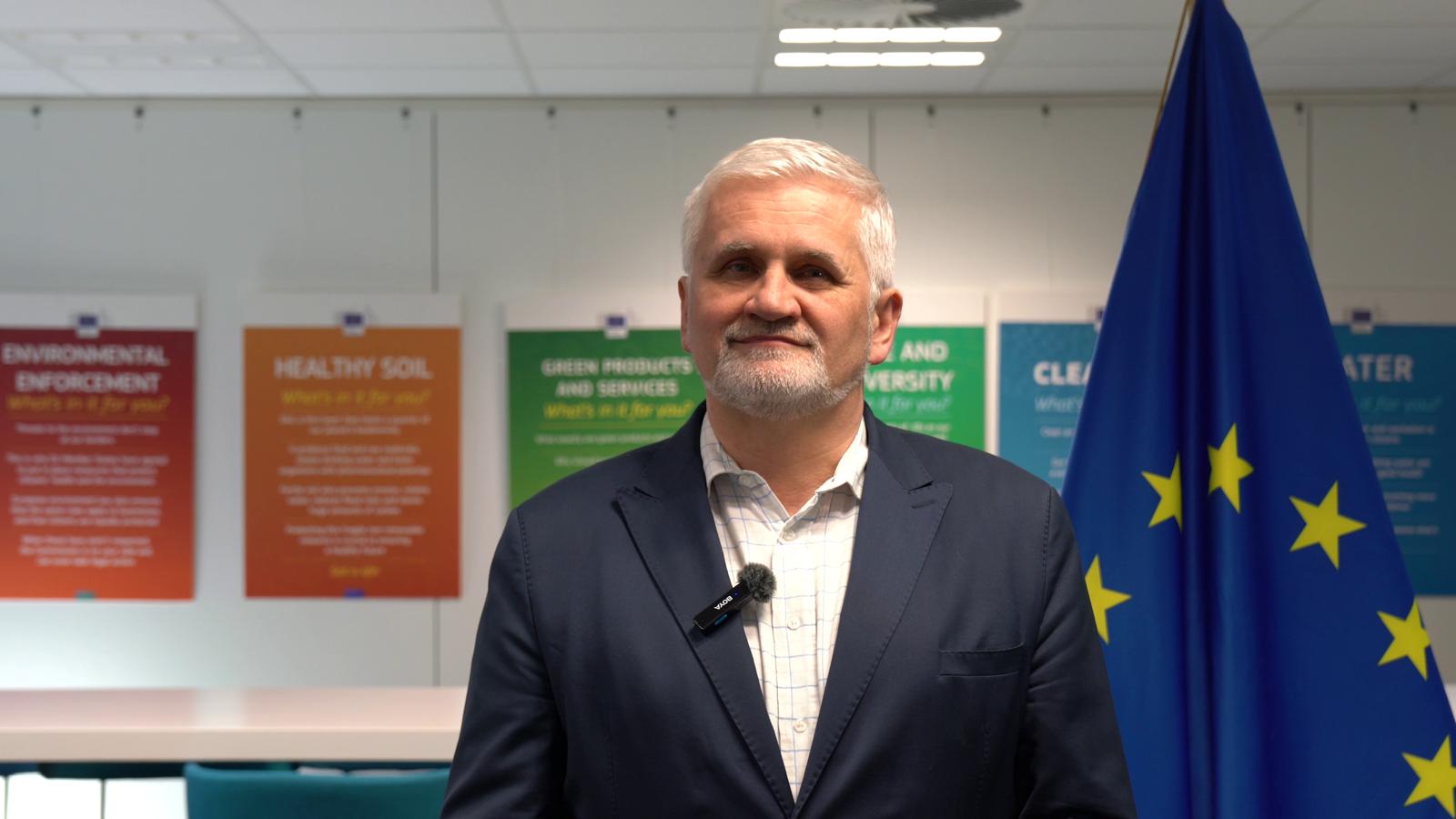
Using renewable sources and taking care of what we all have are the most effective ways to reduce energy bills, says Jan Dusik, Deputy Director of the Directorate-General for Climate Policies at the European Commission, in a conversation with HotNews.
- Why does Romania have among the highest energy prices in the EU?
- There are arguments that blame the European transition plan.
- Jan Dusik says the high prices are the consequence of the delay in approaching the transition to renewable energy.
- An extensive interview where other arguments are also heard.
Jan Dusik, deputy director of the Climate Directorate of the European Commission, is on a visit to Bucharest on Tuesday and Wednesday, in the context in which the European Executive seeks to modify the legislation in the energy sector to accelerate the transition to renewable sources.
In a discussion with HotNews, he revealed that in the first 60 days of the war with Iran, Europe's bill for fossil fuel imports increased by more than 27 billion euros.
“It's a huge amount of money practically wasted. The case for energy independence is obvious,” he says, adding that the countries that have absorbed the shock best are those with a high share of renewable energy.
Romania can become a regional pillar of European stability and resilience, but for this it must act faster, Dusik believes.
“Drought and floods have become structural economic risks in Romania”
– Mr. Jan Dusik, I started in Romania another hot summer already.What impact do extreme climate phenomena have on insurance costs and infrastructure in Romania?
– According to the European Semester 2026 package, one of the most important economic vulnerabilities is the capacity for adaptation and resilience. This aspect covers water, agriculture, infrastructure and public health.
Droughts and floods are no longer exceptional events, but become structural economic risks. The European Environment Agency's assessment shows that Europe faces major risks to food security, ecosystems, infrastructure, water resources, financial systems and health.
Romania is specifically identified as highly vulnerable to drought and flooding.
Extreme climate phenomena are already generating increasing economic and fiscal costs, and the low level of insurance means that an important part of the reconstruction costs is borne by households and the public budget.
Dusik: “We are in the review process”
– What is the purpose of these days' visit to Bucharest? Who will you talk to?
– I will meet with a wide range of representatives from public administration, industry, academia and civil society. This is an important year for climate policy. We are in the process of reviewing carbon pricing and investment policies (the so-called EU ETS) as well as national emission reduction targets.
We will also propose a new framework for climate resilience, designed to protect economies and citizens from the growing threats posed by climate change, such as floods, droughts and wildfires. We want to find out what are the existing opportunities and concerns in Romania before the European Commission formulates new proposals.
“The costs of deploying renewable energy are steadily decreasing”
– How will the EU target of reducing emissions by 90% by 2040 affect the final energy prices for households in Romania?
– The economic arguments in favor of the transition to clean energy are getting stronger. The costs of deploying renewable energy are steadily falling, and these cost reductions are increasingly being passed on to citizens and industry as production capacities increase. The situation in Iran is yet another reminder of the negative effects generated by dependence on fossil fuel imports and the volatility of global markets.
– Will accelerating the energy transition lead to lower energy bills?
– The biggest price shocks in Europe in recent years were caused by Russia's invasion of Ukraine and the closure of the Strait of Hormuz.
These shocks were absorbed most effectively by countries that already had a high share of renewable energy in their energy mix.
Of course, there are costs associated with installing new capacity and developing electricity networks, but there are also financial support mechanisms, including through the ETS.
The Modernization Fund specifically supports Eastern European countries in developing modern and clean energy systems.
In addition, the Social Climate Fund, which starts to be implemented from this year, will allow households and companies to increase the energy efficiency of their buildings or switch to renewable sources. This is the most effective way to reduce energy bills.
The Commission has also recently agreed that Member States can request additional budgetary flexibility for accelerated clean energy investments.
The situation in the Middle East is a strong argument to increase EU domestic production
– How does instability in the Middle East influence the EU's energy independence plans?
– The situation in the Middle East represents a strong argument for the rapid diversification of energy sources and suppliers, as well as for accelerating the transition to domestic energy production.
In the first 60 days of the war with Iran, Europe's bill for fossil fuel imports rose by more than €27 billion. It is a huge amount of money practically wasted. The case for energy independence is obvious.
– So, do you think that the European Union should accelerate the transition to green energy in the context of the Iran war?
– As I mentioned, the vulnerability generated by dependence on imported fossil fuels is very clear. The longer we delay the transition, the higher the costs will be.
A recent UK study made an interesting comparison: the total cost of transitioning to climate neutrality by 2050 is equivalent to the impact of a single major fossil fuel energy price shock. The difference is that the transition is done only once, whereas in the last five years we have already had two major energy shocks. The economic conclusion is obvious.
About “protecting water sources”
– How would you describe Romania's situation at this moment? What is Romania's advantage in the European landscape and what should it do urgently?
– Romania must accelerate the implementation of projects and use the available European funds as efficiently as possible.
It is necessary to modernize and expand energy networks, protect water resources, accelerate investments in clean energy and involve coal-bearing regions in the construction of the new economy.
Above all, investors and citizens must trust that the green transition represents Romania's development strategy for the next decade. Romania can become a regional pillar of European stability and resilience, but for this it must act more quickly.
2,000 MW independent storage projects
– Is Romania's energy infrastructure ready for the accelerated integration of renewable energy and storage capacities?
– Romania is heading in the right direction and has become one of the most active renewable energy markets in Southeast Europe. However, the energy infrastructure is not yet fully prepared for the accelerated integration of renewable energy and storage.
There are many projects in development, but the success of the transition to a clean and reliable energy system by 2030 will depend on the timely closure of coal-fired power plants, the strengthening of networks, the reduction of congestion and the rapid expansion of storage capacities.
Developers have announced about 2,000 MW of independent storage projects, in addition to battery systems associated with wind and solar farms. The market is beginning to respond to the need for flexibility, but the infrastructure remains in the process of being modernized.
– How will vulnerable households be protected from possible price increases during the energy transition?
– First, the primary responsibility for protecting vulnerable consumers lies with national governments. However, there are also European funds that can be used for this purpose.
The Social Fund for Climate will allocate approximately 6 billion euros to Romania, combining European and national funding. This tool is designed to support the most vulnerable citizens in managing energy and transport costs.
The priority is to finance investments in energy efficiency, renewable sources and clean transport, but it is also possible to provide direct financial support for the payment of bills, within certain limits.
– What are the risks for Romania's economy if the energy transition will advance more slowly than the EU average?
– A slow energy transition involves high costs borne directly by households, which already face a rising cost of living.
The delay in the energy transition in Romania generates significant inflationary risks, mainly by maintaining high energy prices, which are already among the highest in the European Union. These costs affect both consumers and businesses, reducing purchasing power and economic competitiveness.
In addition, energy security is a major risk. Russia's war against Ukraine and the closure of the Strait of Hormuz have demonstrated the vulnerability of fossil fuel-dependent economies.
Delays in infrastructure investment also delay consumers' access to renewable energy and reduce the system's ability to cope with the effects of climate change, including losses in hydropower production in years with record temperatures.
The industry will benefit from financial support of 30 billion euros for investments in decarbonisation
– What measures does the EU have to protect European industry from losing competitiveness due to high energy prices? How will energy-intensive industries in Romania be supported in the decarbonization process?
– The President of the European Commission, Ursula von der Leyen, recently announced a new financial support instrument for industry, in the form of the ETS Investment Booster. It will have a budget of 30 billion euros, financed from ETS revenues. Its purpose is to finance decarbonisation projects. The key principles are speed and solidarity. Solidarity means that Member States with lower incomes will benefit from privileged access to these funds.
– Is there a risk of relocation of European industry to regions with cheaper energy?
– The European Commission paid special attention to the design of measures to limit the risks of carbon leakage (“carbon leakage”). The European Emissions Trading System already offers free allocations to sectors at risk of relocation to countries without similar costs.
In addition, we introduced the Carbon Border Adjustment Mechanism (CBAM), which ensures that EU imports pay the same carbon cost as European producers. In the ETS review planned for this year, we will pay special attention to stimulating investment and protecting European industry against unfair competition.