China has overtaken Elon Musk's company in the race to launch the world's first commercial brain chip. Medical applications and risks

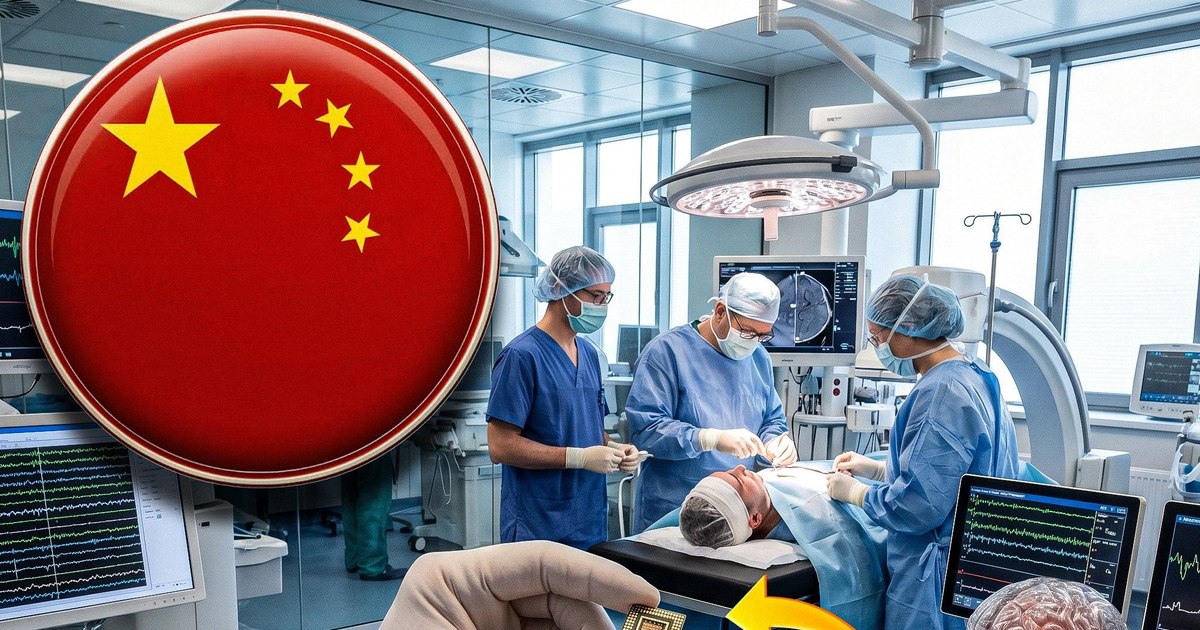
China has approved the first brain-computer device for commercial use, in a moment considered significant for a rapidly developing technology field globally.
The first surgical brain implant to successfully pass the stages of clinical testing/PHOTO:X
The device, the size of a coin and called NEO, became the first surgical brain implant to successfully pass the clinical testing stages necessary for commercialization.
According to the developers, the initial version is designed to support patients with spinal cord injuries and paralysis by improving the functioning of the nervous system. The implant is to go into series production for China's state healthcare system.
Researchers from Tsinghua University and the company Neuracle Technology claim that the design of the device reduces the invasive nature of the procedure compared to other existing solutions.
At the same time, the American company Neuralink, founded by Elon Musk, is still at the stage of clinical trials and has not received full approval from US regulators for general use.
A global competition in neurotechnology
The field of brain-computer interfaces is viewed by investors and researchers as a potential turning point, with significant medical applications as well as ethical and security implications.
Supporters of the technology, including tech industry figures like Sam Altman and Peter Thiel, suggest that such systems could eventually lead to deeper integration between humans and artificial intelligence.
Previously, investor Scott Phoenix described in a TED talk the possibility that these technologies will gradually become inevitable in professional life as their advantages grow.
Future Market Insights estimates that the global neuroimplant market will grow significantly from hundreds of millions to billions of dollars over the next decade.
Medical applications and risks
Researchers say such implants could help millions of patients with neurological conditions, including paralysis, epilepsy, Parkinson's or strokes.
However, cybersecurity experts warn of the risks. Dr. David Tuffley of Griffith University pointed out that neural data could be vulnerable to computer attacks, including manipulation of cognitive or motor functions.
Also, big tech companies like Amazon, Apple, Meta, Google and X are frequently mentioned in debates about the commercial value of personal data generated by connected technologies.
Between promise and uncertainty
Brain implants remain an experimental technology, with major challenges related to biocompatibility, risk of rejection, and possible damage to brain tissue.
Currently, the NEO device has been tested on dozens of patients, with preliminary results considered promising by the developers.
In parallel, other systems, including the one developed by Neuralink, are being tested on a limited number of participants.
One of them described the experience as a slow process of adaptation, but with the potential to fundamentally change the way people with disabilities interact with technology.
As research advances, questions regarding the ownership of neural data and the limits of technological intervention on the human brain become increasingly important in international public debate.