The programmed supersonic plane to be launched in 2030 will carry New York passengers to London in less than 60 minutes

An American company promises to restore supersonic flight to the world's attention, in an unprecedented form: with a speed four times longer than sound and a flight between the big capitals below one hour. If the project succeeds, high-speed air transport will enter a new stage of its development, writes the Daily Mail.
Development of reusable hypersonic technology that will revolutionize and redefine aviation/
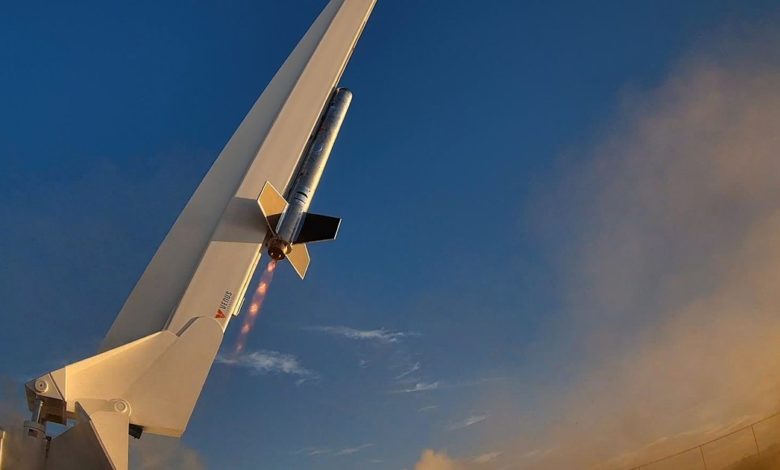
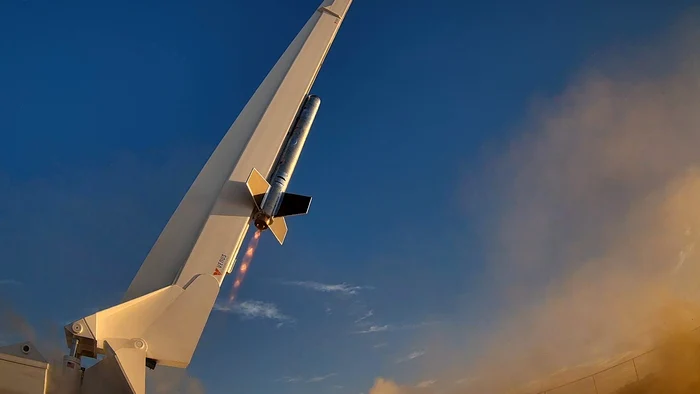
The Texan Venus Aerospace Startup announced this month to perform a test with “historical” tests for aerospace engineering: the first atmospheric flight with an RDRE engine-a propeller based on rotary detonations. Unlike classic engines, which use a constant burning, the new system is based on fast and controlled explosions, meant to generate a more efficient and powerful propulsion.
The test was performed on May 14 at Spaceport America, in the state of New Mexico. At 07:37, an experimental rocket equipped with the new engine was successfully launched, marking a world premiere. The CEO of the company, Sassie Duggleby, described the moment as “the peak of five years of intensive research”.
“Stargazer” – a new promise for air transport
The plane that would be equipped with this engine is called the Stargazer M4 and is designed to reach speeds up to Mach 4, ie about 4,940 km/h. The distance between New York and Paris, over 5,800 km, could be traveled in less than 55 minutes – almost three times faster than Concorde, withdrawn from use over two decades.
In its final form, the aircraft would transport up to 12 passengers, at an altitude of about 33,500 meters, upstairs for the horizon line to appear – a detail that evokes the luxury flights offered by Concorde in the 1990s.
The estimated price of such an aircraft is $ 33 million, and Venus Aerospace hopes that the first commercial flights will be possible in the first part of the next decade.
A technology developed over four decades
Rotary detonation engines are theorized since the 1980s, but only now researchers manage to apply them. Andrew Duggleby, co-founder and technological director of the company, explained that his team managed to “go through the critical obstacles” in designing a reliable, scalable and efficient system. “I built an engine that not only works, but it does it repeatably – an essential step towards commercial applicability,” he said.
The new propeller is designed to operate with the VDR2 system – an aerodynamic detonation branch that extracts oxygen from the atmosphere, thus eliminating the need for additional oxidant tanks, as in the case of missiles. This configuration allows take -off from conventional tracks and gradually accelerating to hypersonic speeds, without the use of external powers.
The future of hypersonic flight: fast, efficient but selective
Although the promise of a transatlantic journey below one hour is spectacular, the technology remains, at least today, for a very small segment. High costs, low passenger capacity and infrastructure demands could maintain these flights in the elitist sphere, at least in the first years of operation.
However, the specialists in the field recognize the strategic value of development: both for fast mobility, as well as for high priority military or logistics applications. If the Stargazer project will become a reality, it will be the first passenger plane that goes beyond the sound barrier again, after the Concorde withdrawal in 2003.
“It's just the beginning,” says Venus Aerospace. “We are approaching a moment when the high -speed flight becomes not only possible, but sustainable and repeatable.”