“I think it's a political issue.” A Ukrainian politician about taking away the order from Zelensky

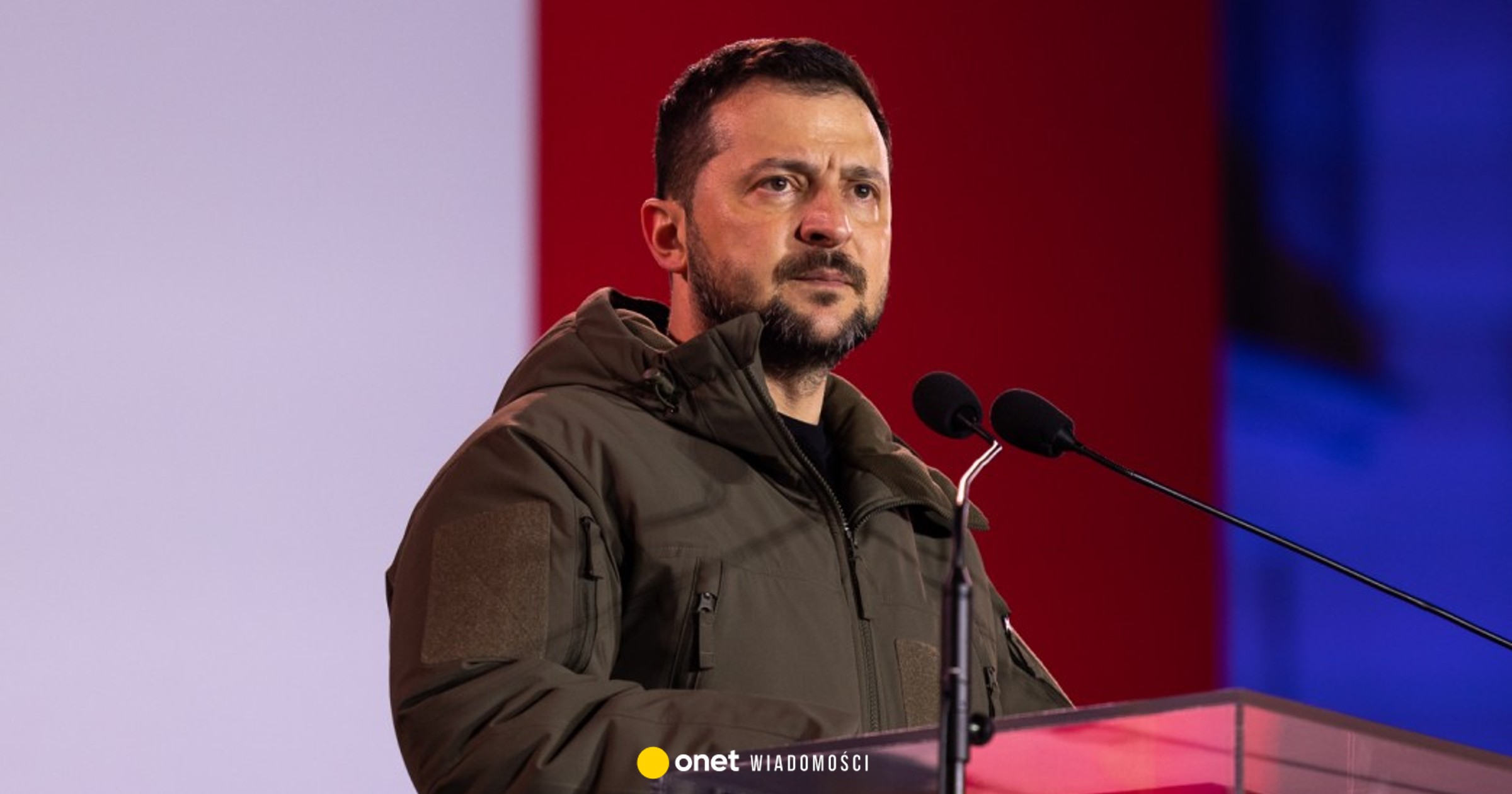
The interview was conducted before the decision of the White Eagle Chapter was announced.
Mariia Tsiptsiura, Onet: How does Ukraine assess the current situation related to the announcement that Poland will receive the Order of the White Eagle from Zelensky? How might this affect relations between Kiev and Warsaw?
Oleksandr Merezhko, chairman of the parliamentary committee on foreign policy of Ukraine: First of all, I hope this won't happen. This is quite a complicated procedure that does not depend solely on the will of Karol Nawrocki.
On the one hand, there is quite strong social pressure to make such a decision. However, this is not in Poland's interest. If you look at it soberly and rationally, a step aimed at exacerbating the situation, not solving it, is not rational and does not correspond to the national interests of Poland itself. This would be a mistake.
In such situations, an honest dialogue must be held, openly, perhaps even behind closed doors, to clarify the issue and reach some sort of consensus. Until recently, however, such a compromise existed. It consisted in leaving historical issues to historians. They should not spoil or destroy our future and our common fight against the Russian aggressor.
Sometimes you just need to refrain from taking sudden steps that only make the situation worse, not better.
Ukrainian politician: this is an attempt to please the radical electorate
What sense do such actions on the Polish side make? Is it a matter of politics or a bid to gain the support of the electorate?
I think it's a political issue. I think it is connected with a certain part of the electorate. Unfortunately, the Confederation, which is not favorable to Ukraine, is gaining popularity in Poland. Other politicians, in order to stay on the wave of popularity among their voters, are unfortunately forced to compete with the Confederation's demands.
And these harm not only Ukrainian-Polish relations, but also Poland itself in the long run. Maybe that's what it has to do with it. This specific competition is not entirely appropriate. However, a politician should be guided primarily by the national interest. However, we see here an attempt to please a certain radical part of the electorate.
What can such disputes lead to? Can they be resolved quickly, or do they leave a long-lasting mark on relationships?
First of all, this is not a new conflict. There have been attempts to solve it before. Meetings of historians were organized. This means that some compromise solutions had already been worked out and a certain status quo existed.
I believe that it is currently inappropriate and unconstructive to blame anyone or find someone to blame. We need to get out of this situation so that it does not worsen or worsen. A constructive solution should be sought through honest dialogue.
“A compromise is needed”
What should be the appropriate response from Ukraine? On the one hand, many Ukrainians find it strange when someone tries to decide who our hero is. On the other hand, good relations with Poland are very important to us. How to act in such a situation?
It's hard to say. I think that the answer may only appear when there is a serious conversation at the level of presidents, prime ministers and foreign ministers about further actions. Poland remains our strategic partner.
The good news is that Poland clearly declares: it remains on our side in the fight against Russian aggression and will continue to support us. That's very good. The second good news – many Polish politicians understand that relations with Ukraine, especially now, are more important than historical disputes. Not all of them, of course, but a significant proportion.
Paweł Supernak / PAP
Karol Nawrocki and Volodymyr Zelensky
And the bad news is that, in my opinion, historical issues may become an obstacle on Ukraine's path to the European Union.
I don't think they will take away this award from him. This would be illogical because it was awarded for specific actions of President Zelensky, who did not escape from Kiev and defended his country. It was a decoration for a specific manifestation of heroism, including services to the Polish nation.
So the most important thing now is not to escalate the situation?
Of course. Every crisis situation requires crisis management. I recently talked to a Polish colleague who said something very accurate: we need crisis management. And I was very pleased to see that my Polish colleagues still wear badges in the colors of the Ukrainian flag. Despite all the disputes.
Such crises appear not for the first time and perhaps not for the last time. However, we need to develop clear rules. We agree on this, we have different views on this, and we can cooperate on this.
This means that some kind of cooperation plan is needed on complex issues, including historical ones. And this is completely normal. A compromise is needed that will not violate mutual interests and at the same time respect the sovereignty of each country and its national interests.