Updating the NECP is of key importance for the Polish energy transformation. The document prepared by the Ministry of Energy will be sent to Brussels. This is a strategy that sets the direction of changes in the Polish energy sector for the next 15 years. Its aim is to provide a planning framework for the sector until 2040.
NECP covers all key sectors of the national economy: power engineering, heating, industry, transport, construction and agriculture. Forecasts take into account both the demand for energy and raw materials, the development of individual technologies, as well as macroeconomic and social effects.
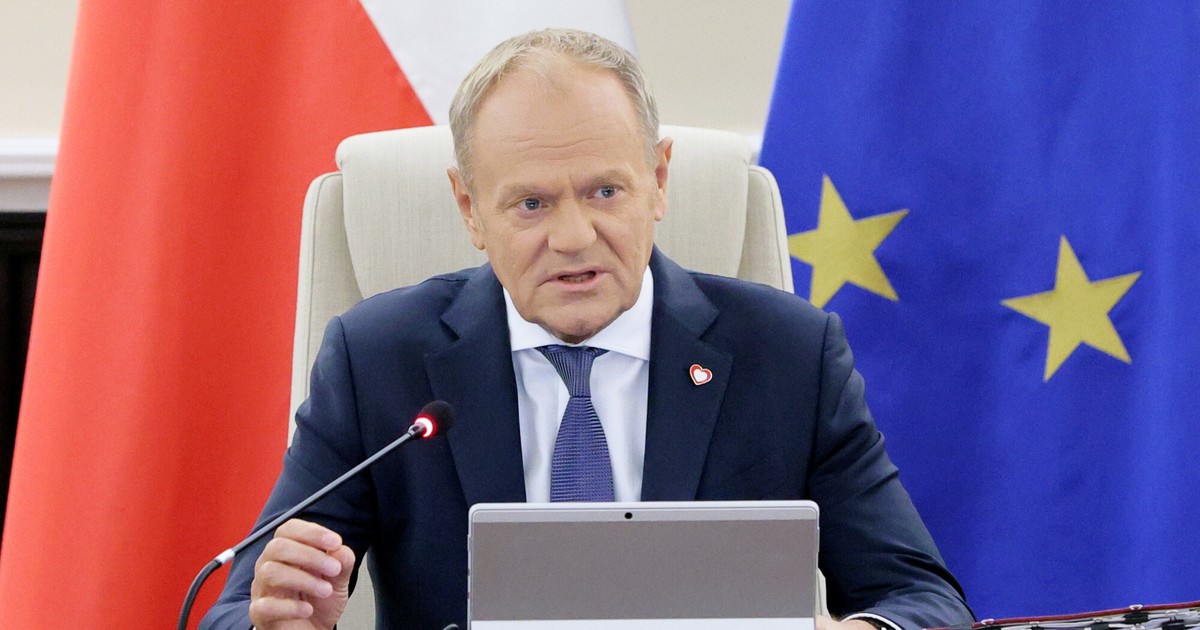
The NECP was adopted by the Council of Ministers. Now the document will be submitted to the European Commission. This provides the basis for completing the infringement procedure initiated against Poland due to delays resulting from the complexity of the document and multi-stage arrangements. The deadline for submitting an updated plan was June 30, 2024.
“The National Energy and Climate Plan shows how much we have already achieved in the Polish energy sector, but also how much more we can do. A wisely conducted energy transformation is a huge opportunity for Poland and the engine of our further development. The document prepared by the Ministry of Energy shows how to turn the ambitious goals of the Polish energy sector into specific and long-term benefits for the economy, entrepreneurs and Polish families. The adoption of the NECP by the Council of Ministers opens the way for further investments that will will increase our energy security, but also strengthen Poland's very strong position on the international market,” says Minister of Energy Miłosz Motyka.
The most important assumptions of the NECP update
- Poland's security and energy independence
According to NECP forecasts, by 2030 the installed capacity in the national power system (NPS) will increase to over 90 GW, and by 2040 it will double compared to 2025.
The implementation of the NECP will lead to successive reducing import dependence in the supply of energy raw materialsand thus reducing the costs associated with the purchase of imported fuels and the outflow of funds outside our country. By 2040, the import-export balance of energy carriers will decrease by approximately -11%. according to the WEM scenario (from over 45 Mtoe in 2020 to approx. 41 Mtoe in 2040) and by approx. -27 percent according to the WAM scenario (i.e. to approx. 33 Mtoe in 2040).
- More green and clean energy
Depending on the adopted transformation scenario, the share of renewable energy in the energy production structure will increase to 51.6-53.2%. in 2030 and up to 65.6–68.9 percent in 2040 (WEM–WAM). Wind energy on land and at sea, photovoltaics and the use of renewable gases will play a key role in this process. Natural gas will play an important role in balancing the system and ensuring security of supply, which will be replaced by decarbonized and renewable gases in the coming years.
However, in heating and cooling, the share of renewable energy sources may amount to 31.6-36.5 percent in 2030 and approx. 43.5-56.7 percent in 2040. (WEM–WAM).
- A strong impulse for the domestic economy
The development of low-emission energy in Poland may become one of the most important impulses for the national economy in the coming decades. In the case of offshore wind farms, it is assumed that the local content level will be approximately 40%. With investments of nearly PLN 274 billion in 2026-2040, this means that approximately PLN 110 billion will remain in the wallets of domestic entrepreneurs, and therefore in the domestic economy.
Onshore wind energy is even more important for the economy. Thanks to the higher share of domestic suppliers and services, local content in this segment may amount to approximately 60%. With investment outlays of approximately PLN 210 billion, this will translate into over PLN 125 billion of value generated in Poland.
The development of nuclear energy will also be an important element of the transformation. With the assumed local content level of 40%. for the first reactor (45% for the second and 50% for the third) and investment outlays amounting to approximately PLN 223 billion, the domestic economy and domestic enterprises can obtain an additional approx. PLN 100 billion.
Energy transformation is not only about the scale of investment, but above all a real impulse for the industry, labor market, competences and innovation. The benefits include the development of domestic manufacturing and service companies, the creation of new jobs and the increase in added value throughout the economy.
- Stable power sources
In the face of aging manufacturing infrastructure and rapidly growing demand for energy (stimulated, among others, by the electrification of sectors, the development of data centers and technologies using artificial intelligence), it is of great importance to have stable and flexible sources of available power.
Natural gas it will be a tool for balancing the sector in the transitional period, in which renewable energy sources have not yet achieved the flexibility to function independently in the network.
Nuclear energy will be developed as a stable and zero-emission energy source supporting the security of energy supplies in the coming decades. The launch of the first units of the nuclear power plant and small modular reactors (SMRs) in the second half of the 2030s will provide approximately 40 TWh of energy generated at the base of the system.
According to the NECP update, the energy system will aim to increase the installed capacity from over 77 GW (March 2026) to approximately 128-156 GW (WEM-WAM) in 2040.
It is forecast that by 2040, renewable energy capacity may increase to approximately 84-92 GW (more than the current capacity of the entire National Power System). In 2040, renewable energy capacity will account for almost 60%. total power installed in the system. Wind power will be important, the total capacity of which may reach up to 47 GW (WAM), with further potential for growth. The share of renewable energy sources in electricity production will increase to approximately 52-53%. in 2030 and to approx. 66-69 percent in 2040 (WEM–WAM).
- Strong and modern energy networks
The expansion of transmission and distribution networks and the development of energy storage facilities will enable the integration of the growing share of renewable energy sources and increase the resilience of the energy system. At the same time, it is planned to modernize and develop heating systems, including their decarbonization and integration with renewable energy sources and heat storage, which will contribute to increasing the efficiency and security of heat supplies.
- Economic development of the country
The implementation of NECP will support economic growth, creation of new jobs and gradual reduction of energy bills. Energy production costs may fall by approximately 8%. by 2030 and by 18 percent by 2040 compared to the level of 2025. This will strengthen the competitiveness of Polish enterprises and bring benefits to individual customers.
- New opportunities for mining regions
The transformation of coal regions will be implemented in a fair and socially responsible manner. The NECP provides for support for mining areas, protection of jobs and the development of new industrial competences.
- Decrease in energy poverty
By 2040, the percentage of households spending more than 10%. energy income may fall by 30-55%, depending on the transformation scenario. In turn, the percentage of households whose income is below the subsistence level after paying energy bills will decrease by approx. 31-55% by 2040. depending on the adopted variant – WAM or WEM.
- Improving the quality of life and health
By 2030, greenhouse gas emissions will decrease by 43-53%. by 2030 and up to 61-75 percent by 2040 (WEM–WAM). At the same time, a significant reduction in PM2.5 and PM10 suspended dust emissions is expected, which will translate into improved air quality and reduced smog, and, consequently, into a significant reduction in the negative impact of pollution on the health of Polish women and men.
The article is being updated