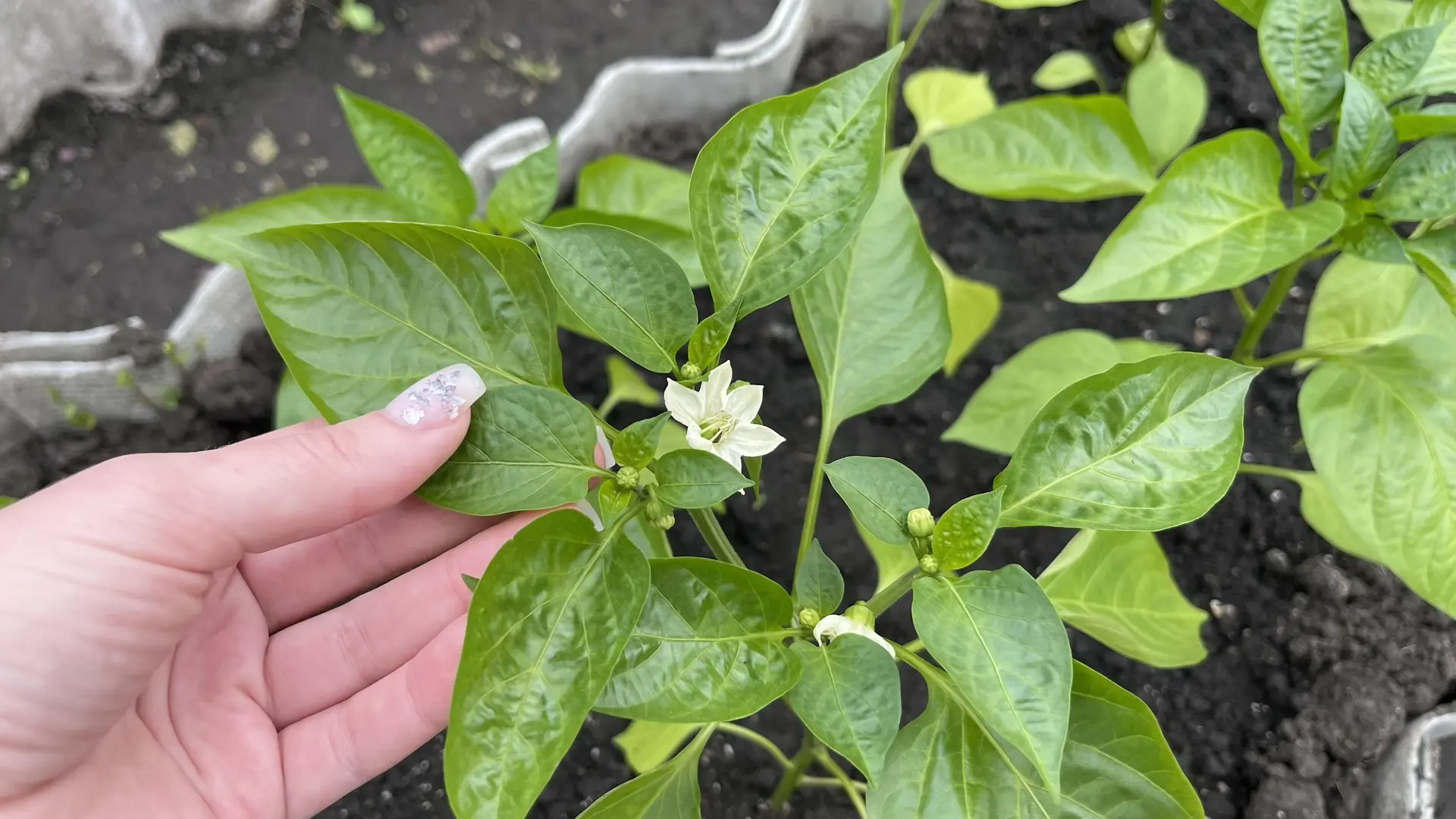
June is a decisive month for pepper: the plant grows greenery, forms buds and begins to bloom. If you choose the wrong fertilizer or miss the deadline, you can end up with lush tops without a single fruit. The root system of pepper is compact; it does not obtain food from deep layers of soil.
What is phase feeding of pepper
Phase feeding – this is the application of fertilizers strictly during a certain period of plant growth: nitrogen – for growing greenery after planting, phosphorus and potassium – for budding and ovary.
Pepper absorbs substances through the leaves 8–10 times faster than through the roots, so spraying works like an ambulance.
What to feed peppers in June
Assess the development phase of your plants and select fertilizer:
First feeding (10–14 days after planting) – nitrogen and potassium for growth and rooting: urea (1 tablespoon per 10 liters of water), infusion of chicken manure (1:20) or mullein (1:10). Water only on damp soil.
Second feeding (when buds appear) — phosphorus and potassium for flowering and ovary: potassium monophosphate (10–15 g per 10 l of water), superphosphate with potassium sulfate (1 tablespoon per 10 l). There should be a minimum of nitrogen.
Folk remedies – ash (200 g per 10 liters of water, leave for 24 hours), banana peel (infusion for 3-4 days), herbal infusion of nettle (1:10 after 5-7 days of fermentation).
How and when to feed
Do not feed more than two or three times a month. Overfeeding is as harmful as starvation.
- 10–14 days after planting, pour nitrogen-potassium fertilizer under the root (0.5 liters per bush). Not earlier – let the plant take root.
- With the appearance of the first buds, switch to a phosphorus-potassium mixture. Add foliar fertilizing with boric acid (1 g per 10 liters of water) – spray one leaf at a time in the evening.
- At the end of June, during active flowering, support the ovary with root ash or potassium monophosphate.
- Water 2-3 times a week with warm water (not lower than 20°C) at the root, in hot weather – every other day. Mulch the beds with grass to retain moisture.
Conclusion
Pepper does not forgive mistakes: excess nitrogen will give lush leaves without fruit, and cold water will kill the buds. Feed in phases: nitrogen after planting, potassium and phosphorus during budding. And then the harvest will not disappoint.
Personal experience
Previously, I fed peppers with anything and got only leaves. Now I act strictly in phases: two weeks after planting I give urea, and when I see buds – potassium monophosphate. Result: the bushes are strewn with fruits, and not just turning green. Ash and herbal infusion are my constant helpers in June.