After the 700,000,000 euro fines given to the banks by the Competition Council, another bank counterattacks: “We express our strong disagreement!”

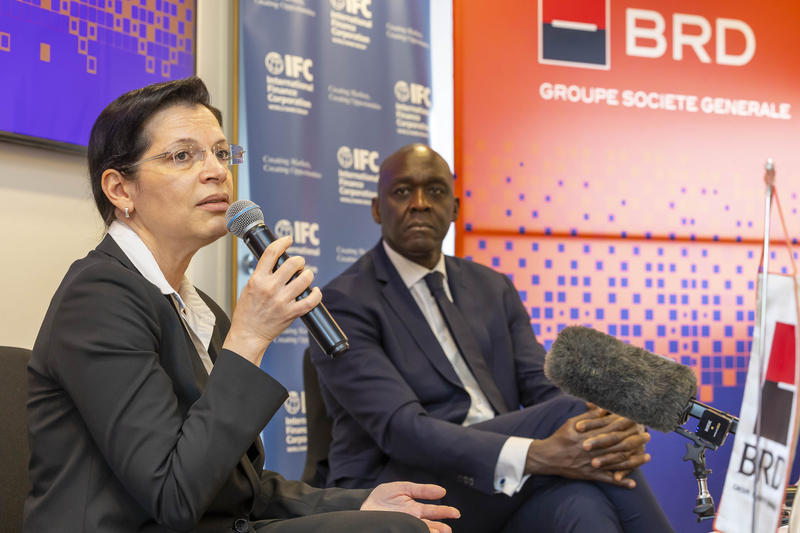
The management of BRD, a bank that had been fined over 412 million lei by the Competition Council, conveyed its “firm disagreement” with the conclusions of the investigation.
BRD has taken note of the Competition Council's public announcement regarding the decision in the investigation regarding the mechanism for establishing the ROBOR rate in relation to the 10 participating commercial banks and expresses its firm disagreement with its conclusions, the credit institution's press release states.
The bank will use all available legal means to challenge the Competition Council's decision, according to the press release sent by BRD.
- Bank executives appear as negative characters in an unprecedented advertising campaign. It runs online, on social networks, but also on websites. In forged images, bankers are violent.
“The BRD strictly followed the rules and procedures governing the ROBOR rate, acting within the letter and spirit of the regulations in force. Surprisingly, we find ourselves in a situation where strict compliance with the regulatory framework has paradoxically led to a sanction.
We are confident that, after going through all the legal stages, the competent courts will fully clarify this situation, restore a correct interpretation of the applicable framework and exclude the hypothesis of any violation of the competition regulations”, the document also states.
At the same time, the reputational impact generated by this decision affects the perception of the entire banking system in Romania, at a time when its stability and ability to finance the economy are essential, the authors of the release conclude.
The first reaction came from the largest Romanian bank, Banca Transilvania, whose CEO, Omer Tetik, accuses the Competition Council of not understanding how the financial system works and of encouraging populism
Exchange of confidential information
The Competition Council's investigation established that the sanctioned banks exchanged confidential and strategic information regarding the level of ROBOR during the fixing procedure, although the confidentiality of firm quotations during the fixing period is provided for both by competition rules and by national and European regulations.
“Specifically, during the fixing procedure, when the firm quotations should be independent, the banks coordinated their behavior according to the competitors' quotations. The independence of the quotations during the fixing period is important, even more so in the case of maturities for which the volume of actual transactions is reduced (3, 6, 12 months), the average of these transactions cannot be used as a relevant indicator”, says a press release from the Competition Council.
Thus, a higher level of the ROBOR index was established, which benefited creditors but directly affected consumers and other debtors whose contracts are related to ROBOR.
“We have a set of evidence that must be analyzed in conjunction. The transparency of transactions is beneficial in some situations. The problem arises, however, in the case of firm quotations sent during the fixing period, which must remain confidential, an essential aspect in the case of maturities where the volume of actual transactions is reduced. Considering the large volume of loans, variations in the size of a fraction of a percentage can generate substantial amounts,” said the president of the Competition Council, Bogdan Chirițoiu.
An investigation that lasted almost four years
The Council launched the investigation at the end of 2022 and also went through the mandatory approval stage provided for in the cooperation mechanism with the European Commission, given the finding of the violation of the TFEU.
“In order not to disrupt the functioning of the market, the banks have a period of 60 days from the receipt of the reasons for the sanctioning decision to present plans of measures through which they will eliminate the anti-competitive practices. These plans will be approved by the Competition Council, thus providing the banks with legal certainty”, the Council states
ROBOR is the reference rate of the interbank money market that influences the calculation of interest for loans granted to legal entities (including state entities, such as local public authorities), but also the calculation of interest for natural persons who have loans granted before 2019 and have not applied to switch to IRCC.
Chirițoiu advertises debates that are “not usual”
“Our decision did not concern the regulations or policies in the banking sector, but is limited exclusively to the behavior of the banks during the ROBOR fixing period and is, of course, based on the finding of the violation of the competition rules, not of other norms. The sanctioning decision was taken unanimously by the Plenary of the Competition Council. The extensive public debates prior to the adoption of the decision are not usual and have generated confusion, which is why clarifications are needed,” said Bogdan Chirițoiu, the president of the Competition Council.
The Council's decision is enforceable, and the collection of fines is to be done by ANAF. On the other hand, the decision can be appealed to the Court of Appeal within 30 days from the communication of the reasons.
A report criticized by Governor Isărescu
On April 20, almost two weeks after the Competition Council had notified the investigated banks of its conclusions, the governor of the National Bank of Romania, Mugur Isărescu, said that he had read the Competition Council's report (“it took me a weekend, because it has 800 pages”), which starts well, correctly explains what ROBOR is. But then he comes to the conclusion that the banks have cartelized, ignoring that the money market must work in a coordinated way, because otherwise the monetary policy of the BNR is not transmitted to the economy.
“And if ROBOR was rigged up by some 'tricksters', why did it drop 2% recently?” Did they also drop it? This discussion with Roborul has reappeared and is troubling Romanian society, and I realize how dangerous this whole discussion is,” Isărescu said.
He said that the BNR and the banks speak a “bird language” that the public does not understand, and television amplifies the confusion.
“The monetary or interbank market is essential. Monetary policy is transmitted through it. We don't sit there in an ivory tower and decide to raise the interest rate. Well… And what if we raised it, if that doesn't go into the economy? And how does it go into the economy? Through the money market!”, explains Isărescu.
In a market economy, the Central Bank does not give loans to the population and companies, this is the role of commercial banks, clarified the governor of the BNR.
“Well, if it is not understood that the monetary market is the one through which the monetary policy is transmitted in the economy, it means that I, as a veteran, should do my self-criticism. But leave the ROBOR, because we cannot function otherwise. From morning to evening the poor ROBOR is rolled over and made the great enemy of Romania”, Isărescu complained.
“The banks have jumped the horse” – Isărescu's statement before the ROBOR investigation
The Competition Council's investigation started in the fall of 2022, following a statement made by the BNR governor himself.
Mugur Isărescu stated in August 2022 that the banks “jumped the horse” with the increase in the ROBOR index, claiming that financial institutions overreacted and raised interest rates above the level of the monetary policy rate.
“The banks jumped the horse and took the ROBOR above the key interest rate. They overreacted. The tendency of banks and traders to look pessimistically at the future was clear,” declared on August 9, 2022, BNR Governor Mugur Isărescu on the occasion of the presentation of the report on inflation.