The bells ring solemnly. Newspapers are talking about the end of a conflict that has lasted almost sixty years. Diplomats exchange greetings.
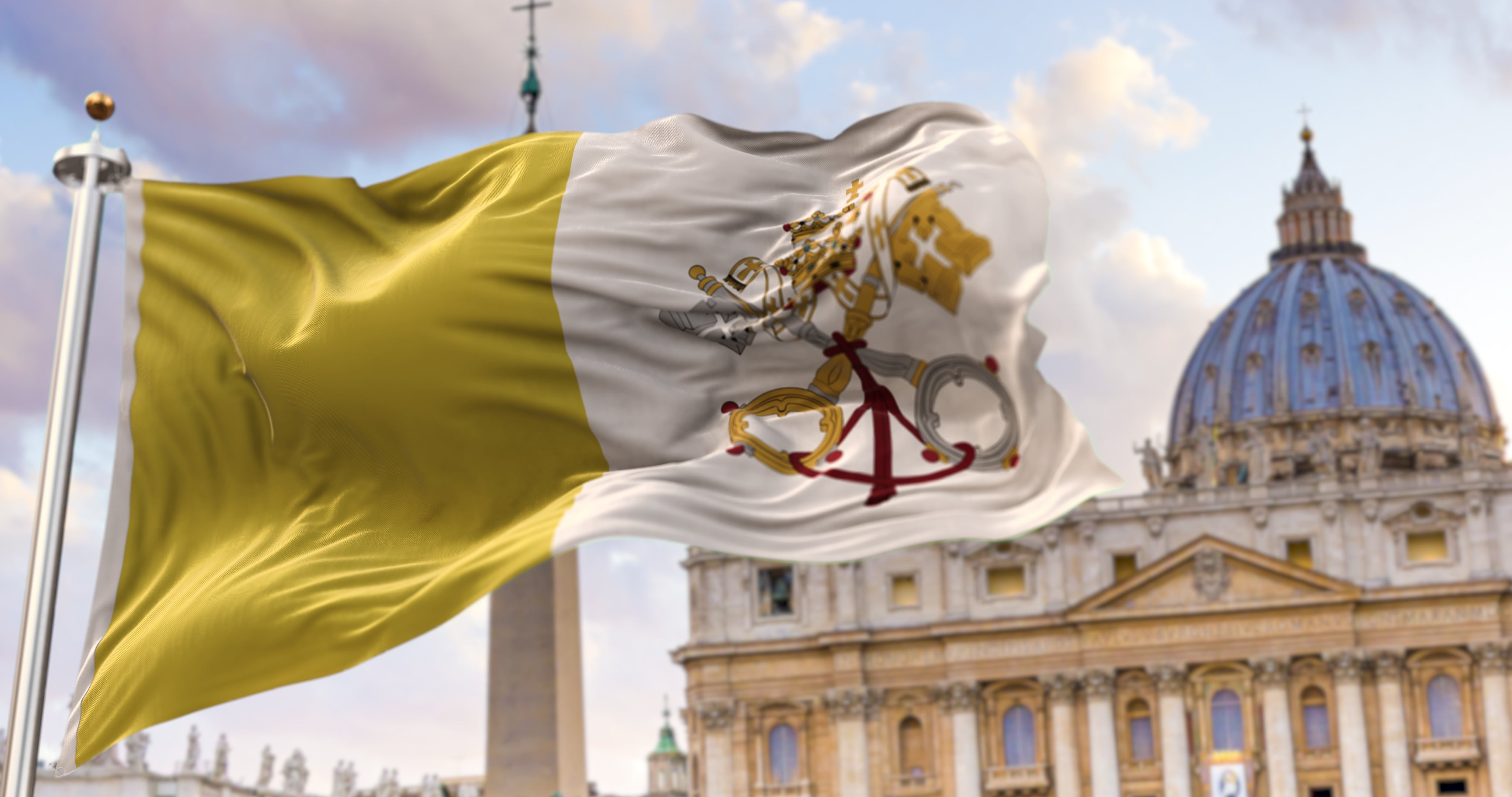
The calendar points to June 7, when the Vatican officially acquires the status of an independent state with the ratification of the Lateran Treaty by the Italian Parliament.
But behind the religious ceremonies and diplomatic smiles hides a financial agreement that will forever change the history of the Catholic Church.
A huge salary package, a brilliant fund manager and a series of investments will transform the smallest state in the world into an economic powerhouse, with real estate, shares and assets in every corner of the planet, writes the Greek press.
Behind the official announcements lies a story that is not about theology or diplomacy. It's about money.
“Prisoners at the Vatican”
To understand what was happening in 1929, we have to go back to 1870.
The troops of the new Kingdom of Italy enter Rome and end the Papal State, a territory that had been under the control of the Popes for more than a millennium.
The Pope loses almost all his territories. He refuses to recognize the Italian state and declares himself a “prisoner in the Vatican”.
For nearly six decades, the Holy See and Italy have lived in a state of cold war. Neither side is backing down. The Popes do not abandon their claims, and Rome has no intention of returning the lost territories.
Until Benito Mussolini shows up. The dictator knows he needs the support of millions of Catholics. Reconciliation with the Church can give his regime a legitimacy that no decree can provide.
Thus began the negotiations that would lead to the Lateran Treaties.
The check that changes history
Most people remember that the agreement recognizes the Vatican as an independent state.
Fewer people remember the financial aspect, and yet it is probably the most important.
Italy agrees to pay the Holy See 750 million pounds in cash and another 1 billion pounds in government bonds as compensation for the loss of the Papal State.
An astronomical amount for that time. Suddenly, an institution that had been facing financial difficulties for decades found itself with a huge fortune in its hands.
The question is what will he do with this money. The answer will determine the future of the Vatican for the next century.
The man who thinks like an investor
Pope Pius XI is looking for someone who can manage the huge capital.
He finds it in the person of Bernardino Nogara. The banker and the economist are not like traditional church property managers. Think like a Wall Street investor.
When it takes an action, it sets a condition. Investment decisions will not be determined by religious or political criteria. They will be determined solely by performance.
It's a revolutionary idea and it's proving to be a goldmine.
Nogara starts placing funds in banks, insurance companies, industries, utilities and international markets.
He buys properties in prime locations in Rome, expands to Paris and then London. The Vatican begins to function not only as a religious organization, but also as an institutional investor with global reach.
The most valuable privilege is not money
The real value of the Lateran, however, does not lie in compensation.
It is in sovereignty. The nascent state occupies only 44 hectares. It is the smallest in the world. However, it has something that cannot be bought. Independence with its own legal status, its own administration, diplomatic immunity and a special tax regime.
This framework allows the Holy See to organize the management of its property in a unique way.
In the following years, the structures that evolve into the modern economic machine of the Vatican are created.
Later, the Institute for Works of Religion, known internationally as the “Vatican Bank”, will also come.
A bank that will be at the center of financial scandals, mysterious deaths, political conflicts and countless conspiracy theories.
The empire of 44 hectares
Almost a century later, the tiny state still wields an influence disproportionate to its size. It has diplomatic relations with dozens of countries.
It manages vast real estate assets, invests in international markets and remains one of the most unique financial institutions on the planet.
But everything starts with the agreement of 1929. From a historical defeat that turns into an economic opportunity. From a compensation that is not spent, but invested.
And from a lesson that markets know well to this day: real power does not always lie in the size of a state, but in its ability to convert political dominance into economic power.
The Vatican lost a territorial empire. But he gained something that turned out to be much more valuable.
An economic empire that still endures nearly a century later.