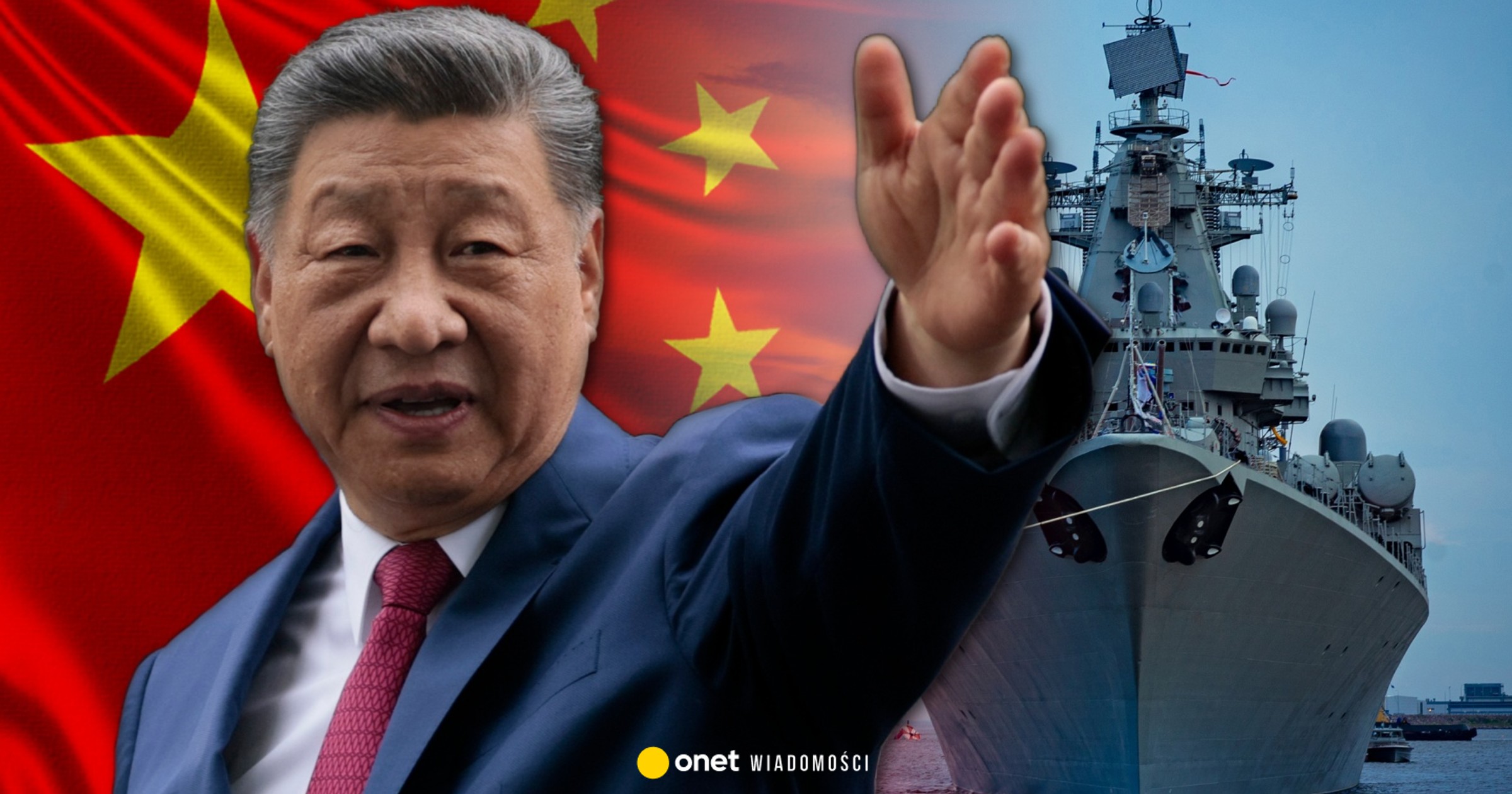
According to a cable published by China's state-owned Xinhua news agency, the operation began on Saturday, June 6. Beijing says the mission is intended to demonstrate absolute authority over the disputed waters.
“The aim of the operation is to comprehensively enforce China's jurisdiction over maritime law, strengthen patrol capabilities as well as control traffic in key water areas, ensure maritime transport security and protect national interests,” reads the official state press release.
China sends a warning. Beijing says the operation is “necessary” because of increased cooperation between U.S. allies. Beijing does not particularly like the recent moves of countries cooperating with the Americans.
Chinese authorities condemned “the unilateral statement by Japan and the Philippines regarding negotiations on the demarcation of maritime areas east of the island of Taiwan.” They described the talks between the countries as a serious violation of China's sovereign territorial integrity and regional maritime rights.
“According to China's domestic law and international law, China has an exclusive economic zone and continental shelf in this area. In accordance with the United Nations Convention on the Law of the Sea (UNCLOS) (…) any delimitation of the waters east of Taiwan must include China as a party to the talks,” said Mao Ning, spokesman for the Chinese Ministry of Foreign Affairs, during Tuesday's press conference, quoted by the state-run Global Times newspaper.
The article continues below the video
By beginning patrols east of Taiwan, Chinese forces are effectively demonstrating their ability to monitor and potentially restrict commercial and military transit along the island's Pacific coast. This area is a key zone in terms of the island's defensive maneuvers and supplies from abroad.
The naval maneuvers initiated by China are another element of the game surrounding Taiwan's status, which has recently gained momentum. Taiwanese President Lai Ching-te, on the occasion of the recent second anniversary of his presidency, stated that “foreign forces” cannot dictate the future of the democratic island. He stressed that Taipei continues to increase its independent defense spending to deter a potential invasion from China.
The Taiwanese parliament recently passed a $25 billion defense spending bill. (over PLN 92 billion). This money is to be used to purchase technologically advanced American weapons, including loitering ammunition and long-range defense packages.
Taiwan as a “bargaining chip”
However, the regional balance of power faced new complications due to changing rhetoric in Washington. During a recent state visit to Beijing, U.S. President Donald Trump publicly suggested that future U.S. arms sales to Taiwan could be used as a strategic “bargaining chip” to obtain broader trade and geopolitical concessions from Chinese President Xi Jinping.
Trump also publicly warned Taipei against declaring formal independence, noting that his administration did not want to be drawn into a war taking place 9,500 miles (over 15,000 km) from the US continental borders.
While Taiwan's Ministry of Foreign Affairs has repeatedly emphasized that defense obligations under the U.S. Taiwan Relations Act remain unchanged, political analysts in Taipei warn that Washington's transactional rhetoric may encourage Beijing to engage in provocations and aggressive maritime maneuvers that limit the island's sovereignty.
I’m Ashley Davis as an editor, I’m committed to upholding the highest standards of integrity and accuracy in every piece we publish. My work is driven by curiosity, a passion for truth, and a belief that journalism plays a crucial role in shaping public discourse. I strive to tell stories that not only inform but also inspire action and conversation.