What effect will Neptune Deep have on gas prices: scenarios analyzed for the period 2027-2030

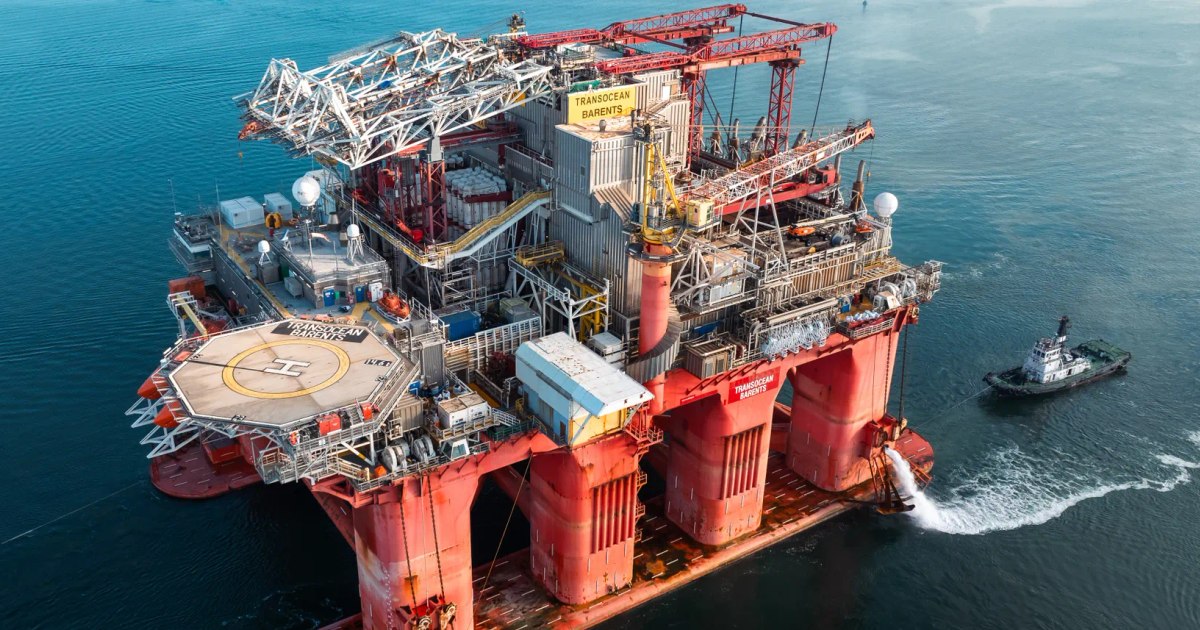
The start of gas exploitation from the Neptun Deep project, estimated for 2027, could lead to a decrease in gas prices on the Romanian market, but the effect on the bills paid by consumers is far from guaranteed, as the final price depends on a number of economic, fiscal and geopolitical factors.
Exploitation of gas from Neptun Deep could reduce the price paid by Romanians. Photo OMV Petrom
The calculations made by energy expert Dumitru Chisăliță, president of the Intelligent Energy Association (AEI) show that it is plausible that, after the entry into production of the Neptun Deep project, there will be a downward pressure on the price of gas in Romania, especially from the perspective of increasing domestic supply. In a scenario that assumes neither demand nor supply will be significantly influenced by other major factors, wholesale prices could see a reduction of around 5-20% from current levels in 2027-2028.
“Considering the available data, it is plausible that, after the start of production in the Neptun Deep project, there will be a downward pressure on the gas price in Romania, especially on the domestic supply side”shows the analysis carried out by the president of AEI.
Domestic production could increase spectacularly
The main argument in favor of cheaper gas is the significant increase in domestic production. According to estimates, Neptun Deep will start production in 2027 and add about 8 billion cubic meters of gas annually.
Under these conditions, Romania's domestic gas production could almost double by 2030, while current demand is estimated to remain around 10-11 billion cubic meters per year. A greater supply of locally produced gas could reduce reliance on imports, which are often more expensive, and put downward pressure on domestic prices.
Another advantage is the infrastructure. Romania has expanded its transport networks to be able to take over the additional volumes coming from the Black Sea. A better connected and more integrated market with export possibilities and more sources of supply can reduce logistics and transaction costs, contributing to more competitive prices.
Why the discount is not guaranteed
However, Dumitru Chisăliță warns that the simple increase in production does not automatically mean lower bills for consumers.
“The gas market does not work according to the simple logic of abundance. The gas extracted from the Black Sea will not be reserved exclusively for Romanian consumers, nor will it be sold at a “patriotic” price. It will enter an integrated European market, where producers, of course, seek the best available price”he explains.
Thus, if markets such as Bulgaria, Hungary or other states in the region offer more attractive prices, part of the Romanian production could be exported, and the domestic price will continue to be influenced by regional dynamics.
At the same time, Romania is preparing to consume more gas. New gas-fired power plants built to replace coal-fired capacity will require significant volumes of fuel. If all announced projects are put into operation, domestic gas consumption could increase by around 25% by 2030.
“In other words, a good part of the promised surplus is already sold before it is extracted“, emphasizes the president of the Intelligent Energy Association.
Taxes and regulations may negate some of the benefits
Another important factor is the fiscal policy and regulatory framework. Taxes, royalties, offshore legislation and the operating rules of the gas market directly influence the costs borne by producers and, implicitly, the final price.
If the state maintains or introduces additional taxes on offshore gas, production costs will increase and price relief could be limited.
In addition to internal factors, the gas market remains strongly influenced by international developments. The price of liquefied natural gas (LNG), security of supply, European energy policy and the geopolitical context continue to play a decisive role.
Neptun Deep could bring over 20 billion euros to Romania's budget. Virgil Popescu: “State revenues increase automatically”
Even if the gas extracted in Romania has competitive costs, a high level of import prices or little competition in the market may prevent a significant decrease in domestic prices.
The final bill depends on much more than the price of gas
AEI's analysis draws attention to an aspect often ignored in public discourse: the price of gas as a commodity is only part of the bill paid by consumers.
“Then there is the problem that politicians constantly ignore: the price of gas represents only part of the bill paid by the consumer. Transportation and distribution rates are increasing, taxes are changing, and the costs imposed by regulations are becoming more and more important. Even if gas as a commodity becomes cheaper, the final bill may remain at the same level or even increase,” warns Dumitru Chisăliță.
Thus, even if the wholesale price will decrease, the benefit to the final consumer may be much less than the production figures or wholesale market prices suggest.
Three scenarios for the year 2030
The economic models made by the Intelligent Energy Association for the period 2027-2030 indicate three scenarios regarding the evolution of the final gas price for consumers.
In the optimistic scenario, the wholesale price could drop to 27-32 euros/MWh after the Neptun Deep project goes into production. In this case, household consumers could pay approximately 280-300 lei/MWh, about 10% below the current capped level.
In the base scenario, the final price is estimated at 320-340 lei/MWh.
In the pessimistic scenario, consumers could end up paying between 350 and 380 lei/MWh.
The government approved salary increases at Romgaz by memorandum. How the decision is motivated
Greater energy security, but not necessarily cheap gas
The conclusion of the analysis is that the gases from the Black Sea primarily represent a strategic advantage for Romania, by reducing dependence on imports and increasing energy security.
“Gas from the Black Sea does not guarantee much lower bills. They offer Romania more energy security, reduce dependence on imports and can generate important revenues for Romania's economy and budget. But there is a huge gap between the strategic advantage and the direct benefit for the consumer“, says Dumitru Chisăliță.
In his opinion, the real stake is not whether Romania will extract gas from the Black Sea, but who will benefit from the economic value generated by these resources.
“The real question is not whether Romania will extract gas from the Black Sea. The real question is who will benefit from the value created by these resources: consumers, the Romanian economy or just the state budget and foreign companies”concludes the president of AEI.
He warns that, in the absence of policies that transfer to consumers part of the benefits of the new production, Romanians could find in a few years that they live in a country that produces more gas than ever, without their bills being significantly lower.
“If the state continues to treat energy as a source of additional taxes and revenue, Romanians could discover in 2028 that they live in a country that produces more gas than ever, but where the bills are not much lower. And then the promise of cheap gas from the Black Sea will fall into the same category as many other energy promises, good for election campaigns, but unrelated to the reality in the consumer's pocket”, concludes Dumitru Chisăliță.