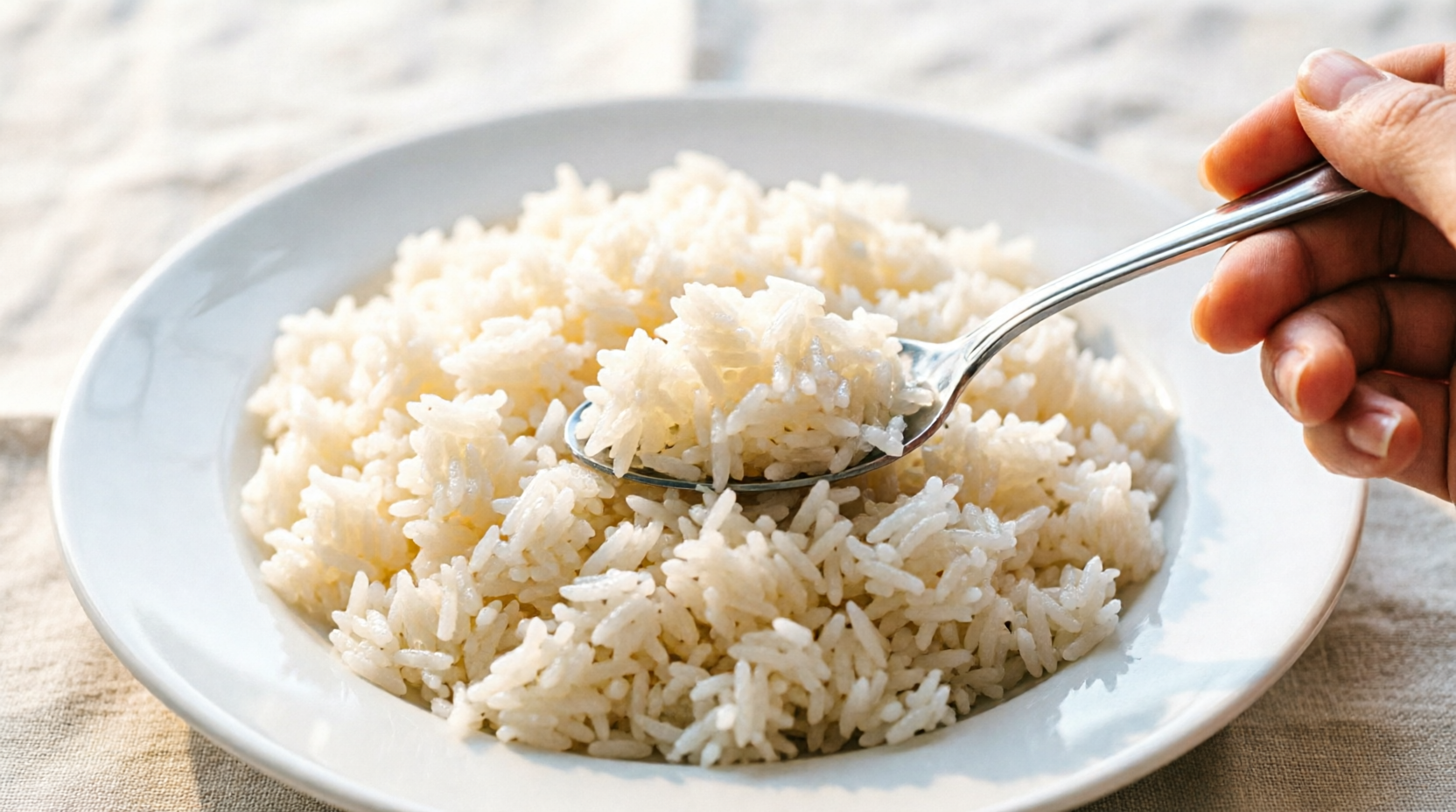
When cooking rice, it is easy to end up with sticky porridge or dry lumps instead of a side dish. Most often the reason is starch, water temperature and steam. These three factors either help the grains stay intact or hold them together. Let's look at what to do and how to do it in order.
Rinse rice with warm water to remove stickiness
Starch dust is the smallest particles of starch on the surface of grains. When cooked, they brew and stick together the rice.
Cold water washes away only visible dirt, but not starch. Warm water (approximately 55–60°C) causes the surface starch to swell and lose its adhesive properties. The rice ends up being crumbly and does not boil into porridge.
Important! Do not rub the grains too hard to avoid breaking them. Just rinse gently in warm water until it becomes almost transparent.
Place rice in boiling water
If you put rice in cold water and only then put it on fire, the outer layer of the grain will swell too quickly and crack. The inner part remains dense. As a result, the grains burst, the starch comes out, and the rice sticks together.
Place the rice in already boiled water or pour boiling water over it. This way the grains heat up evenly, retain their shape and do not burn to the bottom.
Do not stir the rice while cooking and keep the lid closed
Rice is cooked not only by water, but also by steam. When the grains lie still, natural channels for steam to escape form between them. If you start mixing, these channels are destroyed, the grains clump into a ball and begin to stick to the walls, reports “In the Garden of Valentine” (18+).
Which rice to choose for a crumbly side dish
- Basmati and Jasmine (long grain) are crumbly in themselves, rinsing with warm water is enough.
- Regular short-grain rice is more sticky; it is better to rinse it especially thoroughly and with warm water.
- Arborio (for risotto) – specially very sticky, not suitable for a regular side dish.
Conclusion
To make the rice crumbly and not stick together: rinse it with warm water, pour it into boiling water and do not stir with the lid closed. These are the three main rules without unnecessary complications.
Personal experience
For a long time I didn’t understand why my friend’s rice was always perfect, but mine was always porridge. It turned out that she heated the water for rinsing, and I used ice water from the tap. Since then, I only wash my rice warm – and the difference is immediately visible.