
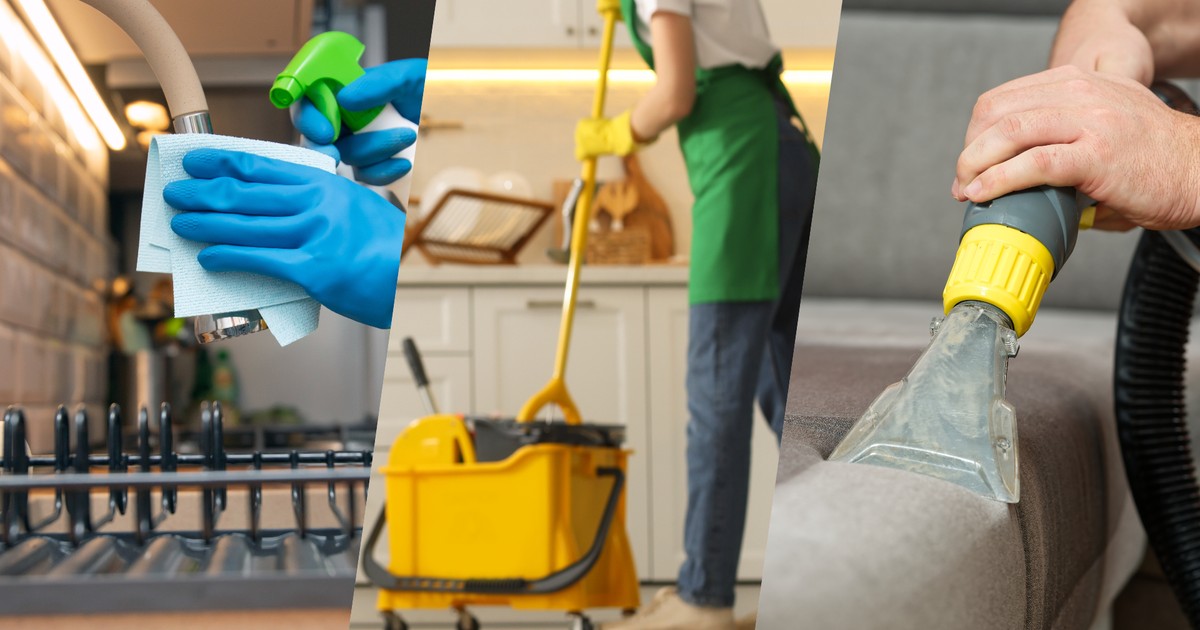
Of course, there's a catch: cleaners wear cameras on their heads that record everything from a first-person perspective as they wash dishes, mop the floor, or fold laundry. These recordings are transformed into training data for AI labs and robotics companies.
Before last week, few people had heard of shift. But then their promotional video went viral, reaching over 8 million views. The first 250 cleaning sessions were purchased almost immediately. “We were trying to serve thousands of people who wanted to book the service,” Harry Kilberg, Shift's US general manager, tells Business Insider.
The most valuable currency: your data
Shift is part of the growing competition for real-world data as AI companies move from chatbots to machines that are expected to operate in homes, warehouses and factories. Altman himself announced that robotics is the next big development area for OpenAI, with Nvidia, Meta and Tesla significantly increasing their efforts in this field.
Kilberg, who appears in the promotional video, said he expected such interest. “We knew this idea could change the world, so we thought it would go viral,” he admits.
Designing the future labor market
Shift is a consumer-facing brand owned by microaga, a research laboratory founded last year in the so-called hacker house in Munich. The German-based company declares that it is working on “end-to-end physical AGI”, i.e. general-purpose artificial intelligence for machines that can operate in the real world. Microagi was founded by Bercan Kilic and Yoan Iliev, former aerodynamics engineers in Formula 1, and Anton Poletaev, a former researcher at the Alan Turing Institute.
According to Kilberg, shift already operates in 15 countries and has 14,000. operators collecting data from the real world. He describes the company as a platform “designed to accelerate the transition from a work-based economy to one where everyday goods and services become more accessible and widespread.”
Kilberg admits that Robots capable of reliably performing household chores are still a distant future. Until then, he says, people can make money by providing the examples — or data — that these systems need to learn.
Read also: BMW introduces a revolutionary solution. Humanoids will replace humans
How to train a robot
This data has become one of the biggest challenges for start-ups and large technology companies that want artificial intelligence to work not only in chats, but also in the real world.
Language models learn from huge amounts of text and images from the Internet. Since no similar data set exists for robots, the industry is trying to create one from scratchpaying temporary workers to record tasks that could be performed by machines in the future.
The offer of free cleaning raises an obvious question: is it worth it?
“The economics of this are better than you might think,” says Kilberg. Microag's proprietary technologies process data in such a way as to significantly improve its quality, so that it can be sold at a higher price to AI laboratories and robotics companies, he explains. Faces and screens are automatically blurred to anonymize data, and audio is not recorded. microagi also uses this data in its own research.
Read also: Autonomous taxis in Europe. A pilot program is launched
A rash of AI trainers
Kilberg says the inspiration to launch the project came from early users who were already recording themselves doing household tasks and wanted to do it more often.
— They started hanging notices in their apartment blocks, offering to clean the house for their neighbors because we covered the costs — Kilberg reports.
Others began stocking shelves in local shops or helping out at eateries, recording their work while doing so. Kilberg declined to say how much he was paid to record himself performing his duties.
New York is just the beginning. Kilberg announces that Shift plans to expand throughout the United States and expand the offer of free or subsidized services beyond cleaning – to include cooking and plumbing services.
Read also: Chinese giants reach for people from OpenAI and Google. This is a new strategy in AI
The race for real-world data
Shift fits into the growing market of data from the physical world. Scale AI, Turing, and micro1, which provided data during the chatbot boom, have also started acquiring real recordings. The goal is to close what Ken Goldberg of the University of California, Berkeley, called the “100,000-year data gap” — the idea that robots lag far behind chatbots because they lack enough real-world examples to learn from.
Read also: Anthropic is preparing its stock exchange debut. OpenAI is watching from the sidelines
The more services shift offers, the more valuable its recordings become. AI labs and robotics companies need data from a variety of tasks and environments so that robots can learn to cope with an unpredictable world.
Shift also focuses on geographical diversity. Kilberg emphasizes that the company operates in countries where few people collect this type of data, including: in Bulgaria, Georgia and South Africa. He adds that it has gained particular popularity in Turkey.
The above text is a translation from American edition of Business Insider


