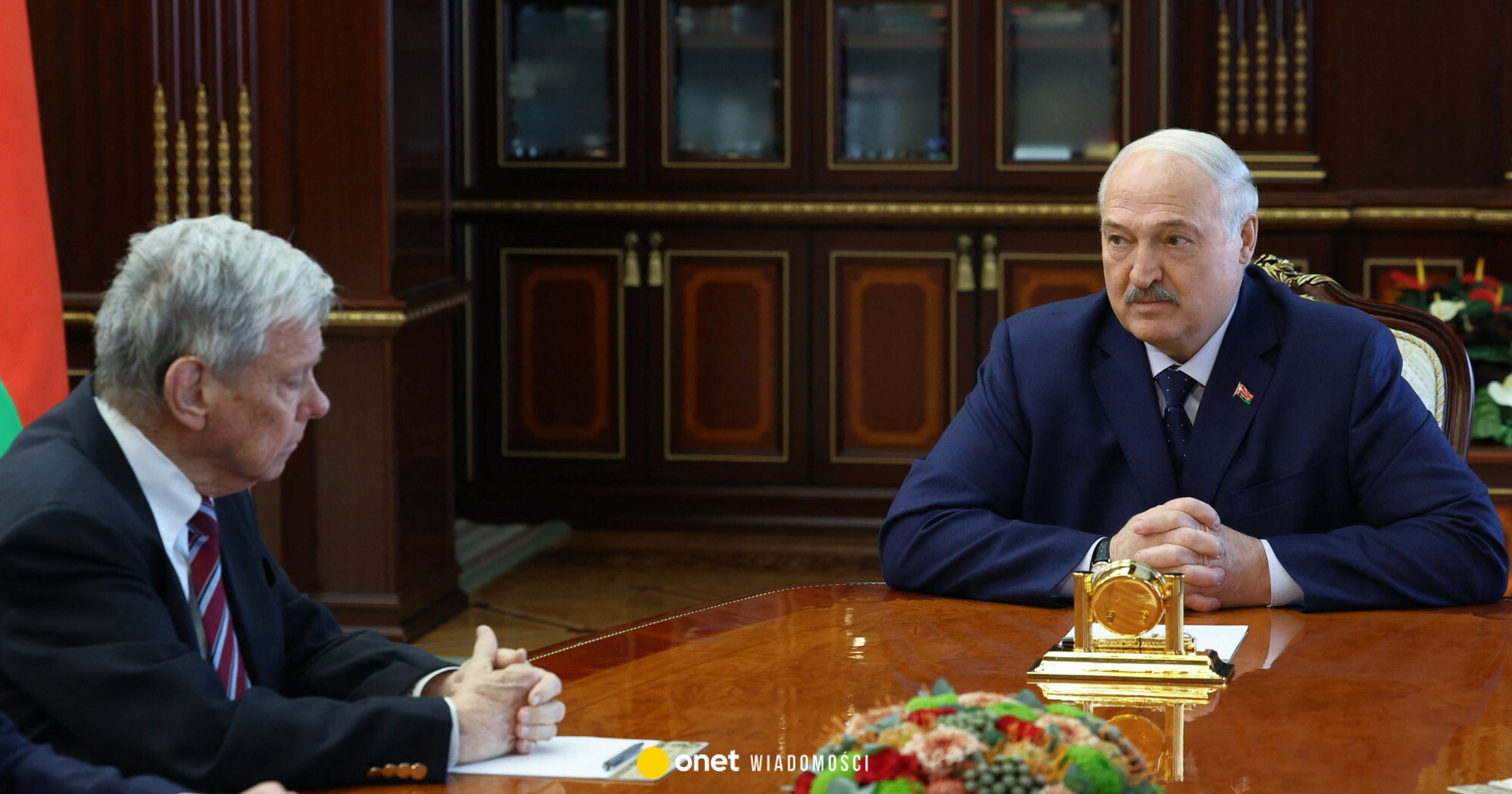
In recent months, some leading representatives of the Belarusian opposition in exile have suggested that the West should re-establish contacts with the dictatorial regime of Alexander Lukashenko. This idea is not at all marginal — he was publicly supported by, among others, Maryja Kalesnikava and Siarhiej Tsikhanouski, as well as recognized experts such as Artem Szrajbman.
It is difficult to understand what is driving this change of approach, which presents Lukashenko not as an illegitimate dictator who must be overthrown, but as a reliable partner. It is possible that groups of Belarusian emigrants are trying to regain prominence in the country and attract the attention of donors by appealing to the widespread fear of ongoing repression – especially in the context of the fate of political prisoners.
“Stockholm syndrome” will not help overthrow Lukashenko
There are currently over 800 political prisoners in Belarus. Although several hundred people were made redundant in 2025–26, the number is still there three times higher than in the entire USSR in the mid-1980s.when Mikhail Gorbachev came to power. Some of these prisoners regained their freedom after the talks between Minsk and Washington, others simply served their sentences. At the same time, while some are released, others are put behind bars so that the regime has new bargaining chips.
The article continues below the video
Supporters of another reset of relations with Lukashenko believe that the current situation is a stalemate, and in response to a softening of the European position, the regime could release all remaining prisoners and distance itself from Moscow. However, taking into account the failure of previous attempts to bring Brussels closer to Minsk in 2008–10 and 2015–20, based on the same assumptions, this argument does not convince. It rather shows the lack of new ideas and the repetition of solutions that turned out to be wrong — this is just wishful thinking.
This approach is reminiscent of Stockholm syndrome. Using Lukashenko in the fight against his own authoritarian regime must be based on a logic that is difficult to find.
In fact, if this thinking prevailed, the following consequences would occur. First, the repression would continue. It is this ruthless intimidation—combined with Russia's economic and diplomatic support—that has kept the regime in power after 2020.
There are absolutely no reasons to count on internal liberalization until the government is pushed to the wall. Lukashenko's thirst for revenge knows no limits, and all members of the Belarusian diaspora dreaming of a safe return to the country should remember the dramatic story of the once famous oppositionist Raman Pratasiewicz.
EPA, Stringer / PAP
Detention of Raman Pratasiewicz at a rally in Minsk, March 26, 2017.
Secondly, from 2022 Lukashenko's dependence on Moscow's favor has increased dramatically — no normalization of Belarus's relations with the EU will give this country even the appearance of sovereignty. The Kremlin can now use Belarus' territory and airspace, its defense industry and training grounds as it wishes, without asking Lukashenko's consent. Any manifestation of disloyalty to Putin may result in his removal from power. At the same time, lifting Western sanctions against Minsk would mean savings for Moscow, because Belarus's own export revenues would allow Russia to reduce subsidies.
Thirdly, a reset of the EU's relations with Minsk would not only affect Ukraine's security and undermine confidence in Europe-Ukraine relations, but also it would contradict the foundations of Western policy towards the entire post-Soviet space. Aggression would remain unpunished, and the aggressor state, which – according to the UN definition of 1974 – is Lukashenko's Belarus, would be readmitted to dialogue before the war ends or even freezes.
And finally, the most important thing: such a signal would only embolden Moscowshowing the Kremlin that sooner or later Europe will also make concessions to them.
Stalemate is a draw. But the alternative is failure
It is worth repeating that in recent decades, the EU has repeatedly tried to establish cooperation with Lukashenko, relying only on his word, without real power to set and enforce conditions. Both Europe and, above all, Belarusians themselves paid a high price for this.
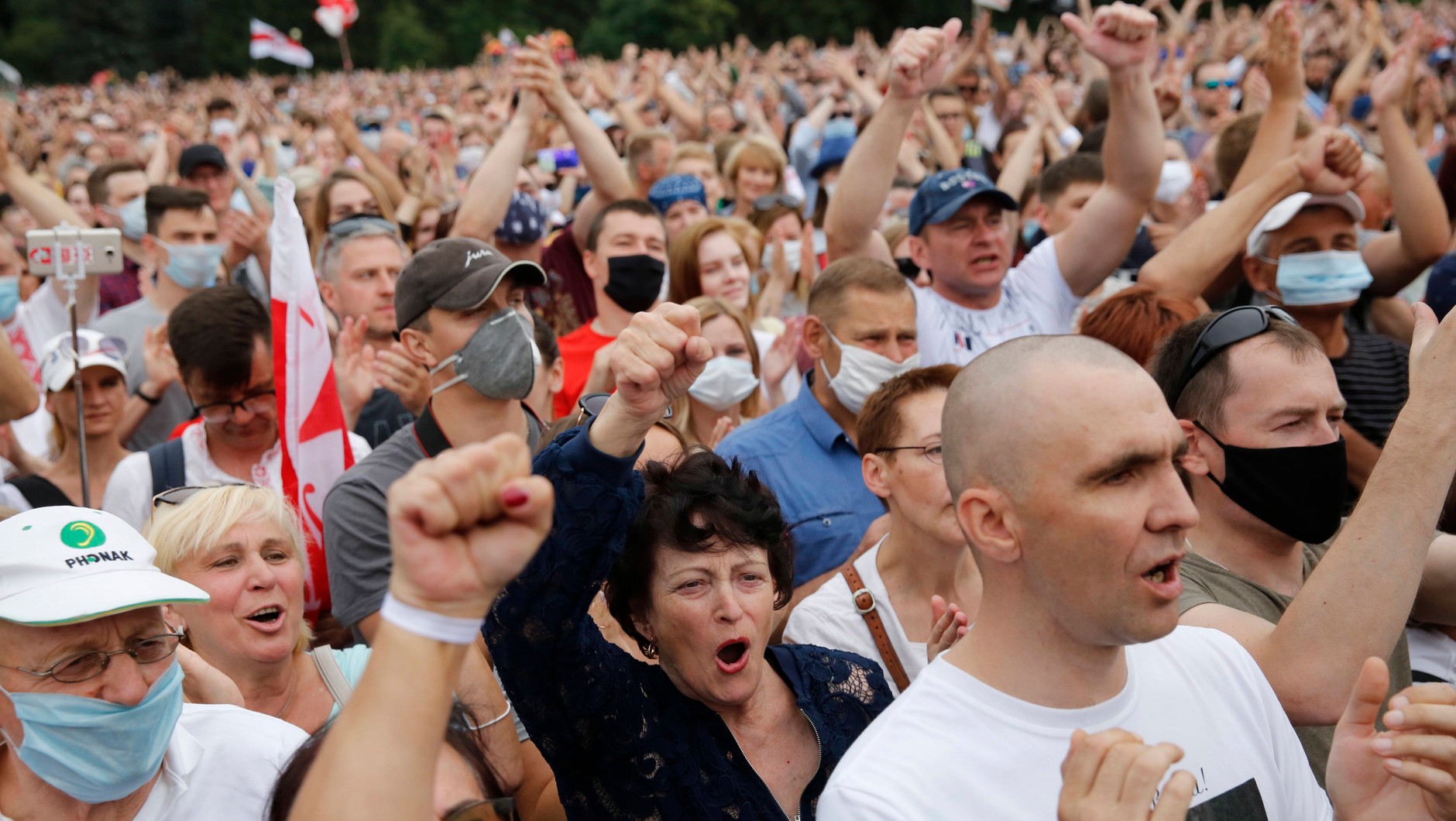
PAP/EPA/TATYANA ZENKOVICH / PAP
Supporters of Sviatlana Tsikhanouskaya during a rally in Minsk, July 19, 2020.
After the mass protests of 2020, Lukashenko proved that he does not hesitate for a moment to break off any dialogue with the West if his power is threatened. The EU has finally realized who it is dealing with – albeit belatedly – by imposing sanctions that are likely to force Lukashenko to release political prisoners and seek compromise.
This is what European policy should be based on: on taking advantage of the regime's weaknesses, rather than giving it a hand. When the regime falls, it will be the right moment to extend a hand to the new Belarus. And the Belarusian opposition in exile should remember that a stalemate is a draw, not a defeat. You may not like it, but the alternative is to give the victory to your opponent unconditionally.
I’m Ashley Davis as an editor, I’m committed to upholding the highest standards of integrity and accuracy in every piece we publish. My work is driven by curiosity, a passion for truth, and a belief that journalism plays a crucial role in shaping public discourse. I strive to tell stories that not only inform but also inspire action and conversation.