Europe's most valuable defense resource cannot be bought with money. Citizen involvement is becoming an essential element, claims a security expert

As European states increase their defense investments in the context of security tensions generated by the war in Ukraine, more and more countries in northern and eastern Europe are emphasizing a resource considered as important as weapons: citizens, writes Elisabeth Braw, a Swedish security expert and senior researcher at the Atlantic Council think tank, in The Guardian.
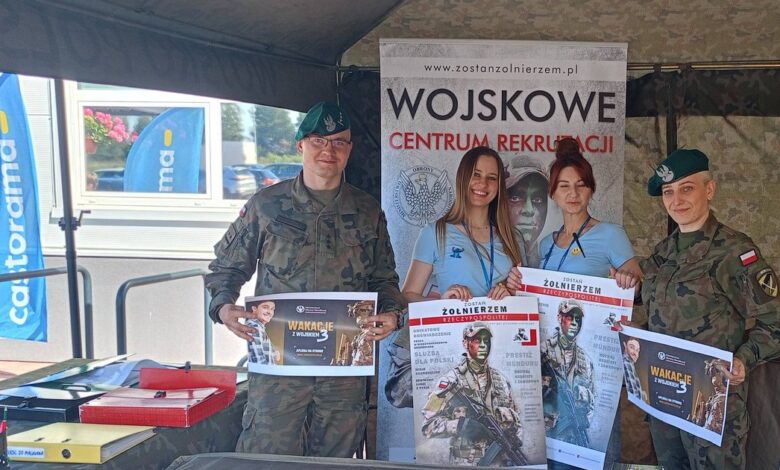
The Polish army is trying to attract as many volunteers as possible/PHOTO:X
In Scandinavia and the Baltic region, thousands of people are enrolling in civil defense programs, support units and volunteer structures that do not involve direct participation in combat but could become essential in the event of a major crisis.
Modern threats go beyond the battlefield
Security experts point out that contemporary wars no longer exclusively target military infrastructure. Energy networks, communications, IT systems, transport and public services have become strategic targets.
In the case of large-scale cyber attacks, ordinary activities such as the use of mobile phones, banking applications, public transport or digital work systems could be severely affected.
Under such conditions, the functioning of the state would depend not only on institutions and armed forces, but also on the ability of civil society to support essential services.
Sweden prepares motorcycle couriers for crisis situations
One example is Sweden, where the Voluntary Motorcyclist Corps (FMCK), an auxiliary defense organization, trains civilians for the role of couriers in emergency situations.
In the event of a major digital communications disruption, they could transport important documents, information and materials between public institutions and other organizations.
More than 250 volunteers have already completed the training program and the number of participants continues to grow.
In parallel, other Swedish citizens contribute through activities such as radio communications, service dog training or logistical support for the armed forces. Also, the Swedish National Guard, a part-time military structure, faces a higher number of applicants than available places.
Sweden is also developing an extensive civil defense model that includes professionals in fields considered critical for the functioning of society in times of crisis.
The Nordic and Baltic model
Similar initiatives are being developed in other states in the region.
In Estonia, IT specialists can attend units dedicated to cyber defense, while teenagers are trained in practical survival and emergency management skills.
In Lithuania, both children and adults are involved in programs to build and operate drones.
Poland launched the “W Gotowości” (“Always Ready”) program, through which around 400,000 citizens receive training in areas such as basic military training, crisis survival, first aid and cyber security.
Military volunteering, regulated by law. The bill passed the Senate with only one vote against. What the law provides
In these countries, national defense is increasingly presented as a collective responsibility, not exclusively the prerogative of the professional military.
Western Europe is starting to catch up
In many Western European states, citizen participation in civil defense programs is still limited. However, signs of a change in attitude are beginning to emerge.
In Germany, for example, support for the reintroduction of compulsory military service remains relatively low among young people. Instead, the majority of the population supports the idea of a year of community or state service.
More and more volunteers are also joining the Technisches Hilfswerk, the German organization that intervenes in emergency and disaster situations.
Beyond military budgets
In recent years, the defense debate within NATO has focused mainly on military spending.
At the summit of the alliance held last year in The Hague, the member states assumed the objective of increasing defense investments to the level of 5% of the gross domestic product.
European governments have launched major orders for weapons and military equipment, including from the United States.
However, experts point out that equipment is only part of the equation. Recruiting military personnel and engaging the civilian population are equally important and, in many cases, more difficult processes.
An immediately available resource
Unlike sophisticated weapon systems, which take years to produce and deliver, the human resource is immediately available.
Countries that succeed in mobilizing the skills and willingness of citizens can gain a significant advantage in terms of resilience and security.
For states like Sweden, Estonia, Finland or Lithuania, geographical proximity to Russia has contributed to the development of a culture of civic preparation and involvement. However, experts believe that the model can be adapted in other parts of Europe.
The quiet revolution in the Ukrainian army: how rudimentary volunteer units turned into elite corps
Defense in a democratic society
Proponents of these programs argue that national security should not be the sole responsibility of the armed forces.
In a democratic society, defense can include a wide range of civilian contributions: from logistics and communications support to emergency response, cyber security and critical infrastructure protection.
Not all countries will need motorcycle couriers or specialized units identical to those in northern Europe. But the experience of the Baltic and Nordic states suggests that many citizens are willing to contribute to national security when there are clear opportunities and well-organized structures through which to do so.
As the threats to Europe become more complex, many governments are considering whether investments in military equipment should be accompanied by similar investments in the training and engagement of their own citizens, emphasizes Elisabeth Braw.