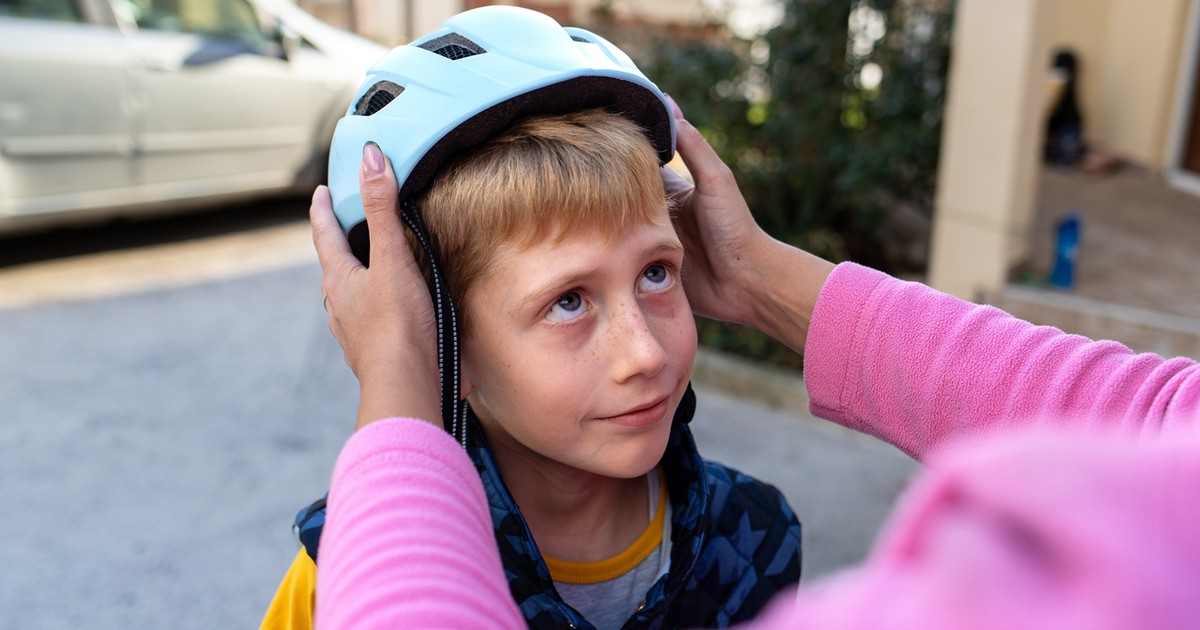
Last year, over 6,000 users of bicycles and electric scooters were involved in accidents. Nearly 1,100 children up to 17 years of age were involved in road accidents as drivers, according to the Police Headquarters.
June 3 this year children and adolescents up to 16 years of age will be obliged to wear helmets when riding bicycles, electric scooters and personal transport devices.
To increase the safety of the youngest, in March this year regulations have been introduced that prohibit the use of electric scooters by children under 13 years of age outside the residential area and without the supervision of an adult guardian.
What are the consequences of not wearing a helmet when riding a bike or scooter? Amount of the fine
“Situations in which we observe both small and adult cyclists or people riding electric scooters without helmets are common in Poland,” reminds Chief Inspector Emilia Kosma, an expert in the Social Prevention Department of the Prevention Bureau of the Police Headquarters,
“The majority of accidents involving them are recorded during the holidays, which coincide with the entry into force of the act on the obligation to wear helmets. Failure to do so in the case of persons under 16 years of age may result in a fine of up to PLN 100,” he adds.
A helmet reduces the risk of serious consequences of an accident, but does not replace common sense, driving skills, speed limits, good infrastructure, visibility of the child and adult supervision.
Why is it worth wearing a helmet when riding a bike or scooter?
The use of helmets reduces the risk of head injuries, including severe and fatal ones, as well as facial injuries, experts remind.
— The American Academy of Pediatrics indicates that cycling is one of the recreational activities significantly associated with head injuries in children, and Head injuries are particularly clinically important because they determine the severity and prognosis of many accidents – tells PAP prof. Ernest Kuchar, pediatrician, sports medicine specialist from the Medical University of Warsaw.
As he explains, a head injury can only be a tumor or a skin wound, but it can also lead to a concussion, a skull fracture, intracranial bleeding or a traumatic brain injury.
A child is not a “little adult”
The specialist reminded that the child is not a “little adult” – it has different body proportions, weaker coordination of movements, shorter experience in road traffic and a weaker ability to predict consequences.
In younger children, the head constitutes a relatively larger part of the body weight, and falls are more likely to result in hitting the head.
— On the other hand, a teenager may be physically fitter, but is more likely to take risks, ride faster, use electric scooters, skateboards or bicycles in city traffic and is subject to peer pressure that encourages competition and risky behavior, the expert said.
When to wear a helmet?
In clinical and public health practice, a helmet should be considered standard for any activity during which a fall at speed, from a height or onto a hard surface is possible.
— This especially applies to cycling, electric scooter, traditional scooter, rollerblading, skateboarding, longboarding, skiing, snowboarding and horse riding. In the case of electric scooters, the risk is particular because the child may move faster than his cognitive maturity and braking skills indicate, explained Prof. Cook.
Data provided by the Ministry of Infrastructure show that head injuries constitute one third of all injuries to electric scooter users, and research confirms a direct relationship between riding without a helmet and traumatic brain injury.
Bicycle helmet. Statistics for Poland
Data from the European Trendline report, co-financed by the European Union, indicate that in Poland only 51% of people wear helmets. Polish cyclists up to 14 years of age and only 23 percent those who are over 15 years old. These are some of the lowest results in the European Union.