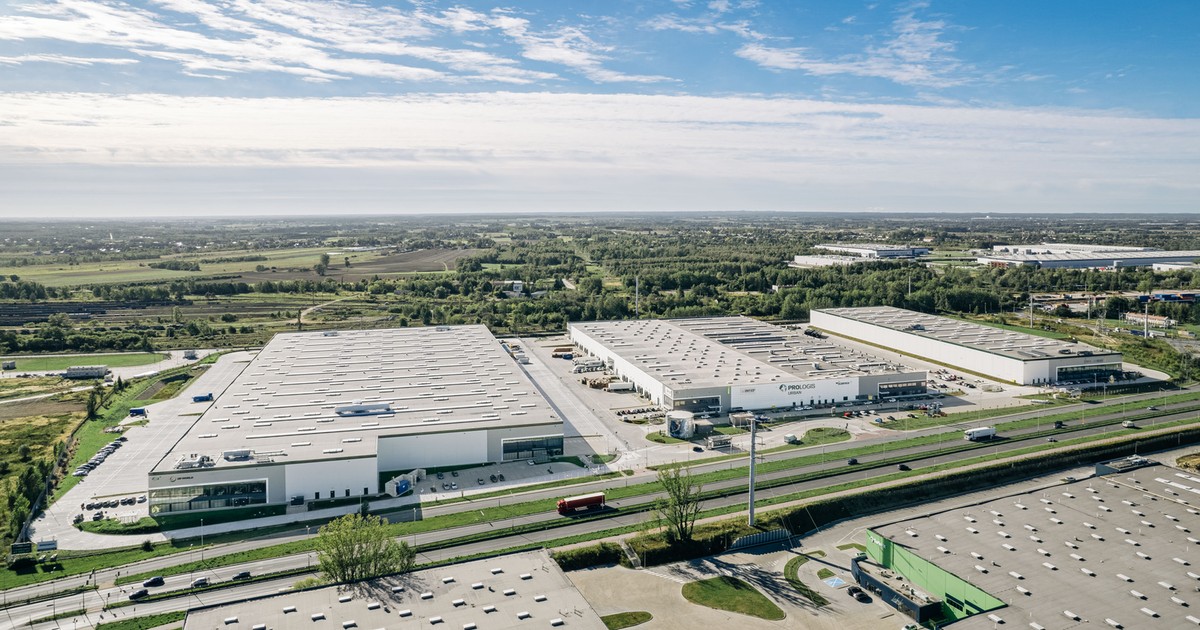
The Polish warehouse real estate market has been one of the biggest beneficiaries of global economic changes in recent years. The Covid-19 pandemic, the explosion of e-commerce, supply chain disruptions and nearshoring have made Poland the logistics center of Central and Eastern Europe. In 2020-2022, developers built record volumes of space, investors aggressively purchased assets, and tenants fought for available modules. Today the market looks different. It's still growing, but not at a sprinting pace. Dynamic expansion is replaced by caution, selectivity and focus on efficiency. However, experts agree: this is not the end of growth, but a transition to a new, more mature phase of the warehouse market in Poland.
Just a few years ago, Poland was called the “warehousing tiger of Europe”. Today the country already has it almost 37 million sq m modern logistics space, which places it among the European leaders. According to market data only in the first quarter of 2026, approximately 650,000 were delivered. sq m new warehousesalthough the scale of new investments is clearly lower than during the record period of the pandemic.
7R Hub Nowa Huta in Krakow
|
7R
Read also: Indians and Turks are increasingly buying apartments in Poland. The trend is growing
However, this does not mean a market collapse. On the contrary, many experts emphasize that the sector is currently undergoing a process of professionalization and stabilization.
— The Polish warehouse market entered 2026 as a more mature, selective and better balanced market – says Damian Kołata, Head of Commercial at 7R. As he emphasizes, after the record-breaking hot years of 2021-2022 today, tenants analyze the total operating cost, energy efficiency and flexibility of buildings much more carefully.
Michał Czarnecki, VP, Head of Leasing at Prologis, assesses the situation similarly. In his opinion, the market has entered into phase of “consolidation and greater maturity”in which projects implemented for a specific tenant, i.e. built-to-suit and pre-let, play an increasingly important role.
The geographic structure of the market has also changed. The largest logistics hubs still dominate – Warsaw, Central Poland, Upper Silesia, Poznań and Wrocław – but regional locations are becoming more and more important. Today, companies are looking not only for access to infrastructure, but also for employees, energy and the ability to quickly serve the end customer.
Demand for warehouses: less emotions, more calculations
The biggest change today is in demand itself. Even during the pandemic, companies rented space at almost any price, securing supplies and building the resilience of supply chains. Currently decisions are much more rational.
Tenants no longer ask only about the rent rate. Energy costs, the possibility of automation, employee availability and operational flexibility become key.
— Today, companies look not only at rent, but primarily at operational security, energy costs, contract flexibility and supply chain resilience, says Tomasz Arent, partner at SQM Advisory.
At the same time, the data shows that demand has not disappeared at all. On the contrary. According to Colliers net demand for warehouse space increased by as much as 75% in the first quarter of 2026. year-on-year and reached the highest level for the first quarter since 2022. Importantly, more than half of the activity consisted of new contracts and expansions, and not renegotiations of existing contracts.

Michał Czarnecki and Tomasz Arent
|
Prologis/SQM Advisory
See also: Remote work and high housing prices. Poles are changing their lifestyle
E-commerce continues to be of growing importancealthough not at such a rapid pace as during the pandemic. Experts point out that e-commerce is maturing, but it still has huge growth potential.
— E-commerce penetration in Poland is approximately 10%. of the entire retail trade, while in Great Britain it is already over 30%. This shows that the growth potential is still very large – emphasizes Michał Czarnecki from Prologis.
However, the nature of logistics operations is changing. Expectations regarding delivery speed, returns handling and process automation are increasing. This means that a modern warehouse is now becoming an element of competitive advantage, and not just a “storage hall”.
Warehouse supply: the end of the era of “stock” construction
The most visible change, however, concerns developers. Just a few years ago, speculative projects dominated the market. Today financing such investments is much more difficult.
Banks are more cautious about risk, the cost of capital remains high, and investors analyze the profitability of projects more carefully. As a result the share of investments carried out without secured lease agreements is clearly decreasing.
— Financing speculative warehouses is no longer obvious. Today's caution by developers may create tomorrow's shortage of space and very strong rent pressure – warns Tomasz Arent from SQM Advisory.
According to Colliers data currently approximately 63 percent space under construction is already secured with lease agreements. This is the highest level in several years and a clear signal of a change in the market's business model.
Experts emphasize, however, that the reduction in supply may lead to a rapid decline in vacancies and a renewed increase in rents in the coming years – especially if stronger demand from logistics, trade and production returns.

Joanna Sinkiewicz and Damian Kołata
|
Accolade/7R
Read: Institutional leasing is growing in Poland. Such transactions arouse emotions
ESG and energy costs: warehouse as business infrastructure
Just a few years ago, ESG certificates were often a marketing add-on. Today, they increasingly determine access to financing and the attractiveness of a building for tenants.
— Further market development will increasingly depend on progress of the decarbonization process and developers' ability to implement investments that meet high energy efficiency standards – comments Klaudia Okoń, senior consultant of Business Intelligence HUB & Consultancy BNP Paribas Real Estate Poland.
Modern warehouses are equipped with photovoltaic installations, energy recovery systems and solutions that reduce utility consumption. Automation capabilities and preparing facilities for robotization are also becoming more and more important.
— The warehouse is no longer a simple building block, but becomes part of the infrastructure competitiveness of the economy – emphasizes Damian Kołata from 7R.
Joanna Sinkiewicz, managing director of Accolade in Poland, also points out that a modern warehouse is increasingly responsible for the resilience of the entire business.
“The warehouse is becoming an element of critical infrastructure for companies – a place on which the speed of delivery, cost efficiency and resilience of the entire supply chain depend,” he says.
Warehouse market 2026-2027: three possible scenarios
Experts agree that The next two-three years will be crucial for the warehouse market. The most likely scenario assumes stabilization – without a return to the pandemic fever, but also without a sudden collapse.
However, much depends on the macroeconomic situation in Europe, the cost of financing and the condition of the German economywhich remains Poland's key trading partner.
The market is also analyzing the potential impact of nearshoring and the possible reconstruction of Ukraine. Both processes could significantly increase demand for logistics and production space.
According to experts, the most dynamic scenario assumes the return of large logistics and e-commerce tenants while limiting new speculative supply. Such an arrangement could very quickly restore the advantage to warehouse owners.
This would mean the end of the era of “cheap warehouses” and a renewed race for companies to secure space well in advance.
However, one thing seems certain: The Polish warehouse market is not ending its success story. It only changes the rules of the game. Today, the one who builds the most no longer wins. The winner is the one who best understands the tenant's business, is able to reduce its costs and ensure operational resilience in an increasingly unpredictable world.