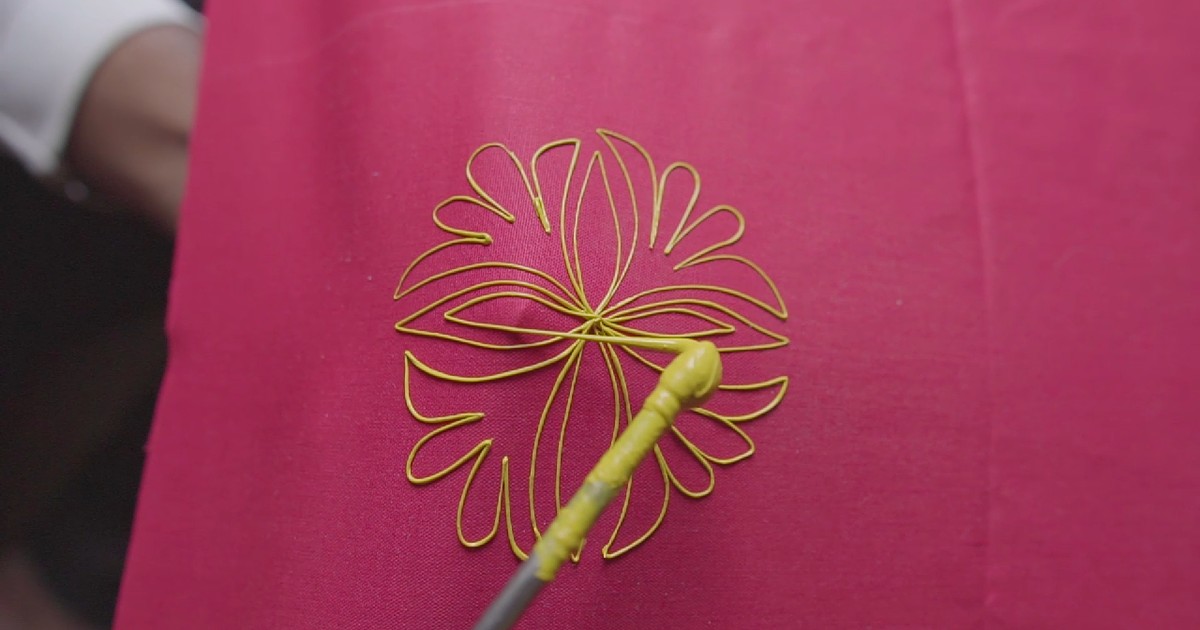
The palm of the hand is an essential “tool” to properly perform this painting technique. Rogan art is a centuries-old craft and has been passed down in Abdul Gaffur Khatri's family for eight generations.
These designs were once popular throughout India, but the development of the industrial textile industry forced many artisans to abandon the craft in favor of more profitable work. Members of the Khatri family claim that they are currently the only remaining Rogan artists in the world.
This is our tradition. My grandfather, father and uncle passed this art down from generation to generation
says Abdul Gaffur Khatri, artist.
Read also: Overload breaks pilots' spines. This is how catapulting works [WIDEO]
They paint with their hands, not brushes. Rogan art is a tradition that only one family knows now
|
Business Insider
The Rogan Art Tradition. It's not entirely safe
Let's take a look at how one family keeps this tradition alive. It all starts with castor oil. It is the basis of the paint. This is where the name of this technique comes from. In Farsi (Persian) the word “rogan” means oil.
Gaffur's cousin, Muhammad, heats the oil for two days until it has a honey-like consistency. This is a dangerous process that only a few people know how to perform.
We use up to 5 kg of oil, which can catch fire at any time. That's why it's very dangerous. Not all members of our family are experts in this process
– explains Gaffur.
Once the oil has cooled, Gaffur's nephew, Jabbar, combines it with pigment to create paint.
— We grind these colors on a stone, then add some water and continue grinding. Then we add the rogan. We add it “by eye”, we do not have a specific amount, such as 100 g or 50 g. Then we break the mixture with a stone until the colors and rogan come together, explains Gaffur.
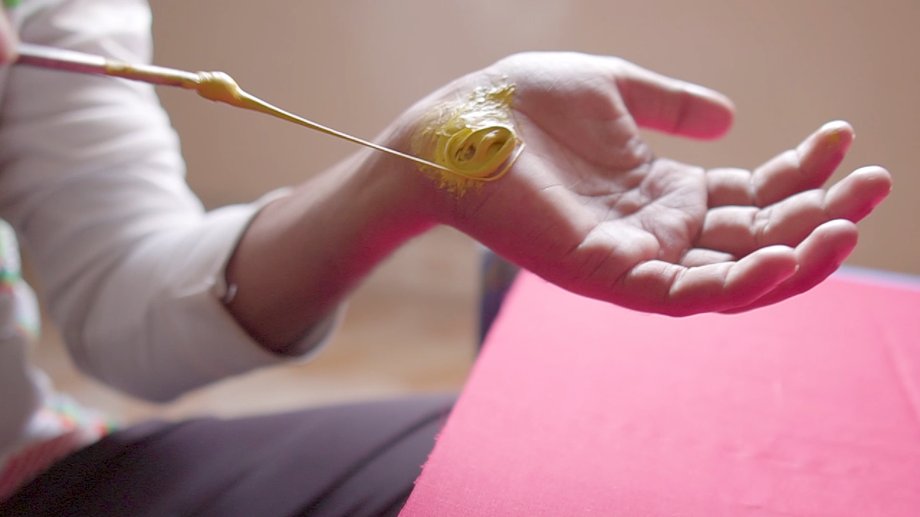
Then it's time to paint. Gaffur argues that it is the use of hands that gives Rogan's art its unique quality.
– If I take the color directly from the bowl, I won't be able to stretch it because it's so thick. So I have to put it on my hand and rub it in,” he says.
Gaffur makes circular movements, generating heat that thins the paint. He then applies a thread of paint to the fabric using a metal rod. He places his other hand under the fabric to guide the paint. He has the idea in mind, but the painting process is completely improvised.
How the thread is perfectly distributed on the fabric and how much it can stretch is part of the artist's vision. It's all a gift from God. It can't be done by any random person or machine
– says the artist.
The painting process is completely improvised
|
Business Insider
Where did Rogan's art come from?
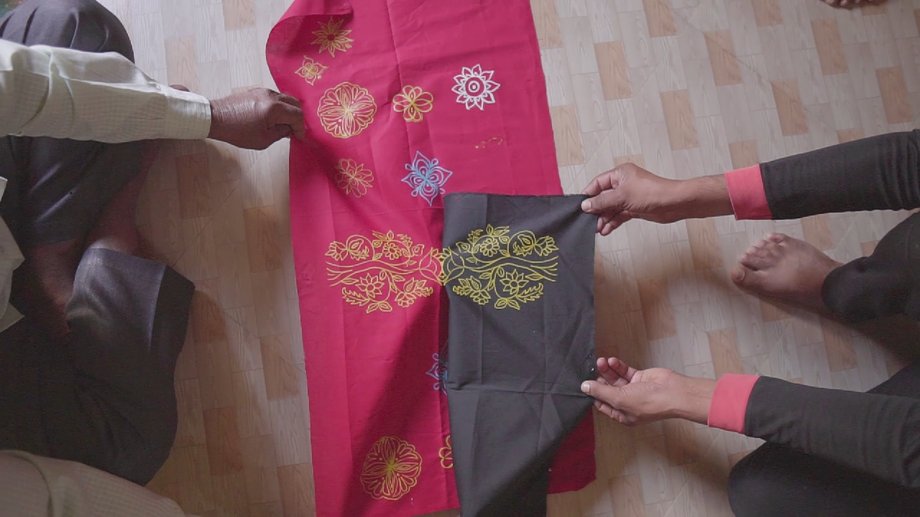
Before the paint dries, Gaffur folds the fabric to create a mirror image of the pattern. He completes some pieces in five days, but more complex designs can take up to two years.
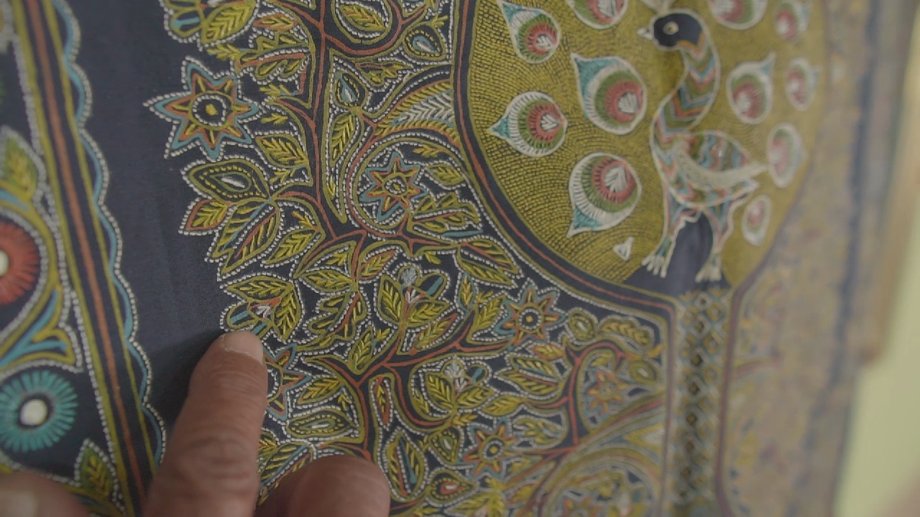
“In this intricate yellow work, the dots were made one at a time using the tip of a pen, which requires a lot of experience and is therefore considered unique,” he explains.
These wall art pieces can cost over $1,000. The art is said to have come to India from Persia 400 years ago and was once popular on bedding and ceremonial clothing in India.
However, with the advent of mass-produced fabrics in the 1980s, locals lost interest in these more expensive, handmade pieces. Many craftsmen were unable to compete with mass production and abandoned their craft to find other work.
Gaffur also made the difficult decision to leave the family business and look for a job in Mumbai.
This family has been creating works of art for 8 generations that cannot be replaced by any machine
|
Business Insider
— Around 1980, I decided that I would not waste my life on this art. Because of this, a discussion arose in my family because in those days, sending a child from the countryside to Bombay was considered something special, says the man.
Read also: They are as tall as the Eiffel Tower. How little cookies became a symbol of luxury
However, a sense of responsibility and the family's request made Gaffur return
— “If you don't come back, this art won't survive“When I heard these words, I decided that I would devote my entire life to this art. I wanted to make it famous all over the world. Now I can say that I have fulfilled my promise,” he gets emotional.
Gaffur has since taken Rogan's art to an international level. He has won over 10 awards for his works, and the Prime Minister of India gifted one of his works to President Barack Obama in 2014.
Just as Gaffur learned from his elders, now his nephew is determined to continue this tradition.
It was difficult for me the first time, but step by step I became better and better. I discovered that this art is a real treasure of our family and we must try to preserve it
says Jabbar Khatri, artist.
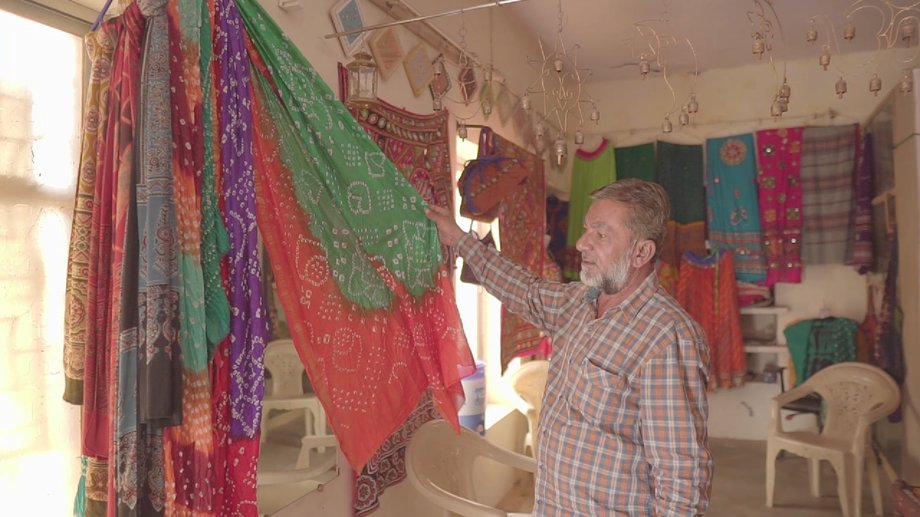
Rogan's works can cost more than $1,000.
|
Business Insider
Khatri is trying to preserve Rogan's art through education and social media.
— These are key activities for this art to survive, because our family is small and consists of only 10 people. That's why we teach it to other people so they can discover how incredibly rare it is, explains Khatri.
Since 2010, the Khatri family has trained approximately 300 women, and 20 of them have started working in the family business. Gaffur believes he knows what it takes to be successful.
To create this art, we need a lot of patience. We also need patience to sell it
– he laughs.