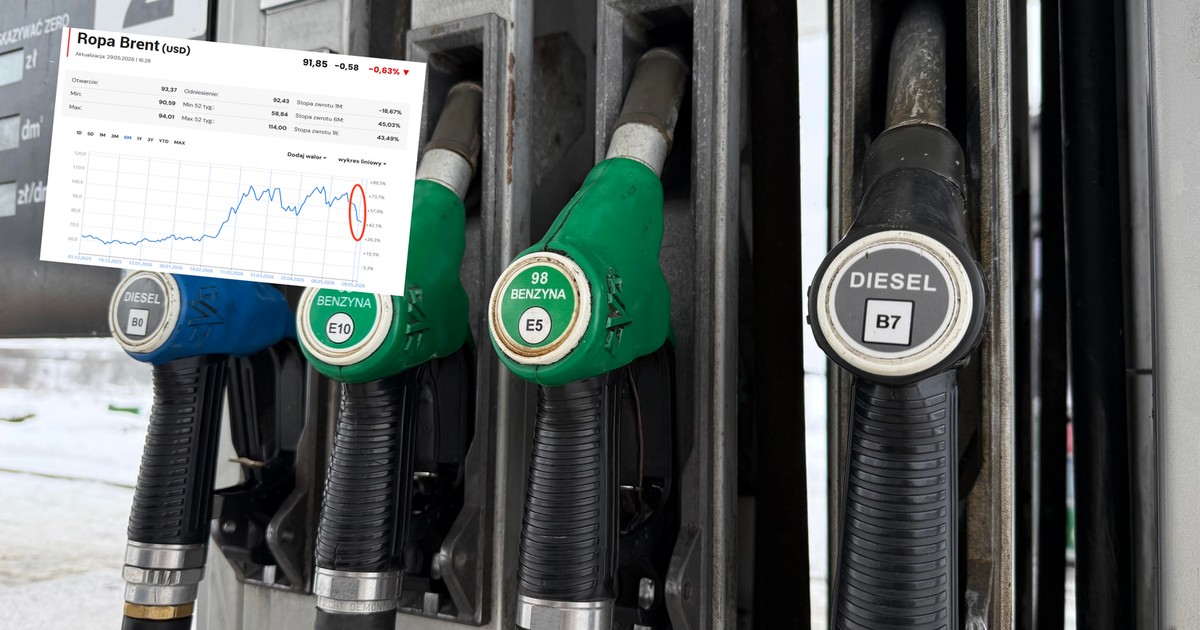
Brent crude oil falls by 1.2% on Friday. For a moment, the price of a barrel of this basic energy raw material in the world approached USD 90, and this is the lower level of the range assumed by analysts in an optimistic scenario.
Bob Parker, senior adviser at the International Capital Markets Association, told CNBC that oil prices will likely remain in the $90 to $100 range. “at least for the next few months” until there is more clarity on a possible lasting peace deal, warning of “inevitable” investor skepticism towards the negotiations.
“Even if the Strait of Hormuz opens, I think it's fair to say that the opening will only be partial,” Parker said Friday on CNBC's “Squawk Box Europe.”
He also highlighted the “significant” damage to infrastructure, refineries and pipelines in the Persian Gulf caused by the war, as well as ongoing safety problems with tanker traffic and depleted supplies.
Under $90 American WTI crude oil prices are now available. Futures prices fell by 16.5%. since the beginning of the month, and on Friday they fall by 0.8%. and are $88.25.
Oil thus has the month of its biggest declines since the COVID-19 pandemic. The problem is that prices increased rapidly in March and April. One way or another, drivers in Poland will soon have the opportunity to refuel extremely cheaply, because of lower VAT and excise duty, and due to falling oil prices, prices at gas stations should go down.
Blockade of the Strait of Hormuz
Crude oil transport by sea through the Strait of Hormuz, a key shipping lane between Iran and Oman that accounted for about 20% of global exports before the conflict. global energy supplies – has been largely prevented.
As Axios reported on Thursday, U.S. and Iranian negotiators reached an agreement on the framework for an end-of-war agreement, including a 60-day extension of the truce, although it did not receive the final approval of the U.S. president. White House officials confirmed the reports.
Despite renewed prospects for peace, attacks continued on Thursday. Iranian forces fired ballistic missiles at Kuwait and sent attack drones toward the strait.
As UBS noted, Iranian crude oil supplies remain below 0.3 million barrels per day in May, a significant decline compared to April's average of 1.5 million barrels per day and March's average of 1.7 million barrels per day.