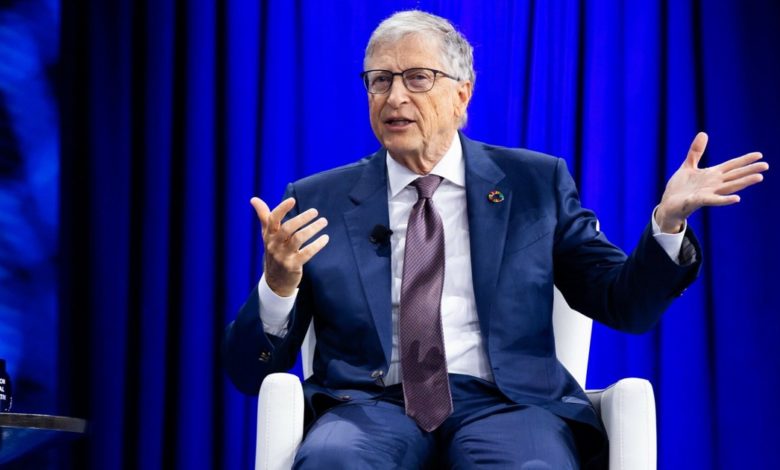
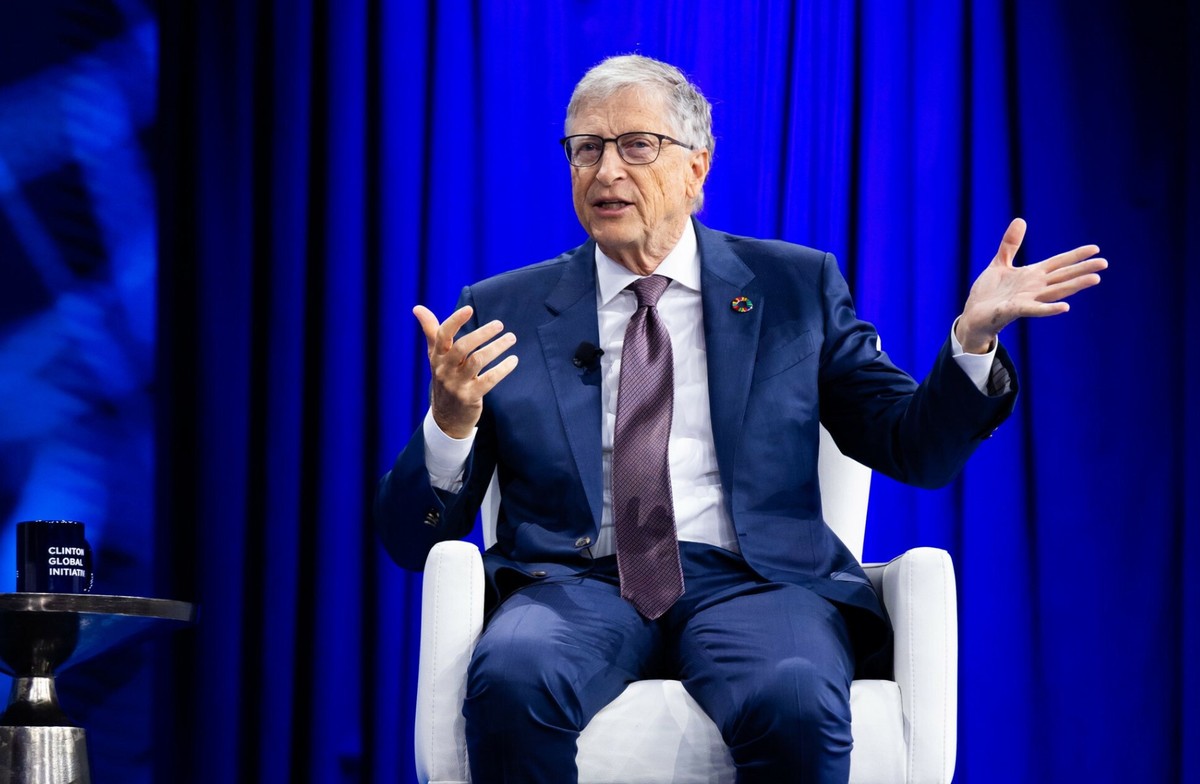
Gates admitted that Achieving the global Net -Zero until 2050. In the current realities it is not realisticalthough examples of countries -leaders could speed up changes.
This contrasts with the scientific determinant, which the UN refers to: to maintain insulation within 1.5 ° C, the emissions must fall by 45 percent. by 2030 and go to zero in the middle of the century. In practice, this means that The world is less than five years old to reduce nearly half of approx. 57 billion tons of CO2 equivalent released today.
Gates, although since 2008, has not managed Microsoft operationally, he still draws a large part of the fortune from the company. The concern itself declares that by 2030 it will become not only neutral, but “negative” – removing more CO2 from the atmosphere than to broadcast from 1975.
However, the environmental report for 2023 shows how difficult this path is. SCOPE 1 and 2 fell by 6.3 percent compared to 2020, but indirect SCOPE 3 emissions – mainly concrete and steel in the Data Center – increased by as much as 30.9 percent, which translated into a total increase in Microsoft's climate trace by 29.1 percent. from the base level. In other words, The company on which Gates built the property is more and more – and not less and less – emission.
Philanthropist -investor or hypocrite?
Allegations of hypocrisy return regularly at every Gates's statements about the atmosphere. Most often The billionaire's private jets and his sky coal trace are scored. In an interview with the BBC in 2023, he replied that “he is not part of the problem”, because he invests billions in innovation, and compensates for his own flights with the purchase of CO2 capture from the Swiss company Climeworks.
Critics point out that such offsets They do not change the fact of fuel burning at the time of flight and can postpone real reductions in time.
On the other hand, private capital – including Gates's capital – powers projects that without such money would have little chance of a market debut. His Breakthrough Energy Ventures has placed Almost $ 2 billion In over 100 start -ups from low -emission steel to flow batteries. Gates himself has allocated a billion dollars for the construction of a demonstration Natrium reactor from Terrapower in Wyoming, whose cost is estimated at $ 4 billion.
Such investments are in line with the postulates of IPCC experts, who emphasize that without technological breakthroughs in concrete, steel, fertilizers or aviation climate we will not save.
The assessment of whether Gates “has the right to demand” from other reductions depends on the criteria. If you look only at historical responsibility, then The billionaire is supported by the fact that he finances solutions that go beyond the minimal corporate cuts. However, if you score the consistency of communication with the real influence of your own corporation on emissions, then Microsoft's SCOPE increases the credibility of the same technological prescriptions. The fact that the concern has not yet managed to control the growing emission of its data centers illustrates the scale of challenges, which are facing all digital economies.
The thesis of Gates is valuable
This paradox does not cross the values of the main thesis of Gates: countries with the highest revenues can and should depart faster faster, because they have capital, technology and margin of social security. As UN data show, without acceleration in OECD countries, the world will approach +3 ° C rather than 1.5 ° C.
At the same time, the example of Microsoft is a warning that Declarations of neutrality must be supported by changes throughout the entire supply chain – Otherwise, even the most ambitious goals will remain on paper.
Gates's words about the climate debt of rich economies have a solid scientific and moral justification. A discussion about their correctness should also not be reduced to the assessment of the nature of one billionaire. Rather, it shows how difficult it is to reconcile the rapid development of modern services – from cloud computing to artificial intelligence – with a rapid cut of emissions.
If the rich are to shine with an example, then an example should become not so much conference declarations as absolute numbers in environmental reports. And this is not only Microsoft, but the whole industrialized world.