“The next six months are decisive.” A Ukrainian commander talks about a possible turning point in the war

A senior Ukrainian officer warns that Ukraine is in a critical time window of about six months in which it could regain the initiative on the front and decisively influence future peace negotiations with Russia. In the meantime, the intensification of drone warfare and the strengthening of defensive positions are seen as key factors in changing the balance of power.
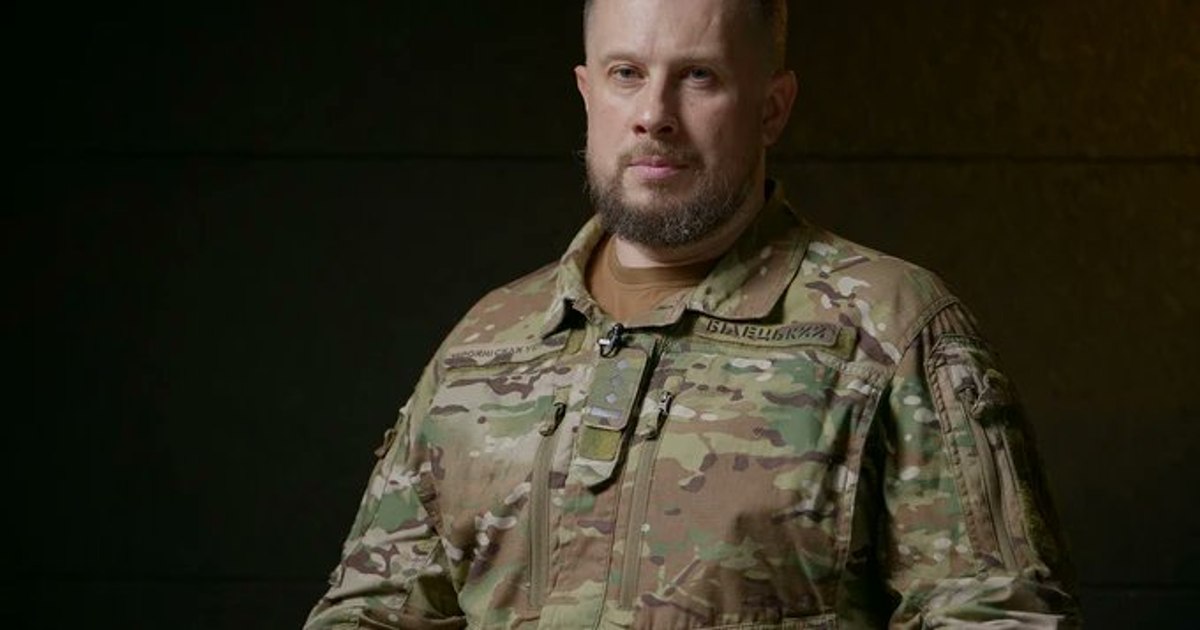
Ukrainian General Andri Biletski PHOTO: X
Brigadier General Andrii Biletski, commander of Ukraine's 3rd Army Corps, told Reuters at an underground location in the Kharkiv region that Russian forces were beginning to show signs of wear and tear after more than four years of full-scale war.
“I think the next six to nine months are a turning point. Specifically, the next six are the most critical”said Biletski.
Although Russia continues to make slow advances in certain sectors of the front since the invasion launched in February 2022, the pace of these gains has slowed in 2026 amid increasing pressure exerted by the Ukrainian military on Russian logistics, air defense and military infrastructure.
In the view of the Ukrainian commander, maintaining the pressure in the coming months could allow Kiev to regain the initiative and enter possible negotiations “from a position of strength”.
“We need to define the directions in which we can improve our positions, occupy strategic points, and only then talk to the Russians from a position of strength, not weakness, about a truly stable armistice”he pointed out.
One of the main stumbling blocks in the US-brokered peace talks remains control of the Donetsk region. Moscow insists on the full takeover of the territory, while Kiev refuses to withdraw from the areas that Russian troops have not conquered.
Kremlin officials did not immediately comment on Biletski's remarks, but Vladimir Putin recently said Russia was moving closer to its military goals.
Signs of fatigue on the Russian front
According to the Ukrainian commander, the Russian army is beginning to feel the pressure of losses and the difficulty of sustaining offensive operations at the same level as in previous years.
“The lack of staff no longer allows them to advance as they did a year ago”said Biletski.
Military analyst John Helin of the Black Bird Group (Finland) confirms this assessment, pointing out that Russia appears increasingly affected by attrition, while Ukraine, while also facing personnel problems, has not yet reached a critical threshold of operational collapse.
In parallel, the Institute for the Study of War (ISW) revealed that Ukrainian forces are “actively contesting the positional character of the conflict” and may soon launch limited mechanized attacks.
Fighting continues around the so-called “Fortified Belt” in eastern Ukraine, a chain of heavily fortified cities that form the backbone of defenses in Donbas. Among the hotspots is Kostiantînivka, where Russian pressure remains high.
Chain explosions in Crimea, near some military objectives. The pro-Russian governor claims that Ukraine used Storm Shadow missiles
Drone warfare is a game changer
Bilețki pointed out that military technology, especially drones, is rapidly reconfiguring the dynamics on the front. Ukraine would have an advantage in attack drones and unmanned ground systems, while Russia would partially compensate by using fiber-optic drones, impossible to jam electronically.
He also argued that Elon Musk's decision to limit Russian forces' access to the Starlink network significantly affected Moscow's ability to coordinate.
“Russia is radically losing out on battlefield communications”said the commander.
In recent months, Ukraine has stepped up its medium-range drone attacks on Russian military infrastructure, making it easier for strikes to penetrate ever greater distances inside the territory of the Russian Federation.
President Volodymyr Zelensky recently said that the Ukrainian army would have recaptured almost 600 square kilometers of territory in 2026.
Biletski also foresees a structural transformation of the Ukrainian military, through the accelerated integration of robotic systems into frontline operations, with the goal that by 2027 about 30 percent of combat functions will be taken over by autonomous or semi-autonomous systems.
“The next revolution will enable more creative combined operations while protecting human populations”he said.
Dispute over the duration of the war
At the same time, the Ukrainian presidential administration rejects the information appearing in the international press according to which Kiev is preparing the population for another two or three years of war.
The Economist reported that Ukraine is counting on its military resilience, expanding long-range strike capabilities and Western support to sustain a protracted conflict. At the same time, the article warned of growing domestic pressures, including corruption scandals and economic vulnerabilities.
However, presidential advisor Dmitro Lîtvîn rejected the information, categorizing it as an “old leak” recycled.
The Economist also notes that, according to some sources, there are scenarios that point to the resumption of negotiations as early as this summer, although most estimates suggest that the war will continue until one of the sides is forced to make major concessions.
In the background, Russia's economy continues to be affected by sanctions and stagnation, but has been partly supported by high oil prices influenced by global geopolitical tensions.
The report comes shortly after Volodymyr Zelenskiy told lawmakers that the “hot” phase of the war could end by November if Ukraine gets clear security guarantees from Western allies.