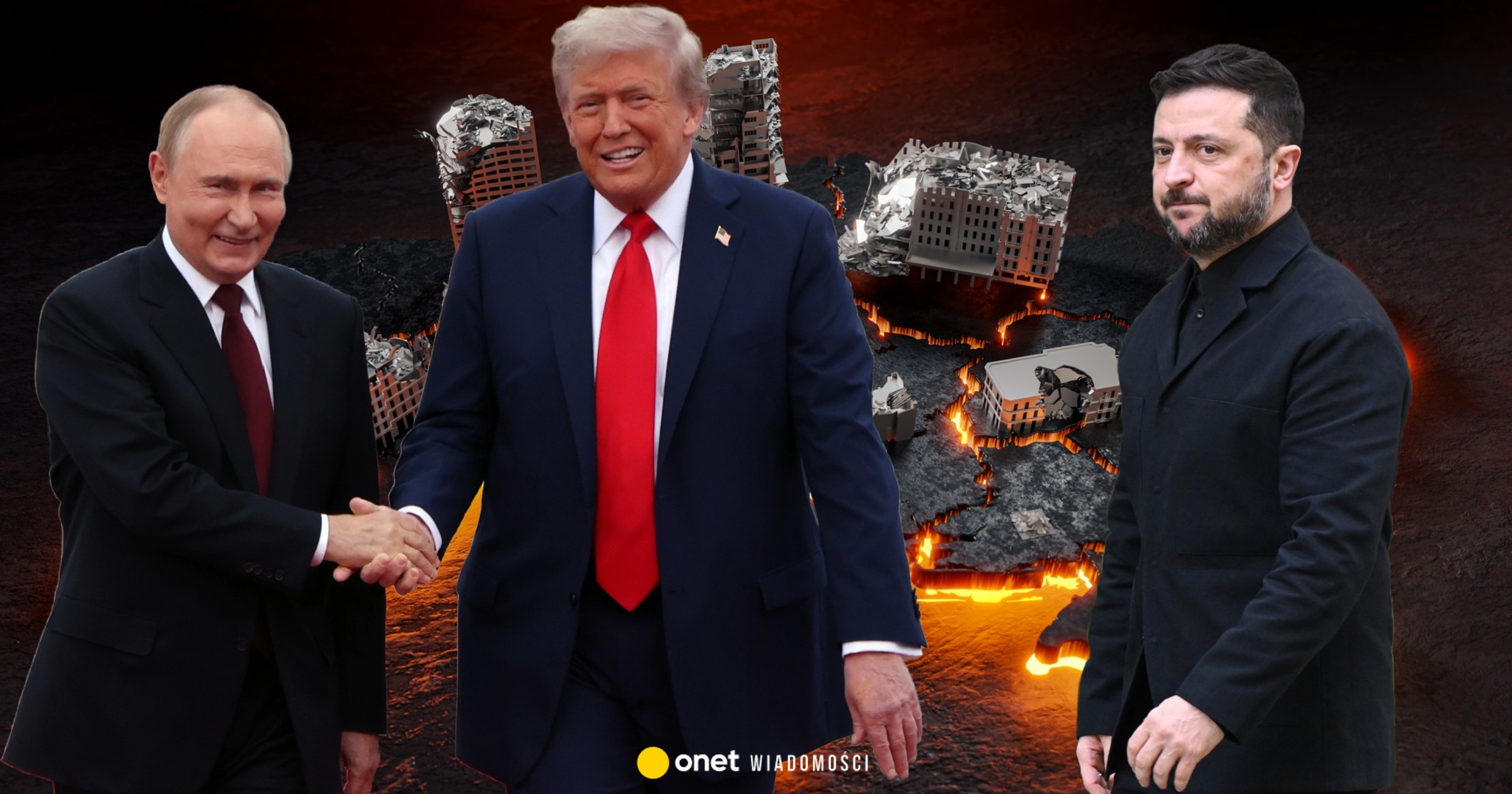
The backstage of the problem negotiations led by the special emissary Steve Witkoff in Russia. Alone with little and with the Kremlin translators

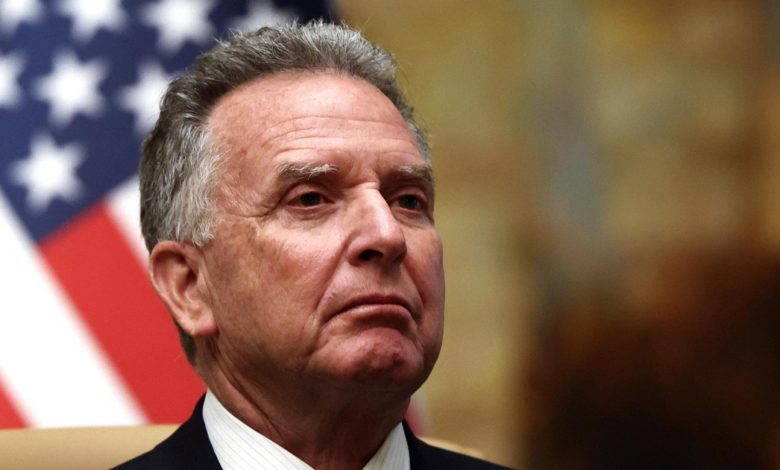
President Trump's special emissary for the Middle East, former realized realized lawyer and investor Steve Witkoff, has aroused a real concern among Trump administration by approaching negotiations with two of America's greatest opponents, reports New York Post (NYP).
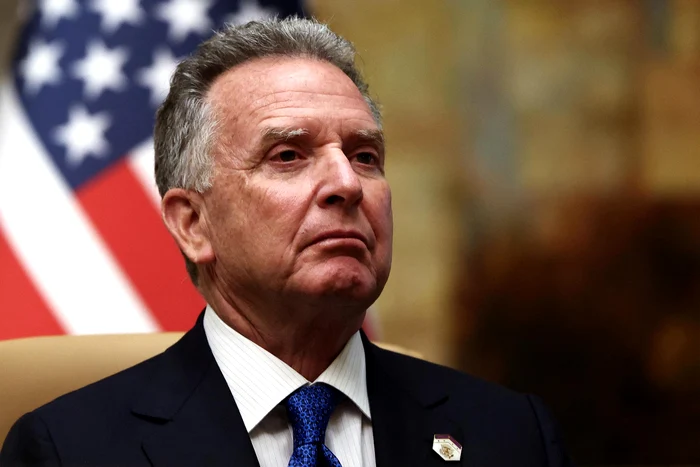
Steven Witkoff has noticed by the warm attitude towards Vladimir Putin Photo Archive
Witkoff, who became Trump's personal de facto ambassador to Russian President Vladimir Putin, participates alone in high -level meetings – and, according to reports, has occasionally based on Kremlin translators – in a break with the long -term diplomatic protocol, several sources for NYP said.
Before Witkoff's latest meeting with Putin, last Friday, he greets the Kremlin leader as an old friend – without any sign of the usual circle of advisers, experts and military officers who usually accompany American officials during negotiations.
Putin himself did not attend the meeting on Friday, being accompanied by his counselor, Iuri Usakov, and the director of the Moscow Sovereign Investment Fund, Kirill Dmitriev.
“Anyone who is involved in such discussions with Putin would benefit from the presence of experienced members in his team and bringing them to meetings with the Kremlin,” said John Hardie, the director of the Russian Program of the Foundation for Democracy, about Witkoff's decision.
A member of Trump's first administration was even more sharp.
“A type of work, but an unstoppable idiot”this person said about Witkoff. “He shouldn't do this alone.”
A negotiator and many heavy files
Praised by his allies as a ferocious negotiator, Witkoff also had to be managed to send special to the Middle East, trying to negotiate a fire termination and hostage issuance between Israel and Hamas, as well as a revised agreement on his nuclear weapon program.
Witkoff's mandate started with the right after contributing to a two -month break in the battles between Israel and Hamas, who entered into force the day before Trump's investment.
But the sending of the envoy to extend the cessation of the fire failed.
On March 12, Witkoff left meetings with Hamas representatives in Qatar convinced that he had reached a principle understanding. The cessation of fire was to be extended by another month, the terrorist group releasing five living hostages in exchange for a larger number of Palestinian prisoners.
Two days later, Hamas replied: he will free a living American hostage, along with the corpses of four other people. Witkoff refused the offer without any delays, and the armistice collapsed four days later.
“I thought we had an acceptable understanding,” Witkoff said, in a puzzled voice, for “Fox News Sunday” on March 23. “A.I even thought we had a green wave from Hamas. Maybe I was fooled. “
Although many Israelis appreciate Witkoff's efforts, his lack of diplomatic experience is perceived as a factor that affects his judgment.
“The assumption that actors like Hamas or Iran are primarily motivated by the desire to live – and, therefore, can be discussed with them by direct involvement – reflect a dangerous misunderstanding of their long -term ideological objectives.”said Shiri Fein-Grossman, former head of the Regional Business Department of the National Security Council of Israel.
“We need to understand our enemies through their prism, not ours. Hamas and Iran are autocratic regimes led by deeply rooted ideologies, not short -term interests.”
Others are afraid that Witkoff is asked to assume a too important role.
“How does Witkoff divide his time between two very demanding negotiations?”, asked Danny Citrinowicz, an Israeli expert in Security and member of the Institute for National Security Studies, based in Tel Aviv. “I think it's a job, but Iran's problem is so complex that I hope it will bring more people to the team. ”
“Because, for now, the Iranians could have the advantage, given their vast knowledge in negotiations.”
Steve Witkoff's responsibility in Ukraine negotiations
When Trump took over the position on January 20, he already had a special sent for the Russia-Ukraine War: the Lieutenant in retirement Keith Kellogg, counselor of former vice-president Mike Pence during Trump's first term.
However, in the middle of March, the role of Kellogg was changed from “Special for Ukraine” to “”Special sent for Ukraine and Russia ”.
Meanwhile, Witkoff has received the authority to negotiate the conclusion of the Ukraine war with Moscow – but not with Kiev, which remained within Kellogg's competence.
Kellogg's work was fruitful, causing Kiev to sign a proposed armistice and elaborating an agreement on mineral access with the Trump administration.
But the existence of separate negotiators for each side has proven to be a difficult balance work
On April 24, Ukrainian President Volodimir Zelenski said that together with Kellogg and a European delegation they reached an acceptable peace variant during London discussions, before Trump announces a new agreement that would recognize Crimea – which Moscow insists, and Kiev considers a red line.
“A challenge related to how President Trump has shared responsibilities between Witkoff and Kellogg.”Hardie said, “EI am that Witkoff, who is closer to Trump, tells Trump's views, but has a much more limited exposure to Kiev's opinions. “
“If Trump would finally take the mediation to put an end to the Ukraine war, he would name a person to talk to both sides – through a shuttle diplomacy – and, preferably, someone with some diplomacy experience.“The former US ambassador to Russia, Michael McFaul, wrote on Saturday. “Witkoff acts as a postman for Putin. He doesn't negotiate anything.”
Finding things, the Russian press noticed a pattern in which Witkoff repeats what Putin says, the state -of -the -art television crayons recently commenting that the official accepts Moscow's speeches – even when the Russians themselves do not.
The most flagrant example was during an interview with Tucker Carlson on March 21, when Witkoff repeated Kremlin's arguments, according to which “The biggest problem” From the negotiations was a “political” one and related to the annexation by Moscow of “these so -called four regions” – forgetting the names of the regions in the game (Donetk, Herson, Luhansk and Zapuijie).
“They are Russian speakers,” Witkoff said, repeating an ordinary excuse that Putin offers to justify his attack on Ukraine. “There were referendums in which the vast majority of people indicated that they want to be under the control of Russia. ”
But the envoy did not admit that Moscow either killed and drove the Ukrainian speakers, or ordered them to communicate only in Russian – a confirmed NYP and other publications on the spot – and that the referendums took place under the careful supervision of the Kremlin.
“The Russians are de facto control these territories”, Witkoff said. “The question is will do it, will the world recognize that these are Russian territories? Will Zelenski survive political if it recognizes this? This is the central problem of the conflict.”
Ukrainian officials rejected these statements, one of them declaring for NYP: “It is about sovereignty and dignity, not politics.”
“I think Witkoff has adopted the strategy of the Russian part,” Zelenski told reporters on April 17. “Conscious or not, he spreads Russian narratives. In any case, he does not help.”
Others have criticized Witkoff's habit of not knowing their interpreters in discussions with Putin. In a video recording from his Friday meeting, it is heard how Witkoff asks if the person who was sitting next to him is “from the embassy”.
“It is impossible to negotiate when you do not trust the translator. Witkoff does not speak Russian and cannot verify what translates.”the Ukrainian-Estonian translator and government counselor Janika Merilo told X. “It is crucial for each shade to be translated correctly and in context. ”
“No politician goes to negotiations in a hostile environment, as Russia should be, without your own translator. You do it if you really trust the other side. Or are you not competent. Or you don't care. I get rid of it, but something is wrong.”