The man who had Cristi Mungiu in the newsroom was awarded on Wednesday in Bucharest. “Let the elders of our country know that young people are right even when they are not right”

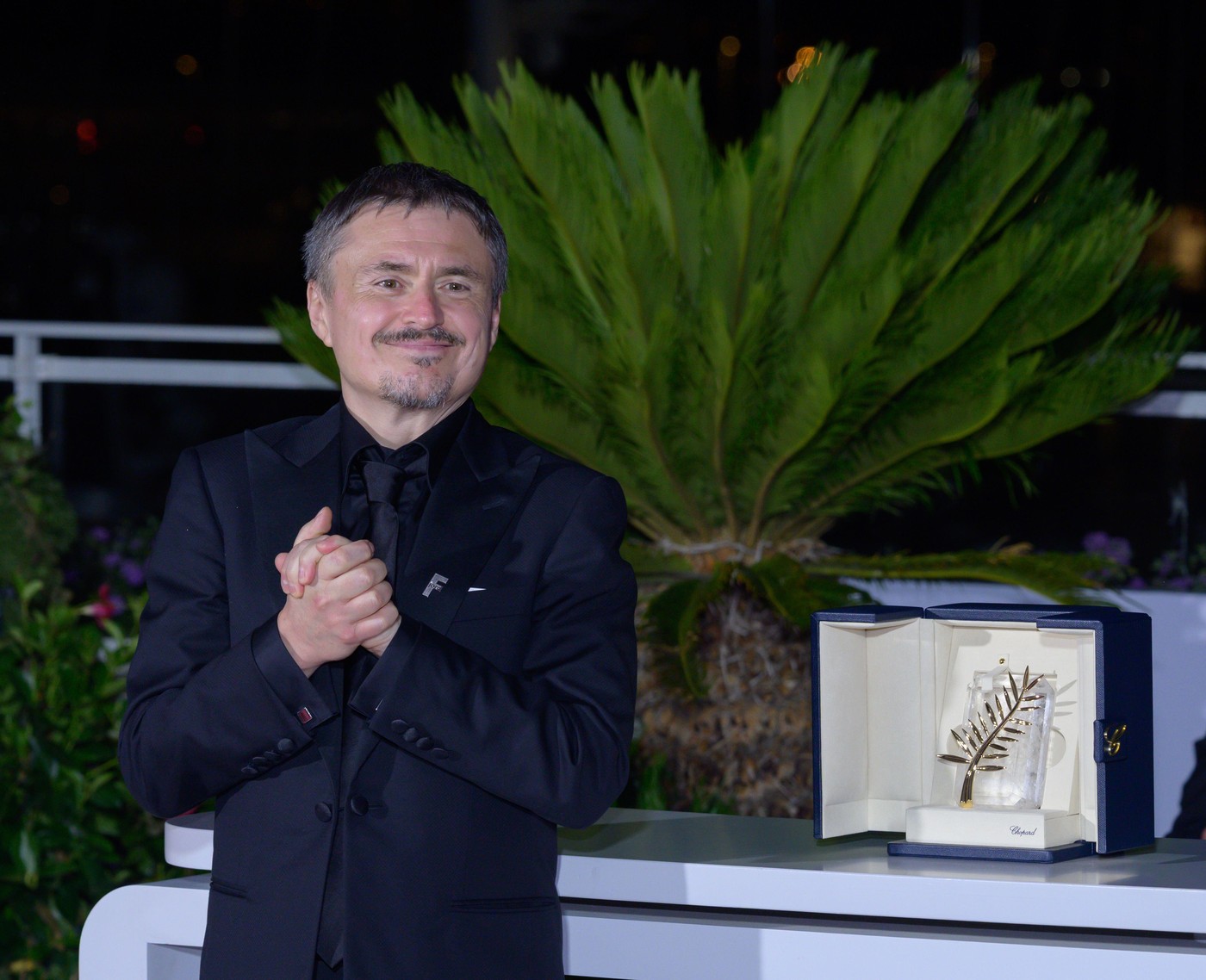
Director Cristian Mungiu, double laureate at Cannes, was a journalist at “Opinia studențeasca”, one of the most famous publications in Romania, which wrote history immediately after the fall of communism, under the leadership of Professor Daniel Condurache.
On Wednesday evening, from 7 p.m., at the Diplomats' Club in Herăstrău Park, the Superscrieri awards were awarded. Organized by the Friends for Friends Foundation, the awards are one of the longest-running competitions in Romania, dedicated to journalism. It was the 15th year that awards were presented for investigative, reporting and other journalistic genres.
The jury decided to give a special award, for his entire career, to Professor Daniel Condurache, from the “Gheorghe Asachi” Technical University in Iasi.
Daniel Condurache, 71 years old, is one of those who in 1990 revolutionized “Student Opinion”. Together with other professors and his students, Condurache transformed a student publication into a national legend.
Condurache has been working with young people for over 50 years
The magazine of the University of Iasi appeared in 1974. Condurache started working in the student editorial office in 1975.
After 1990, “Opinia” quickly became a strong opposition title and a benchmark of media quality.
The magazine launched dozens of the current well-known journalists from Romania. Professor Daniel Condurache continued to be part of the life of “Student Opinion” and to extend the tradition of the journalism school in Iași and the mentorship in the newsroom.
“The Superscrieri Jury has the joy and honor to celebrate Daniel Condurache, the man who entered a student newsroom more than 50 years ago and built a space of freedom, talent, characters and the most important informal press school in Romania, a school from which all the well-known and lesser-known names of journalists from inside and outside the room came out, some of them even winning the Grand Prix at Cannes,” said the journalist Dan Duca, president of the Superscrieri jury and editorial director of HotNews.
The episode with Mungiu was also invoked on stage by the laureate Daniel Condurache.
Condurache: “Young people are right even when they are not right”
When he went on stage, Professor Daniel Condurache said: “Since you mentioned earlier the old history that happened in Iași, I have to tell something about how the Cannes prize is also related to the adventure from “Student Opinion”. And Cristian Mungiu made his debut at “Student Opinion”.
Any of you can do this. I know that things must not go back, and I know something that I hope our elders will also hear, that young people are right even when they are not right”.
Mungiu: “It was a kind of reportage, not to say literature”
The reference to Cannes is related to Cristian Mungiu, the recent winner of the second Palme d'Or. The director of “Fjord” worked as a journalist at “Student Opinion”.
“Mungiu failed Medicine, then studied Philology, wrote for Opinia Studențeasca and dreamed of being a writer,” writes journalist Alexandra Tănăsescu, in an extensive portrait of the director, published on the “Cultura la dăbă” website.
Mungiu arrived at Opinia Studențeasca in 1987. Prompted, as he says, by his sister Alina Mungiu-Pippidi. “What we wrote was not the press. I worked in the press, but there were some things closer to literature than the press. Yes, you did some investigations, you covered some subjects, as they say, but it was… But it was a kind of reportage, not to say literature”, recalls Cristian Mungiu of those years.
He left Iasi after the revolution, he said, “I left, please, my sister left first, who was very rebellious, revolutionary and left without thinking. She didn't think for a moment. She left everything, college, job, whatever she had. She went and… I don't know when she left. In '90, probably, I also left in 93”, explained Mungiu in an interview for the culture site Rasfoiala.
Mungiu and Iasi are students
Now a director working in a global environment, Mungiu has remained deeply connected to Iași and the student atmosphere. He would like, over time, the parental home to become “a cultural hub dedicated to young people”.
He told, for “Cultura la duba” how he would like the place to look: “I would like it to be so informal that if you are a student, live in Copou and have nowhere to work, treat this place as I am trying to prepare it, as a kind of co-working space, where you come, make a coffee, have a library with 1000 volumes, have internet, if you want to watch a movie, watch a movie. The house was very lively when my family lived, and I would like it to come alive again.”