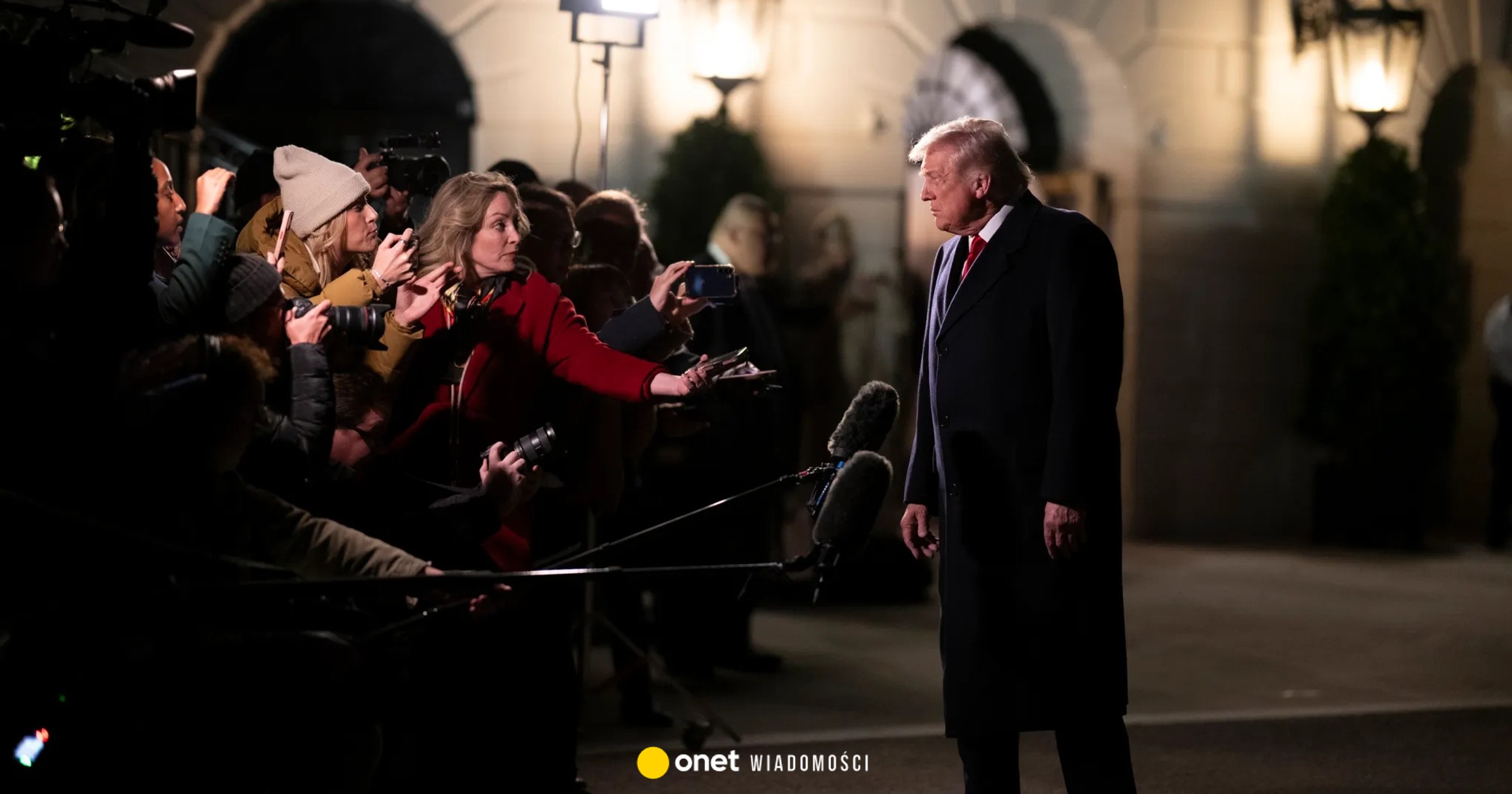
Trump changes strategy towards Greenland. Fear is growing on the island

Wearing a heavy jacket and surrounded by cameras, Jeff Landry walks around Nuuk, the capital of Greenland. “If you visit me at my residence in Louisiana, you'll get as many chocolate cookies as you can eat,” he promises three children who find the situation a bit suspicious. He offers another boy a photo together – and is immediately refused.
The governor of Louisiana and the US special envoy to Greenland arrived unexpectedly in this country last Sunday to take part in the Future Greenland economic conference. He came without an invitation, but with a clear order from President Donald Trump.
— I talked to him late last night. He said, 'Go there and make as many friends as you can,'” Landry said.
On Saturday, Trump posted a photo montage on Truth Social showing him holding a mountain and looking down at Nuuk. He captioned it “Hello, Greenland!” (Hello, Greenland!). This entry has a clearly possessive tone.
A screenshot of Donald Trump's profile on Truth SocialTruthSocial
Change of strategy
Jeff Landry traveled to Greenland for the first time since December, when the US president appointed him special envoy to the country. This visit shows once again that Trump has not abandoned his ambition to make Greenland part of the US – he has clearly changed his strategy.
Landry's nomination was widely perceived as a symbolic confirmation of Trump's plans to annex Greenland – after all, the United States also purchased present-day Louisiana from France in 1803. During his visit to Nuuk, the governor was downright overly friendly. “It's all about building relationships,” Landry said. He added that the United States had long ignored Greenland — until “Donald Trump put it back on the map.”
He stated that he wanted to help the Greenlanders by “leading them from dependence to independence.” The U.S. ambassador to Denmark, Ken Howery, also adopted a softening tone during Thursday's opening of the new American consulate. “The president has ruled out the use of force,” he said, quoted by local media. — The future of Greenland must be decided by the Greenlanders themselves.
Earlier this year, Trump faced widespread opposition from Greenland, Denmark and Europe over his threats to seize the Arctic island — by military force if necessary. So it seems that he is now trying a new tactic: he wants to use promises and flattery to make the people of Greenland find joining the US attractive.
Already last year, Danish media reported on secret activities of American citizens in Greenland – they were supposed to try to collect information about potential supporters of American plans and influence public opinion. Landry's charm offensive is likely another move in Trump's repertoire.
Power vacuum in Nuuk and Copenhagen
The timing of the visit was probably chosen deliberately – the Greenlandic government had just completed a cabinet reshuffle after internal disputes. Denmark is embroiled in difficult government negotiations after the April parliamentary elections, in which former Prime Minister Mette Frederiksen's party suffered a significant defeat. Washington likely sees this power vacuum as an opportunity to pursue its interests on the island.
However, this can be difficult. Greenland, once a Danish colony, is now largely autonomous. All its political parties seek independence from Denmark in the long term – and in this context they are not opposed in principle to closer cooperation with the United States. However, polls show that the overwhelming majority of Greenlanders rule out joining the US.
Even a more moderate tone of speech will probably not change anything, says Greenland expert Ulrik Pram Gad from the Danish Institute of International Studies (DIIS) in Copenhagen. – The problem is that even if Americans say nice and friendly things, it is perceived as pressure because Trump has not abandoned his plans – he adds in an interview with the Danish station DR.
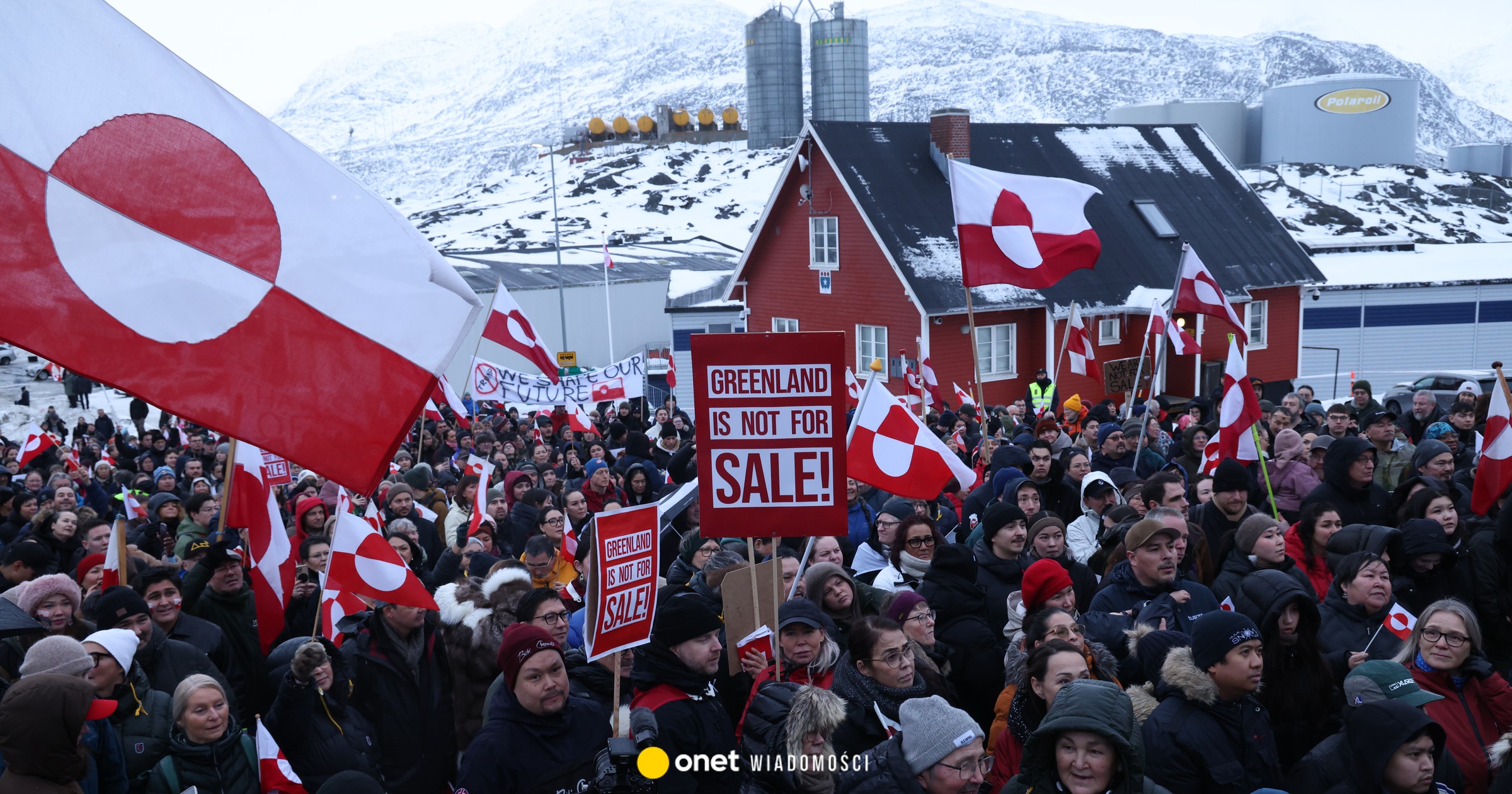
Proof of this approach by the Greenlanders is Landry's cold reception in Nuuk. According to local journalists, residents allegedly showed him the middle finger and shouted “go home.” There are also dozens of posters with the words “stop USA” hanging around the city. Particularly critical was the fact that the governor was accompanied by a doctor who, as he himself said, wanted to assess the country's “medical needs.”
Greenland's Minister of Health and Disability Affairs, Anna Wangenheim, called the statement “very problematic” on social media. Already in January, Trump was considering sending an American hospital ship to Greenland to “take care of the many people” who “are not receiving the treatment they need” there, he wrote on Truth Social, sparking protests in Greenland.
The opening of the new US consulate, which moved from a small house on the outskirts of the city to a skyscraper in the center of Nuuk, was also accompanied by a demonstration in which, according to local police, about 500 people took part. They turned their backs on the building and held two minutes of silence to protest against US attempts to influence their country. Some chanted “Greenland belongs to Greenlanders” or “No means no.”
The organizer of the demonstration assured that the point was not to provoke US representatives. “But what the United States is trying to do here is very dangerous,” he told local station KNR. Unlike the opening of the previous consulate, on this occasion members of the Greenlandic government did not attend the ceremony.
Far-reaching US demands
The Prime Minister of Greenland, Jens-Frederik Nielsen, and the plenipotentiary for foreign affairs, Mute B. Egede, met briefly with Landry on Monday and talked about a “constructive” exchange of views. However, they also made it clear that they believed the US had not significantly changed its position. — We have our red lines. The American position has not changed either, Egede said.
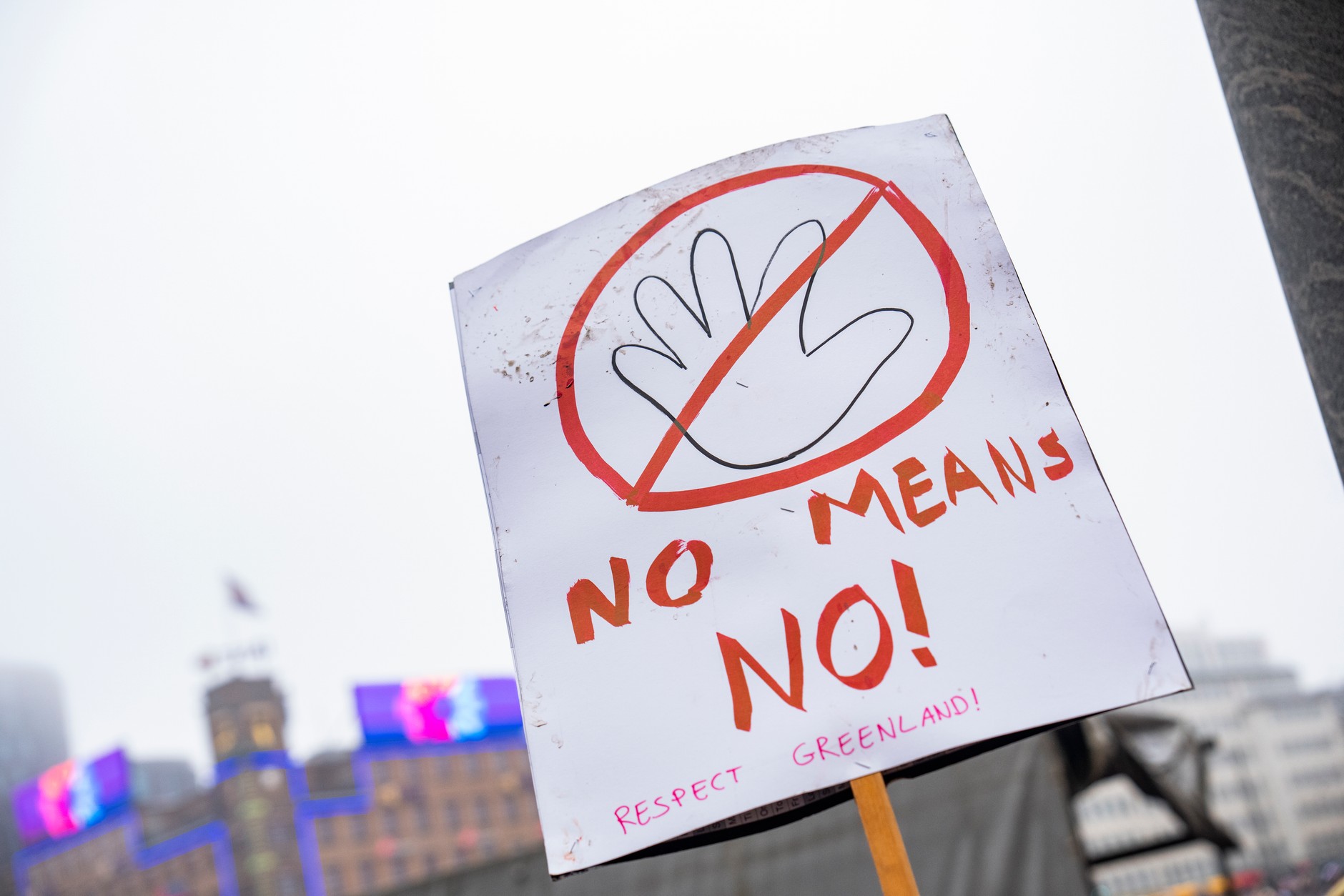
Poster with the words “No means no. Respect for Greenland”, Copenhagen, January 17, 2026.Martin Sylvest Andersen / Stringer / Getty Images
Nielsen stressed that “it has been clearly confirmed that the people of Greenland are not for sale and that Greenlanders have the right to self-determination.” He added that this limit will not move – “no matter how many chocolate cookies we get.” Asked by local newspaper Sermitsiaq whether he respected Greenland's red line, Landry only replied: “For us, there is only one line.” It is red, white and blue (these are the colors of the US flag).
Behind the scenes, both sides are apparently expressing irreconcilable contradictions. According to media reports, in the negotiations of the working group, the creation of which was decided during the January crisis meeting in Washington, The United States is expected to make far-reaching demands.
According to The New York Times, it is primarily about expanding the US military presence in Greenland. Three new locations are being considered, including at former US bases in Narsarsuaq and Kangerlussuaq – which would already be possible under existing agreements. American negotiators, however, are reportedly demanding more – they want a permanent, irrevocable right to a military presence, even in the event of Greenland's future independence.
The Government of Greenland rejects such a perpetuity clause, as does the infringement of sovereignty over parts of the island. Moreover, according to The New York Times, Washington wants a veto on investments in Greenland to prevent China or Russia from accessing the island's raw materials. Officials in Nuuk have criticized the demands as a potentially huge and long-lasting violation of Greenland's sovereignty.
If Greenland agreed to these conditions, it would never achieve “true independence”, MP Justus Hansen tells local media. “Then we might as well lower our flag to half-mast right away,” he adds. The chairwoman of Greenland's foreign affairs committee, Pipaluk Lynge, says it is an “all or nothing” situation. “The best solution would be to avoid being attacked or subjected to foreign control,” he says.
Before he left, Jeff Landry seemed completely unfazed by the strong opposition he faced in Greenland. He speculated that people's resistance must stem from “misunderstandings or narratives” that “have arisen from bad journalism.” He added that it was time “for the United States to reassert its presence in Greenland.” Shortly thereafter, he announced further trips.