The tradition that gives flavor to the food, almost abandoned: “Everything is at the expense. And without support”

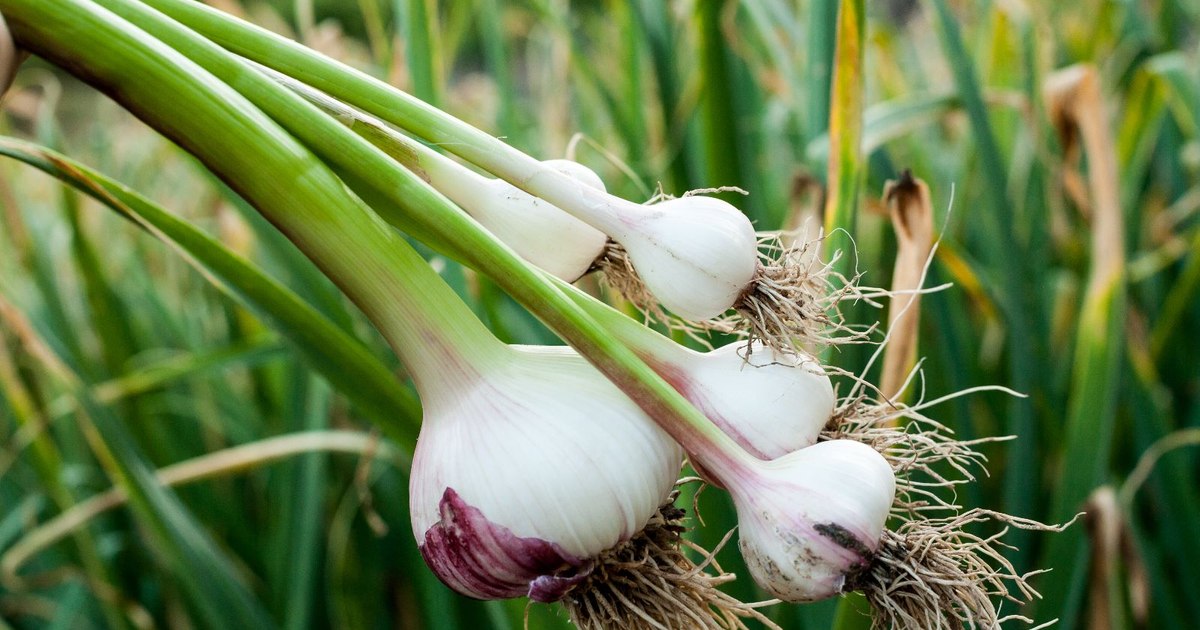
From hundreds of cultivated hectares, to total disinterest. It happens with a culture supported for several years by a de minimis program discontinued last year. The daring few do not know whether, in 2026, they will have support or not.
Garlic is expensive to produce, farmers say FOTo: Shutterstock
A project launched a few days ago in decision-making transparency on the website of the Ministry of Agriculture would bring farmers who dare to grow garlic a support of 3,000 euros/ha, if they manage to put on the market, with legal documents, at least 3 tons/ha of the production obtained.
The support was promised last year as well, 2025 being, from 2019 until now, the only year in which the subsidy was not granted, the normative act, published a year ago, but not approved, being now resumed.
The program was promoted, seven years ago, with the intention of increasing the production of garlic, a product that has a significant deficit in the trade balance. And, at least in the official documents, the cultivated area began to increase, reaching, for example, in 2024, that a single county, Olt, registered more than 800 requests to enroll in the program, with a total area of almost 1,000 ha.
In the pilot phase of the program, in the pre-pandemic year, Botoșani, Suceava and Teleorman had the largest areas for which requests were made. Two years later, Buzău took first place, which maintained its supremacy in the following years, seconded by Olt.
As suddenly as it grew, farmer interest in the garlic crop has also collapsed in the past year, given the postponement of the 2025 program to 2026.
The farmers say that without the promised support, which would support at least the cost of the seed, the expenses are too high and the profit extremely uncertain, Romania still importing large quantities of garlic.
We import from Holland, Germany, Spain, Egypt, but also from China
According to the draft government decision launched in the debate, “interest in garlic cultivation in Romania has been increasing in recent years, due to consumers' orientation towards fresh and quality products”. Garlic culture has a fully untapped potential, with producers not having the opportunity to operate “under fair market conditions in a competitive context”it is stated in the substantiation note of the normative act.
Between 2022 and 2024, both the area cultivated with garlic and the production decreased, the INS data, cited in the draft law, showing that in 2022 8,986 hectares were cultivated with garlic, so that two years later the area decreased to 8,429.
In 2024, the counties with the largest cultivated areas were: Botoșani, Suceava, Dolj, Arad, Teleorman, Olt, Iași, Dâmbovița, Buzău, Alba.
“In Romania, in the years 2023-2024, the average annual consumption of dried garlic is around 2 kg/inhabitant, which represents about 1.2% of vegetable consumption. (…) The production deficit in the garlic crop grown in the field is due to the high production costs, the shortage of seeds from local varieties, the lack of the range of machines and equipment necessary for the application of the technology, as well as the weak association of agricultural producers”, also mention the authors of the project.
Because producers do not have adequate facilities for sorting, packing and storage, sales have not been as expected by farmers, so imports have continued to rise.
Where does Romania import garlic from? From Holland, Germany, Spain, Egypt, but also from China. Romania managed to export to countries such as: Hungary, Belgium, Bulgaria, Italy and Ukraine. Farmers want to cultivate, large commercial networks are interested in purchasing, motivates the initiators of the project.
What is missing? Support to be able to produce at competitive prices. And this claim, in 2026, may come too late.
“I'm 50. And I've been doing this since I was 20”
Cristian Fota is one of the farmers who grow garlic with or without support. In an interview for “Adevărul”, the farmer, from the town of Cioroiași, Dolj county, stated that he has reduced the area and is even thinking of giving up, although he has been constantly maintaining the culture among those established annually for decades. “I've been doing this for 30 years. I'm 50 years old and I've been doing this since I was 20 when I came out of the army. I have three hectares. But without that support, it's hard. It's very difficult without it, you basically have to support garlic from another crop or bring money from home, as we say. It requires a lot of care, even though we work 70% mechanically. But we also need labor, treatments, water… Everything is an expense for garlic”Fota explained.
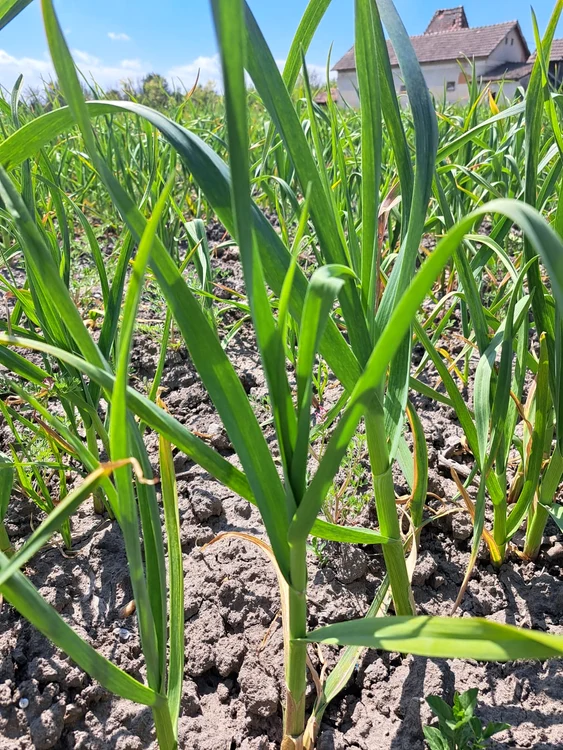
Cristian Fota cultivated garlic again this year, on 3 hectares PHOTO: personal archive
He has not always cultivated on whole hectares, because he also has an important area of protected spaces where he grows vegetables. However, it expanded the area in the years in which the support was granted. “There were years when I didn't do anything with it, because of the drought,” adds the farmer.
In Cioroiași, says the farmer, it was a tradition to grow garlic, there were many more villagers who did it. Meanwhile, most have dropped out, and young people are not tempted by the field.
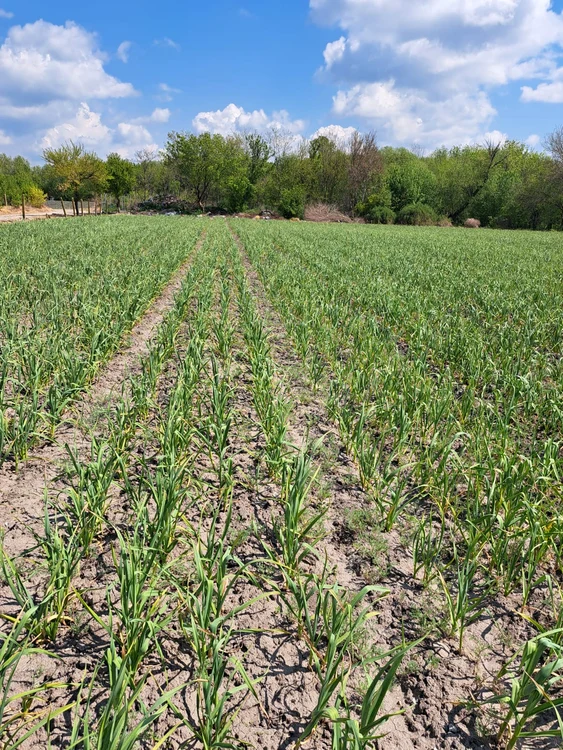
Farmers must submit requests quickly if the support is approved PHOTO: Cristian Fota
“It comes in somewhere between 800 and 1,000 kg per hectare”
The expenses for the establishment of garlic culture are not small.
“The seed – enters somewhere between 800 and 1000 kg per hectare. Not to mention the land, until you prepare it, the fertilizers… The seed would be somewhere around 15,000 lei, that is exactly the support, which is not a big deal, but if they cut this one too, it basically leaves you without oxygen. Even if we don't put certified seed, because it's much, much, much more expensive, you can't find a seed like this for less than 10-15 lei. There are also fertilizers, agricultural works, with sowing, harvesting, with people… A hectare of garlic, I say that without 300-400 million old le you can't do it today”. explained the farmer.
The farmer claims that the ministry did not give the support by chance, because it is a culture that requires a lot of expenditure. The crop is established in October (autumn garlic) and harvested in June. “Garlic is not like cabbage or cucumber, to be produced in a month. All these years, I often started from scratch. But I had a European project and I was obliged to maintain the SOs. Besides, I am not the man to give up immediately, even if what happened last year happened. But if (ed. – the governors) make it a habit, we give up.” said the farmer.
“The market would be for Romanian garlic”
Cristian Fota works in a cooperative and thus managed to capitalize on his production without any major problems. “I can't complain that I don't have an outlet. Well, I've been doing it for many years, I have certain customers. Garlic is not perishable, there's no problem with it. It just dries out and loses weight. I can't complain about the market, but it could be a problem at the national level. Garlic is also brought from China and Spain, but you should know that the Romanians are starting to appreciate it. I mean, whoever bought Romanian garlic came back to us. He also saw what it means to eat and it's spicy, to be sick and how you feel after the imported one and now he's looking for ours”the farmer also said.
One problem is drought, because it has no irrigation possibilities, so production depends on how favorable the year is. Last year he kept all the production to be able to establish the new crop, and the year before the price was, as far as he remembers, 6 lei/kg, immediately after the harvest, wholesale price.
“The intermediaries wanted to take it for 5-6 lei”
One of the producers who no longer grows garlic, at least this year, is Ionuț Crăciun, from Ghimpețeni, Olt. He cultivates, on average, 2-3 hectares, but after last year's experience, when the de minimis support was lacking, and there was a lot of running for sales and a price below expectations, he decided to give up.
“There are a lot of costs, although it can also have a good price. It is divided into categories. The seed, to buy something of quality, is 30-35 lei per kilogram, it costs a lot.
The autumn one is more attractive, it is bigger, it is more convenient for housewives to prepare it, but the best and tastiest is the spring one”, explained the farmer.
Last year “there wasn't much beating on him”the manufacturer details. Because he didn't have firm contracts, he tried to sell it retail, in the markets. Being also a producer of watermelons, famous in Olt county, he used the opportunity and sold it together with the melons. He found a good market in the neighboring county, in Pitesti, where he had no competition from other producers, but for the entire quantity he had to sell to intermediaries.
“I also went to intermediaries, who wanted to buy it for 5-6 lei, to sell it to them. You can't sell it quickly either. You have to stick to it, otherwise it's not profitable.” said the farmer.
If the draft government decision is finally adopted, the producers who must already have the culture established would have 10 days from the publication of the normative act to submit the requests. The control institutions – APIA and the Agricultural Directorate – should, in turn, arrive in the territory as quickly as possible and make the necessary checks, because the harvest begins in June.
According to the draft decision, the minimum area on which garlic is grown must be 3,000 square meters. Farmers can request support within the limit of 50,000 euros of money obtained in the last three years as de minimis aid.
Beneficiaries of this financial support can be:
– agricultural producers, natural persons who hold a producer's certificate issued on the basis of Law no. 145/2014 for the establishment of measures to regulate the market of products from the agricultural sector, with subsequent amendments and additions, valid until December 31, 2026;
– agricultural producers, authorized natural persons, individual enterprises and family enterprises, established according to the provisions of the Government Emergency Ordinance no. 44/2008 regarding the conduct of economic activities by authorized natural persons, individual businesses and family businesses, approved with amendments and additions by Law no. 182/2016;
– agricultural producers, legal entities, regardless of the form of organization.