The Milky Way swallowed another galaxy 10 billion years ago, and astronomers say they've found the remains

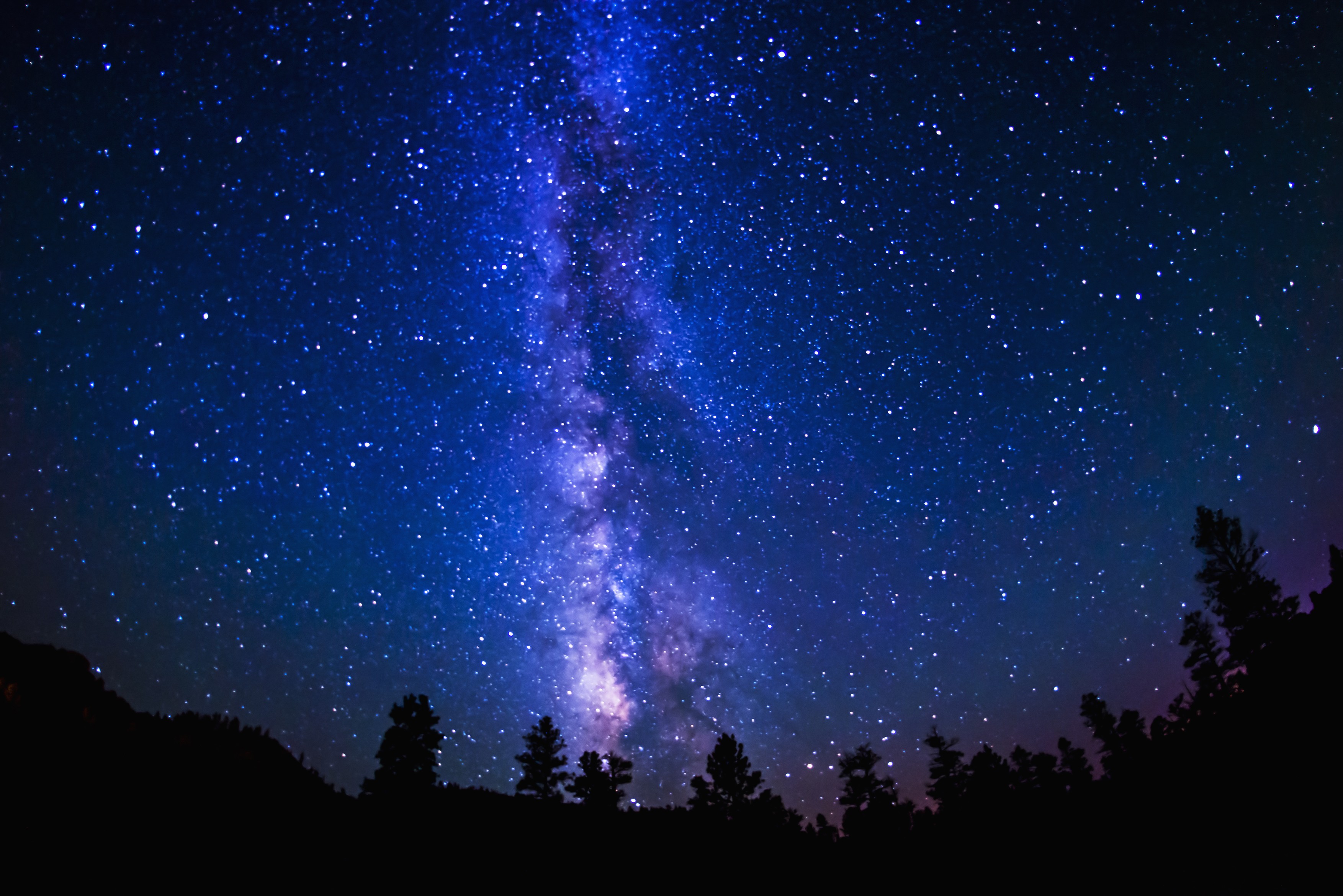
Astronomers have discovered an unusual series of stars that could represent the remains of a dwarf galaxy that the Milky Way swallowed about 10 billion years ago, reports CNN.
Astronomers believe that these stars originate from an ancient galaxy neighboring the Milky Way, which they named “Loki” after Norse mythology. The discovery could change the way we understand how the Milky Way evolved in the distant past.
The Milky Way spans about 100,000 light-years and contains between 100 billion and 400 billion stars, according to NASA. A light-year is the distance light travels in one year, i.e. 9.46 trillion kilometers.
Our galaxy wasn't always such a big cosmic giant. It grew over time, beginning about 12 billion years ago, by merging with a multitude of dwarf galaxies. But the Milky Way's original size and mass remain a mystery — prompting scientists to search for evidence of the galaxies it swallowed to determine its history and evolution.
What scientists have discovered
Astronomers have discovered 20 metal-poor stars orbiting unusually close to the galactic disk using observations from the European Space Agency's Gaia telescope, according to a study published in May in the journal Monthly Notices of the Royal Astronomical Society.
Metal-poor stars are often associated with ancient dwarf galaxies, which the Milky Way may have swallowed up over time to reach its current massive state, and the remnants of these “cosmic tables” may be hiding deep within the galaxy.
The exact age of the stars is difficult to determine, but their chemical composition suggests they are older than 10 billion years, said the study's lead author, Dr. Federico Sestito, an astrophysicist at the University of Hertfordshire in England.
According to him, they are all located about 7,000 light-years from our solar system. The stars also have similar chemical compositions, suggesting that they all came from the same metal-poor dwarf galaxy.
11 of the stars were in a prograde orbit, meaning they were moving in the same direction as the galactic disk, while nine were in a retrograde orbit, meaning they were moving in the opposite direction – possible remnants of a dwarf galaxy swallowed up by the Milky Way just a few billion years after the Big Bang that created the universe about 13.8 billion years ago.
The authors of the study believe that the accreted, or “abducted” stars simply remained part of our galaxy, being thrown in all directions and ending up in different types of orbits.
“If the Loki scenario is correct, then a system that has merged with our galaxy could be scattering its stars both in the prograde direction and in the opposite direction,” Sestito said.
“This is only possible if the merger occurred when the Milky Way was still in its infancy and its gravitational potential was weaker than now. Cosmological simulations suggest that this could have happened no later than 3 or 4 billion years after the Big Bang,” the researcher added.