Romanians, outraged by the pigeons in the cities: “Bucharest stinks. Why do people keep feeding them?”

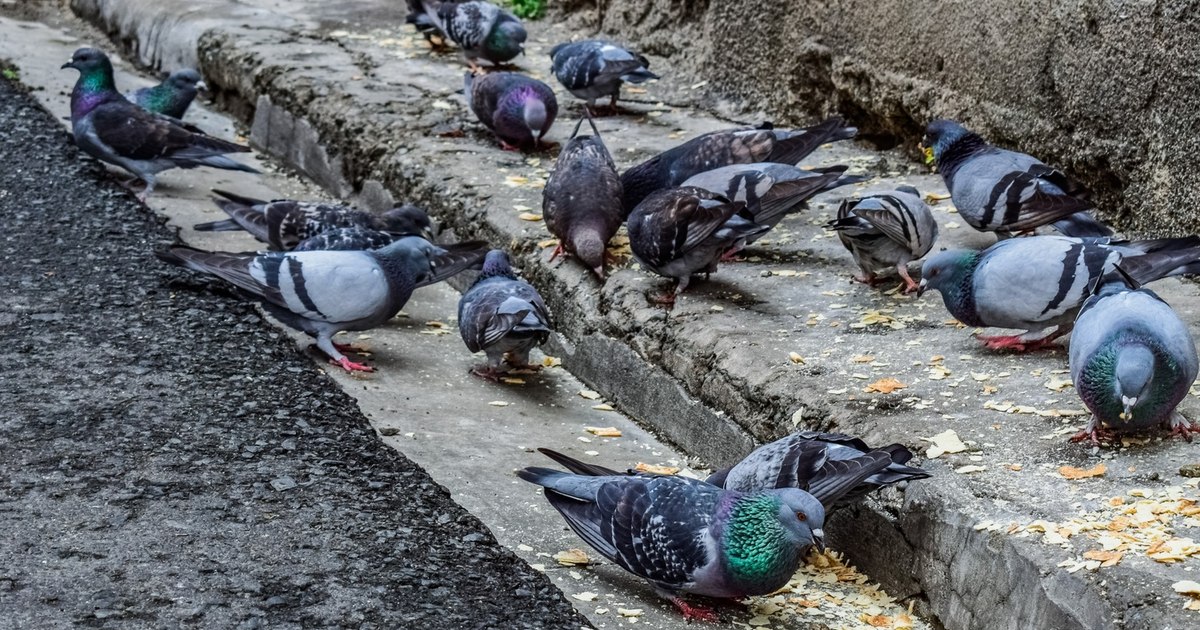
Feeding pigeons in public spaces is controversial in many cities in Romania, where flocks often create mess and discomfort. Although many view them as friendly birds and provide them with food, the habit contributes to overpopulation in urban areas.
Pigeons are easily attracted to food provided by humans. Photo: Pixabay
Feral pigeons (Columba livia) can be found by the thousands in cities in Romania, where they make their shelters and resting places, living near people and accepting the food offered by them.
Flocks of pigeons cause problems in cities
Over time, flocks of pigeons have sparked controversy. Some experts have shown that they can spread diseases and parasites through the excrement they produce, and in addition to health risks, their presence in large numbers also has an economic impact on cities, due to the costs of cleaning and maintaining human-built infrastructure.
In several cities in Romania, the feeding of pigeons has been prohibited by the regulations of the local authorities, and those who violate such provisions risk fines. The motivation for such measures is given by the fact that the constant feeding of pigeons in public spaces leads to the concentration of birds in certain areas, and this causes misery and discomfort.
Food scraps that pigeons are fed can attract pests, from insects to rodents, and the acidic droppings left by pigeons should not be neglected. Many Romanians avoid the risk of being fined by feeding the pigeons, which they consider friendly birds. The sight of people feeding pigeons every day in certain parks has become a common sight in some localities. The capital is no exception, even if many locals are outraged by such customs.
Heated debate on the account of pigeons
The message published by a local from Bucharest on the Reddit platform, in which he claims that feeding the pigeons is not a “good” done to them, but rather a contribution to the overpopulation of the city with pigeons, caused a wave of reactions.
“Bucharest really stinks of pigeons and it's full of pigeons everywhere. You can't sit quietly at a bus stop without someone spreading bread on the floor, or sit under some cables or a street lamp, that there is a real chance that a pigeon will relieve itself at any moment. Real empathy does not mean creating huge colonies of pigeons just to tell yourself: look what a good person I am!“, he complained.
Many Romanians were right. Some have compared those who feed pigeons to those who take care of stray cats.
“If you live on the block, you've probably already noticed that it just stinks of cats. Not to mention that it climbs on cars, scratches and destroys everything”says a netizen.
Someone else advertises the easy way pigeon feeders show their generosity.
“The dog must be walked, after the cat you pick up from the litter box, you take care of the child for at least 18 years, the beggars always add: “Yes, don't you have a cigarette? But what time is it?” etc. Pigeons — nothing. With half a loaf under your arm, you become an avian Patron”he says.
Another argues that it is natural for there to be both urban fauna and flora, which some maintain and others destroy.
“They're all part of this urban forest we live in, I suppose. I wouldn't say I like them, but I don't hate them either. And they're not the only ones that roost, we also have grouse, crows, grebes, etc.”he says.
The pigeon hen, much to the chagrin of the locals
Some claim that because they are fed bread, pigeons scatter chicken everywhere. Another Romanian adds that, although he lives next to a neighbor who raises pigeons, his house is bypassed by them.
“I have a very fit guy with a pretty big appetite. I got access to his house too, so that's good! Instead? The cars? Because they're parked under cables, they're absolutely destroyed.” he remarks.
Another local from Bucharest claims that, during his walks, he noticed parking spaces covered in pigeon roosts. Someone else recounts the American experience with pigeons, where feeding them can bring stinging fines.
“When I was in NYC, there were signs saying 'No feeding the pigeons. $450 fine'. Written in English, of course. These pigeons were also very friendly. I sat outside on some steps for a while, and at some point they started climbing on me. I didn't mind until one of them sneezed,” he says.
However, some Romanians agree with the street feeding of pigeons and invited those who can't stand them “to build their garages”. Others added that humans make more mess than pigeons.
“None of the 'well-wishers' who subscribe to the charitable act of giving bread to pigeons have the slightest sense to accept that, over time, bread destroys their ability to fly. Unseasoned and unroasted seeds are too expensive for a good deed, so they poison their world in the name of mercy.” claims a netizen.
Another Romanian states that when they are hungry, pigeons become even more invasive and that the world must accept that their habitat is the city. One netizen believes that pigeons are not such a big problem and should be left alone, because they bring joy to the elderly and children.
“They carry as many diseases as rats. They're considered pests and it's an offense to feed them, for a reason. People complained about the Pigeon Coop being full of pigeons, but they didn't want to pay more taxes to clean it. There are many people who feel that if it's a baby's or a child's pleasure to defecate on the pole on the street corner, they should let's” someone else adds.
Wild birds have invaded the rivers again, after decades of pollution. Why they should not be fed bread
Another claims that some places in Piața Victoriei have become hotbeds of infection because of people who feed the pigeons.
“There's always a 10-year-old beggar sitting there, and she's like the woman with the pigeons in the movie “Home Alone 2″. The pigeons bump into people and there's always a smell of chicken.”he claims.
A Romanian admits that he only gives food to the pigeons if he eats pastries on the street.
“I don't think I'm a good person for that, and I know it's not good for them, but I imagine that after all these years of eating nothing but garbage, they've adapted too. Pigeons have been domesticated and then released, and now we call them winged rats and we want them gone. I find them funny and cute. Some of them will have diseases, but most of them are not a risk to humans. You always have the choice not to touch them, anyway. And wash your hands,” he states.
Pigeons, appreciated and hated
Another states that the pigeons were brought to the city by humans, so they should not complain about their invasion.
“The city doesn't stink of pigeons. It's not chicken everywhere. They're souls, too. None of them have sneezed on me yet.” says someone else.
Another Romanian claims that, because of the pigeons, he lost tenants in the houses above which they nest. “The smell is absolutely pestilential! The noise is absolutely maddening,” write this one.
A Romanian points out that most people offer them bread, which is not good for them.
“If the streets are full of pigeons, it's the public administration's fault that they don't clean the sidewalks, as it should be, not the birds' fault that they exist”he adds.
A Romanian claims that, although he was the “victim” of the pigeons, he does not bear any trace of hatred towards them. However, they would prefer their numbers to be smaller.
“Why do people keep feeding them? Do they feel like they can't do it on their own? What if, instead of interfering with the wildlife, we let them eat what they already find in the areas they fly? They're perfectly capable foraging birds and would probably make better choices than bread. Why do you think we're filling up on caterpillars and other pests? Because natural predators sit belly up, enough of what I am”, believe this one.
However, someone else complains that, in Cîsmigiu, after every rain, he cannot breathe, because an extremely strong smell of chicken rises from the ground and from the alleys.
“I haven't fed pigeons for over 10 years. They are the rats of heaven. Have you ever fed rats? No? Well then why pigeons?“, someone else thinks.
Pigeons should not be fed in summer
Some believe that pigeon fanciers are not sincere.
“If you want to take care of an animal, you can get a puppy or a cat, but that involves responsibility. So you satisfy your brain that, mother, what a good deed you did when you took out a corner of bread, gave it to the pigeons and moved on.” writes an internet user.
Someone else claims that there is no room to pass them in some markets and that they make a mess on the terraces.
“There is no such thing as an urban ecosystem. The urban environment is, by definition, artificial, created and controlled by humans. I like pigeons. Don't people who don't like them really have bigger problems in life than they do?”, add this one.
The Romanian Society of Ornithology shows, in an article dedicated to the feeding of wild birds, that, during the summer, they easily find food, both of plant and animal origin: insects, molluscs, amphibians and reptiles. Recommended foods include oilseeds such as sunflower, pumpkin seeds, flax and hemp seeds, walnut kernels, hazelnut kernels, plant foods — cooked vegetables or fruits — and animal fat.
Zăganul, the extinct bearded eagle from the Carpathians. The story of the “bone breaker” who ruled the sky of Retezat
Salty and spicy foods are contraindicated: salty, fried seeds, spicy or smoked bacon, etc.; processed foods; the bread; pasta and rice; cereals: wheat, barley, oats, bran and corn.
Bread can cause problems for birds
Although not toxic to wild birds, bread, most often offered as food to these birds, can cause them a lot of problems, nutritionists say.
“Most bread is very unhealthy for birds because it is heavily processed and contains preservatives, salt and sugar, which their bodies cannot process. The main ingredient is refined flour, from which the nutritious part of the grain has been removed.” shows the website Nest and Glow, which specializes in healthy eating.
Bread contains little protein, and this is vital for birds to develop muscles and feathers. It fills a bird's stomach but doesn't provide much food. Bread also has no fat, and birds depend on fat for energy.
“Bread is very high in carbohydrates, but offers little else in the way of nutrition. This is problematic because it fills up the little bellies of wild birds very quickly — leaving them nice and full, but without the nutrients they need. In other words, bread is basically junk food for birds.” says Armstrong Bird Food, a Canadian specialty website.
The daily bread offered to wild birds in cities leads to overpopulation of these places, which can have negative effects on the local ecosystem. That which is no longer eaten by them can attract pests, such as rodents and cockroaches, which can spread disease. Through mold, although not every piece of rotting bread happens like this, it can cause infections in the birds that eat it.
“Birds that eat excess bread will spread more feces, and as it turns out, they have a lot of nasty bacteria that can harbor a variety of diseases. And because birds can fly, there's really no place safe from their droppings. People, animals, and other birds can reap the negative consequences of this.” informs the site.