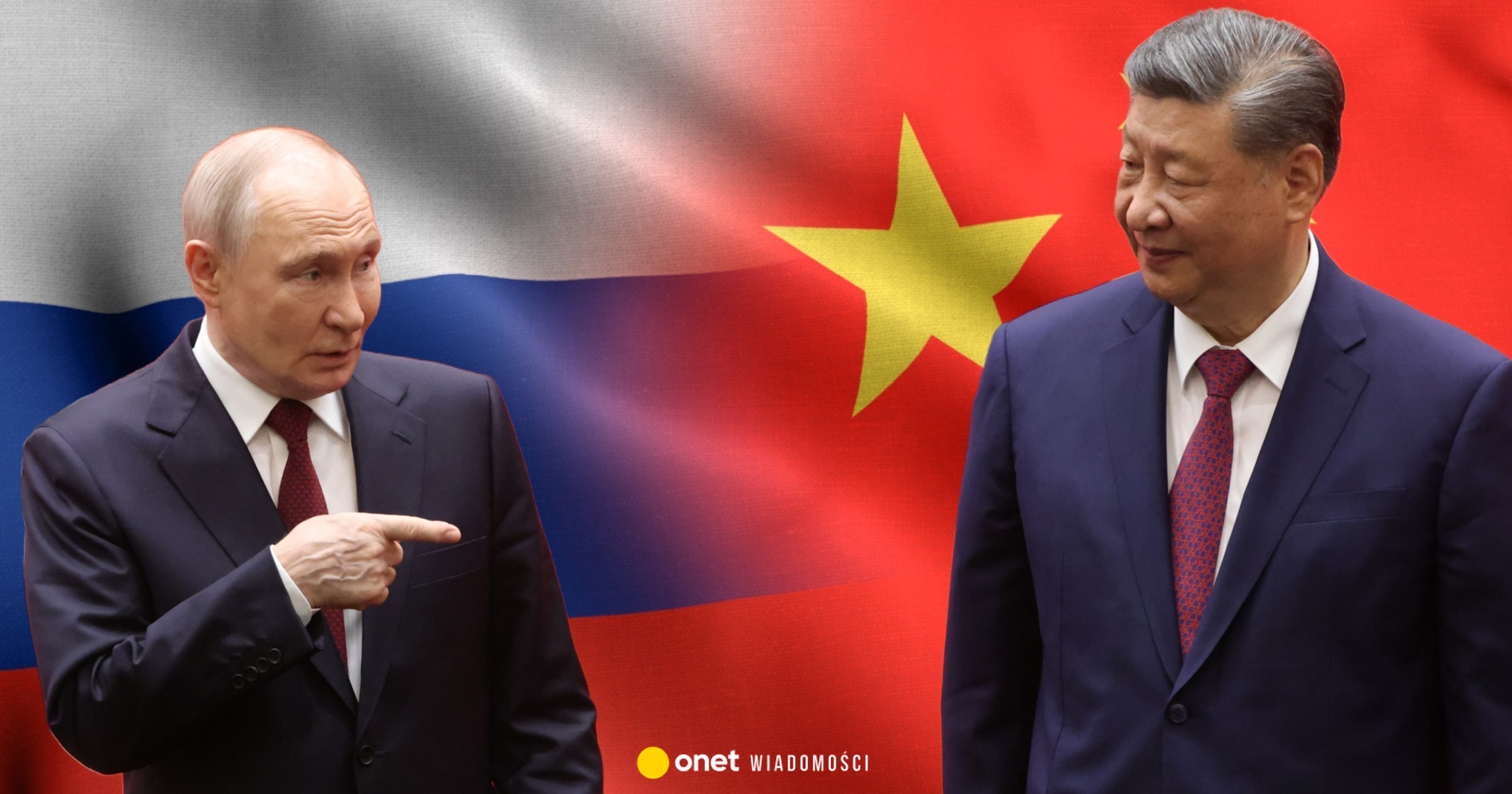
Many people have a “friend” with whom they can talk about everything, with whom they have fun and spend good time – but who fails at the decisive moment. Vladimir Putin also has such a friend. This is China's leader Xi Jinping.
The two men have met over 40 times, most recently on May 20 this year. in Beijing. Yet despite all the talk of “close strategic partnerships” and “cooperation for prosperity”: what Putin really wanted from his “friend” he did not receive.
The Kremlin did not read Beijing's signs, even though China's plans had been known for a long time. And if that wasn't enough, the gas pipeline is not Putin's only problem. He also just lost two advantages at the front. It's all connected. And it is Xi who can bring about a breakthrough.
They concluded 41 agreements in the Chinese capital: regarding agricultural products, nuclear energy and training programs. But The Chinese still do not want to hear about the Power of Siberia 2 mega-gas pipeline.
For Putin, this huge pipeline, which was supposed to transport up to 50 billion cubic meters annually. gas from Russia through Mongolia to China, is more than just a project close to his heart. As the war enters its fifth year, this may be his last chance to save this vast empire from a worst-case economic scenario.
Today Russia stands on the brink of an economic abyss. Economic growth moved to the negative side, from 4.9 percent. in 2024 to the recently recorded -1.8 percent in the spring of 2026. Even the well-oiled Kremlin propaganda machine cannot forget about it for long.
The article continues below the video
Xi prefers to buy from Trump rather than Putin
Western customers (despite the temporary lifting of trade sanctions by the US) have mostly turned their backs on Russia. 24 of the country's 33 large oil refineries are moderately or severely damaged by Ukrainian drone and cruise missile fire. However, without oil and gas exports, Moscow will not be able to maintain its extremely expensive war machine for long.
In Putin's plans China was to play the role of rescuer. However, Xi did not sign an agreement on the second gas pipeline – the first Power of Siberia gas pipeline was put into operation in 2019. Elina Ribakova, a geopolitics expert at the Kyiv School of Economics, speculates in “The Wire” that divergent price expectations regarding this liquid raw material could have led to the termination of the contract.
China buys gas flowing through the first gas pipeline at a reduced price, from which the Russians earn almost nothing. Putin must therefore put more pressure on Beijing to reach into its pockets. However, Xi has no intention of buying at fair prices.
In recent years, China has significantly diversified its energy portfolio: wind energy from its own hinterland, oil from Iran (which, thanks to a special agreement with the mullahs, even now flows through the Strait of Hormuz), huge investments in new nuclear power plants and – as a result of Donald Trump's state visit in mid-May – again American liquefied gas (the first four ships from the US are on their way to Chinese ports). Russian gas? Why not? But only if it remains cheap.
Moscow has little say in what is by far its most important trading partner. Since the beginning of the war, Russian dependence on China has increased even more. Let us take as an example the fact that, according to sources from the Ukrainian secret services China supplies 9 out of 10 of the foreign parts that Russia needs to build its combat drones.
If Xi – as he suggests in his flowery messages to Putin – were really interested in “universal peace”, he could at least force it on Ukraine by taking his “friend” into an economic embrace. Xi's initial rejection of the new pipeline project is already doing Kiev a great favoreven if it wasn't intentional and is probably just a side effect of China's pressure on energy prices.
Russia is losing its two most important advantages
The blocked gas pipeline is not Putin's only problem at the moment. His soldiers are dying at a record rate – at least if data from Kiev is to be believed. This year alone, Ukrainians were to kill 86,000. Russians and severely injure 59,000.
Month after month, Ukrainian arms plants present new devices and technologies thanks to which they want to regain the initiative on the battlefield. Most recently, these included a glide bomb produced entirely in Ukraine and new tactics for using dronesin which unmanned aerial vehicles are transported by balloon over enemy territory and released from an altitude of eight km.
Michael Carpenter, former US ambassador to the OSCE, told the Kyiv Independent newspaper that thanks to such innovations, Russia has already lost two strategic advantages – a larger population and a larger area.
For the first time since the beginning of the war, Ukraine is carrying out more attacks on Russia than vice versa. The recovered territories are larger than those lost to the Russians. There is growing concern in Russia over drone attacks on Moscow and other major cities, as seen in Moscow newspapers.
Echoing New York's motto, the head of Ukraine's drone units promised last week that Moscow will become the city that never sleeps. This week, Xi has — indirectly — but largely contributed to the fact that at least Moscow's most powerful resident probably can no longer sleep soundly.
I’m Ashley Davis as an editor, I’m committed to upholding the highest standards of integrity and accuracy in every piece we publish. My work is driven by curiosity, a passion for truth, and a belief that journalism plays a crucial role in shaping public discourse. I strive to tell stories that not only inform but also inspire action and conversation.