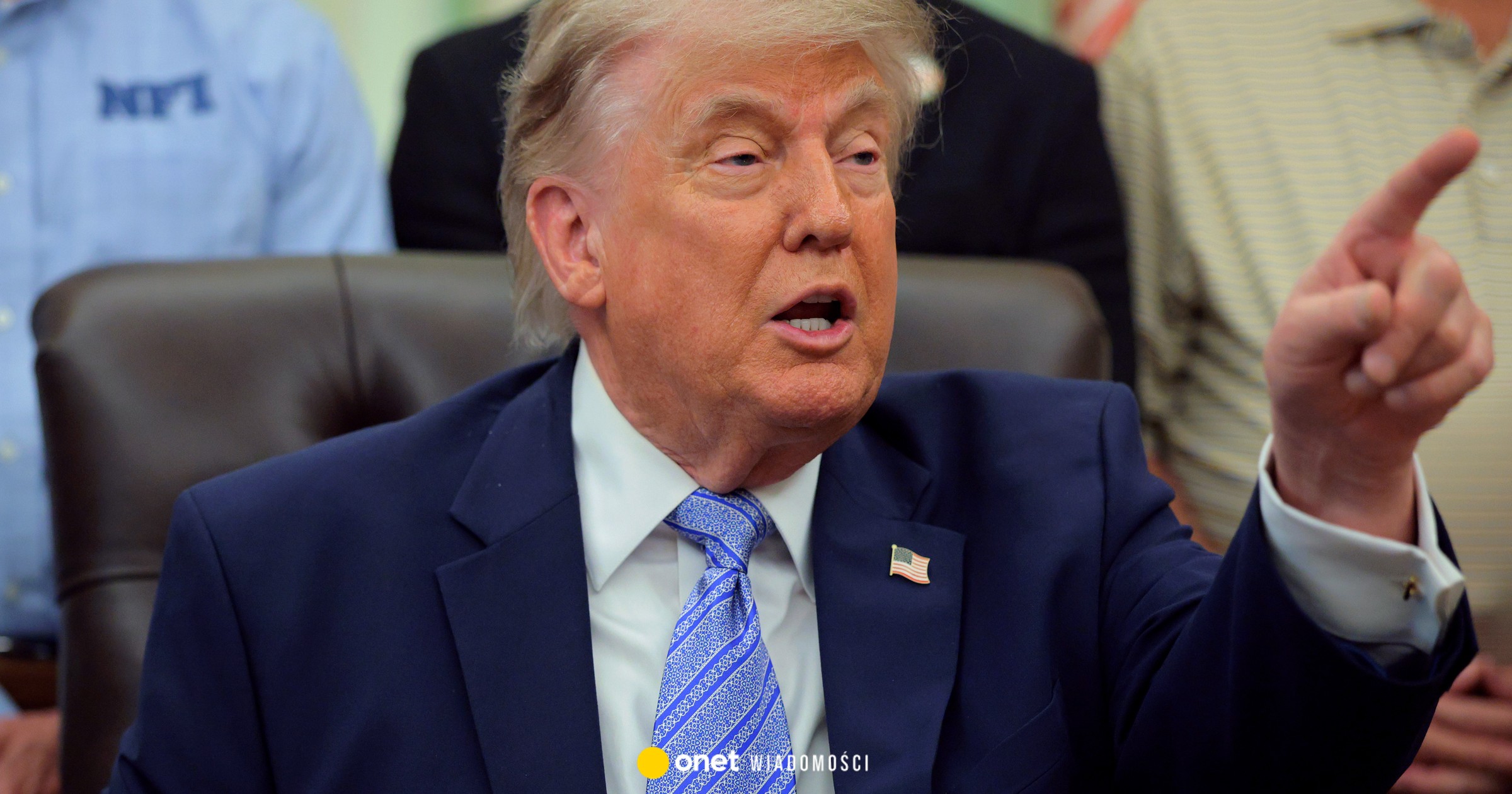
Confusion over Trump's seemingly arbitrary statements regarding troop movements increasingly irritates NATO partners. “It's really confusing and it's not always easy to navigate through it all,” said Swedish Foreign Minister Maria Malmer Stenergard.
“We just spent almost two weeks responding to the first announcement. We also don't know what it means – an anonymous Pentagon official comments on Trump's surprising statement about increasing the number of troops in Poland.
On this occasion, the issue of aid to Ukraine and the related pressure from the Germans to make serious changes in this area come back like a boomerang. In turn, the Americans mock the Europeans regarding the Strait of Hormuz. And if that wasn't enough, the Germans, the French and the Canadians had just quarreled.
NATO Secretary General Mark Rutte tried to calm the situation and give some logic to Trump's partially contradictory statements. “We know that adjustments will take place. This will take place in an orderly manner over time,” he noted.
Put simply: in the coming years, Americans will gradually withdraw significant numbers of troops from Europe to redeploy them to other regions, such as the Indo-Pacific. Currently, there are talks of 5,000 soldiers to be withdrawn from Germany. How reliable this number is, no one in the alliance currently knows.
However, one thing is clear: Americans want to hand over more and more tasks related to the defense of the alliance to Europeans in the future. The latter have therefore committed to investing from 2035. 5 percent GDP in defense.
The article continues below the video
The US wants to summarize its actions so far
“We want a stronger NATO with a greater role for Europe,” said Foreign Minister Johann Wadephul (CDU). Rutte's slogan is: “Stronger Europe, stronger NATO.” During the July NATO summit in Ankara, the Americans want to summarize their actions so far. Each NATO country must demonstrate that its defense spending has already increased noticeably over the last twelve months.
Ukraine is also back on the agenda in Helsingborg. Germany is very dissatisfied with the fact that aid to Ukraine is distributed unevenly within the alliance.
The weapons that Europeans order from America for Ukraine are financed mainly by four countries: Germany, the Netherlands, Sweden and Norway. Many countries “are not spending enough to support Ukraine,” Rutte criticized.
Berlin realizes that lasting support for Ukraine will cost billions more, much more than the EU and NATO together currently have. Berlin is now pushing for a fairer distribution of costs.
A few weeks ago, the federal government proposed in a letter to the allies to create a new additional fund for Ukraine or at least provide greater transparency as to who pays how much. – This is to put pressure on those who are in arrears with payments – one of the diplomats tells “Die Welt”.
Rubio questions the value of NATO
During the meeting, US Secretary of State Marco Rubio again made it clear just how much Washington is embittered by the lack of support from European allies in the war with Iran. He even questioned the value of the alliance: “I know NATO is good for Europe, but why is NATO good for America?” – he commented. He announced that the lack of support will be the topic of the upcoming NATO summit in Ankara.
Against this backdrop, allies are now intensely debating whether NATO can play a role in securing the Strait of Hormuz. “We will be there wherever we can help,” Rutte said. Wadephul [niemiecki minister spraw zagranicznych w rządzie Friedricha Merza] however, he emphasized that he did not see “any direct NATO mission there in the classic sense of the word.”
Politically, there is talk that NATO will soon agree to provide intelligence or patrol ships in the waters adjacent to the Strait of Hormuz — only for Trump to finally give up.
According to information from the “Welt am Sonntag” newspaper, there is doubt in NATO whether Trump will appear at the NATO summit in Ankara due to irritation with the alliance. This is confirmed by several diplomats. — Although these doubts are not expressed in the forum of NATO bodies, they appear in numerous informal conversations, says one of the officials.
The American ambassador to NATO, Matthew G. Whitaker, assured during the talks that Trump would come to Ankara. In addition, the US leader was to confirm his presence to Turkish President Recep Tayyip Erdogan. In any case, as diplomats emphasize, the alliance has planned only a relatively short summit meeting in Ankara so that “President Trump's behavior does not get out of control.”
Meanwhile, it turned out that the German candidate running for the chairmanship of the NATO Military Committee from the summer of 2027, General Carsten Breuer, suddenly has competition. Canada has announced the candidacy of Jennie Carignan, commander-in-chief of the armed forces. The elections will be held in September.
France reportedly pressured Canada to nominate Carignan. Supposedly, French President Emmanuel Macron “wants to irritate the federal government” because “he believes he has many reasons to do so,” we hear in the corridors in Brussels. Carignan has no chance of winning. But if it lost or withdrew its candidacy just before the election, Canada could count on another lucrative position in the alliance, diplomats say.
I’m Ashley Davis as an editor, I’m committed to upholding the highest standards of integrity and accuracy in every piece we publish. My work is driven by curiosity, a passion for truth, and a belief that journalism plays a crucial role in shaping public discourse. I strive to tell stories that not only inform but also inspire action and conversation.