Iran is rebuilding its military-industrial base faster than anticipated. Drone production has already resumed, US reports show

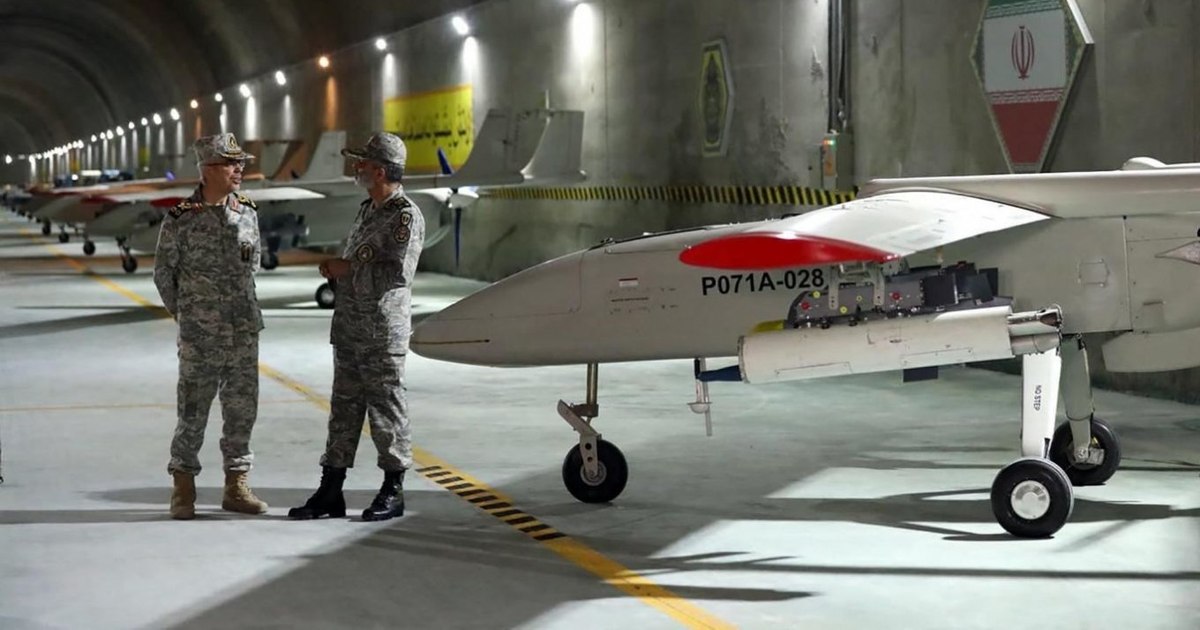
Tehran has already resumed some drone production during the six-week truce that began in early April. This is a clear signal that the Islamic Republic is rapidly rebuilding its military capabilities damaged by the US-Israeli attacks, according to sources familiar with US intelligence assessments. Moreover, official sources indicate that the pace of reconstitution of Iranian forces is far exceeding the Pentagon's initial estimates.
Underground Iranian drone base/PHOTO: Archive
The rebuilding of military infrastructure — including replacing missile sites, launchers and production capabilities for key weapons systems destroyed during the recent conflict — demonstrates that Iran remains a major threat to Washington's regional allies should President Donald Trump decide to resume the bombing campaign. This dynamic also calls into question the official rhetoric regarding the long-term effectiveness of Allied attacks.
While the length of time required to restart production lines varies depending on the complexity of the components, some US intelligence estimates show that Iran could fully restore its drone strike capability in as little as six months.
“The Iranians have exceeded all the timelines that the intelligence community had anticipated for rebuilding forces,” a US official said on condition of anonymity.
How Tehran circumvents the blockade
Drone strikes are a major concern for US regional allies. If hostilities resume, Iran could compensate for its — significantly degraded — ballistic missile arsenal with a massive use of drones, capable of striking targets in Israel and the Gulf states.
President Donald Trump has repeatedly threatened to resume combat operations if the two countries do not reach a firm agreement to end the war. Recently, the White House leader publicly stated that he was “an hour away” from ordering more bombings, meaning that Iran's new military production could quickly enter the equation.
According to the analysis, Tehran's ability to reinvent itself so quickly is due in part to the logistical support it received from Russia and China, but also to the fact that the US-Israeli strikes did not cause the full damage expected. For example, sources indicate that Beijing has continued to supply critical components for missile manufacturing, although this flow has been partially restricted by the US-imposed naval blockade.
Israeli Prime Minister Benjamin Netanyahu has directly accused China of providing Iran with military production technology, a charge strongly denied by Beijing's Foreign Ministry, which described the claims as “lacking any factual basis”.
Contradictions at the top of the US military
Recent assessments show that the war has weakened the Iranian military, but not destroyed it. About two-thirds of Tehran's missile launchers survived the air campaign, a higher percentage than estimated in the spring, amid a truce that allowed military engineers to unearth equipment buried under rubble. Also, the drone stock remained 50% intact and coastal defense cruise missiles are operational, keeping the risk to maritime traffic in the Strait of Hormuz high.
However, this reality on the ground is in flagrant contradiction with the official statements of American military commanders. Recently, Admiral Brad Cooper, the commander of CENTCOM, claimed before Congress that the allied operation destroyed 90 percent of Iran's defense industrial base, assuring that the regime will not be able to recover “for years.”
The intelligence report suggests a far more realistic and troubling conclusion: the damage to Tehran's weapons factories has set back the military program by mere months, not years. With still a partially functional industrial infrastructure and open supply channels, Iran is demonstrating a resilience that is forcing Washington to recalculate its deterrence strategy in the Middle East.