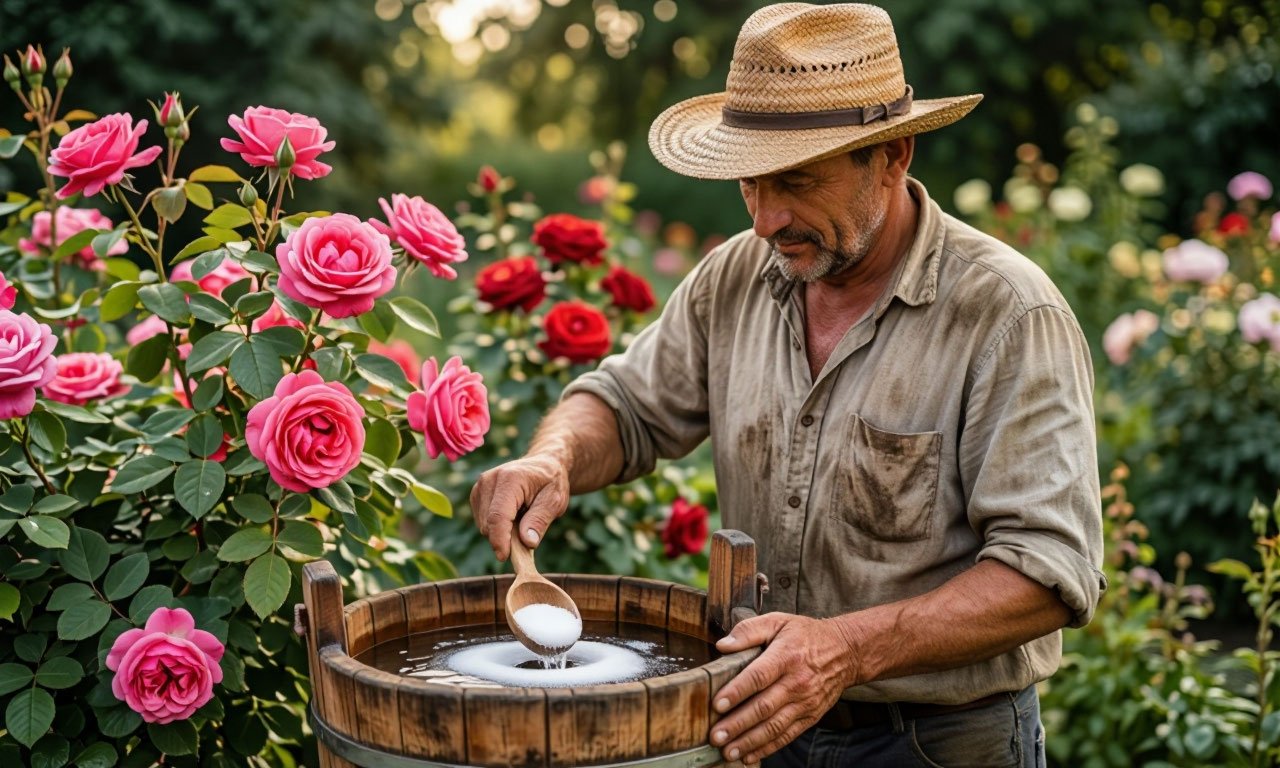
Roses – decoration of the garden, but they require care. Regular baking soda is readily available, inexpensive and, when used correctly, solves several common rose growing problems. Agronomist Ksenia Davydova spoke about this.
From powdery mildew to aphids
Baking soda has antiseptic properties, inhibits fungal diseases (especially powdery mildew) and creates unfavorable conditions for pests like aphids. Its slightly alkaline reaction also helps correct soil acidity—roses prefer a pH of 6.0–7.0.
Main recipes for roses:
- preventive solution for powdery mildew: 1 tbsp. spoon of soda + ½ teaspoon of liquid soap + 1 liter of water. Spray every 10 days;
- root fertilizer for flowering: 1 tbsp. spoon of soda per 10 liters of water. Water at the root in spring and after the first wave of flowering (2–3 liters per bush);
- light anti-stress composition after pruning or replanting: 1 teaspoon of soda + 1 drop of iodine + 1 liter of water.
Directions for use and precautions
For soda to be beneficial and not harmful, follow several conditions:
- do not exceed the dosage – excess sodium inhibits plants;
- consider the type of soil: do not use soda on alkaline soils;
- spray in dry weather in the morning or evening to avoid leaf burns;
- test the solution on one shoot before mass treatment;
- Wear gloves and avoid contact with eyes.
Soda is an auxiliary, not a primary remedy. Alternate soda treatments with other care methods.
When baking soda won't help
Soda is powerless against advanced fungal infections, massive pest infestations and nutrient deficiencies. Nor will it correct the wrong climate or the wrong variety.
When used wisely, soda becomes a reliable aid in creating a beautiful rose garden. In combination with proper watering, fertilizing and pruning, your roses will reward you with bright and lush flowering.