Milena lives on the streets of Berlin. He says it straight: I fear them the most

Haste. This is the first thing that catches my eye. An elegant woman in a suit only glances towards the gate leading to the zoo. Speeds up your pace. An Asian couple takes photos against the background of two concrete elephants and a characteristic oriental-style gate. They don't have cameras around their necks. They were replaced by telephones. A man dressed in a light shirt and black trousers quickly passes them. You can immediately recognize who is a tourist and who lives and works in Berlin. Haste. He is a feature.
A little further on, loud music catches my attention. I pass more exclusive shops and showrooms of Bikini Berlin, one of the most unique shopping centers in the German capital. Through shop windows I see expensive branded clothes and electronic equipment.
It is the latter that is the source of music. Two large loudspeakers placed in front of the entrance fill the entire street with sounds. There are even red carpets. Although a bit dusty and stained, they are supposed to add luxury to the entire area.
—Turks are the worst. They open their hip bags and show how much money they have. Or they put the item under their feet and wait for you to crouch down in front of them to pick it up – I will hear from Milena later when we stop in the same place.
It's only a few hundred meters from Bikini Berlin to the train station, but the landscape is changing. Luxury boutiques are replacing takeaway places. From a distance you can also see the characteristic inscription on the viaduct, unchanged for several decades. Bahnhof Zoologischer Garten, the infamous Zoo Station.
When Berlin was divided by a wall in the 1960s, this station became the most important station in West Berlin. At that time it had only two platforms. Today it is a large transfer center, although not as important as it was several dozen years ago. Only supports regional calls.
The world heard about Bahnhof Zoologischer Garten in the late 1970s. Book We, children from the Zoo Station which is a record of conversations with a young drug addict, became a global hit. Three years later, in 1981, a film of the same title was made, and in 2021 HBO made an eight-episode series.
Andrzej Scotland / newspix.pl
– Yeah… it's nice to watch it from a warm couch, but life on the street is something else – Arek snorts slightly when I later ask him about these productions.
It is estimated that there are over 50,000 people in the homeless crisis in Berlin. These are those who live in shelters, night shelters, sometimes with friends or family. There are officially six thousand people whose only home is the street. Such data for 2024 were presented by the Berlin Senate. According to aid organizations, this number is several thousand higher.
Just outside the steps leading to McDonald's, a small group sits on the ground. They are of different ages. A girl with her head shaved almost bald, wearing leggings imitating jeans and designer shoes. Next to her is a man in his fifties. He has a pink cowboy hat on his head. There is also a woman with blonde hair, whose face is covered with wrinkles, and a girl wrapped in a pink down comforter. She looks like the youngest of the group. He's 20 years old at most. My friend adjusts this quilt from time to time, wrapping it tighter. It's July. It may not be hot, but a down duvet seems out of place.
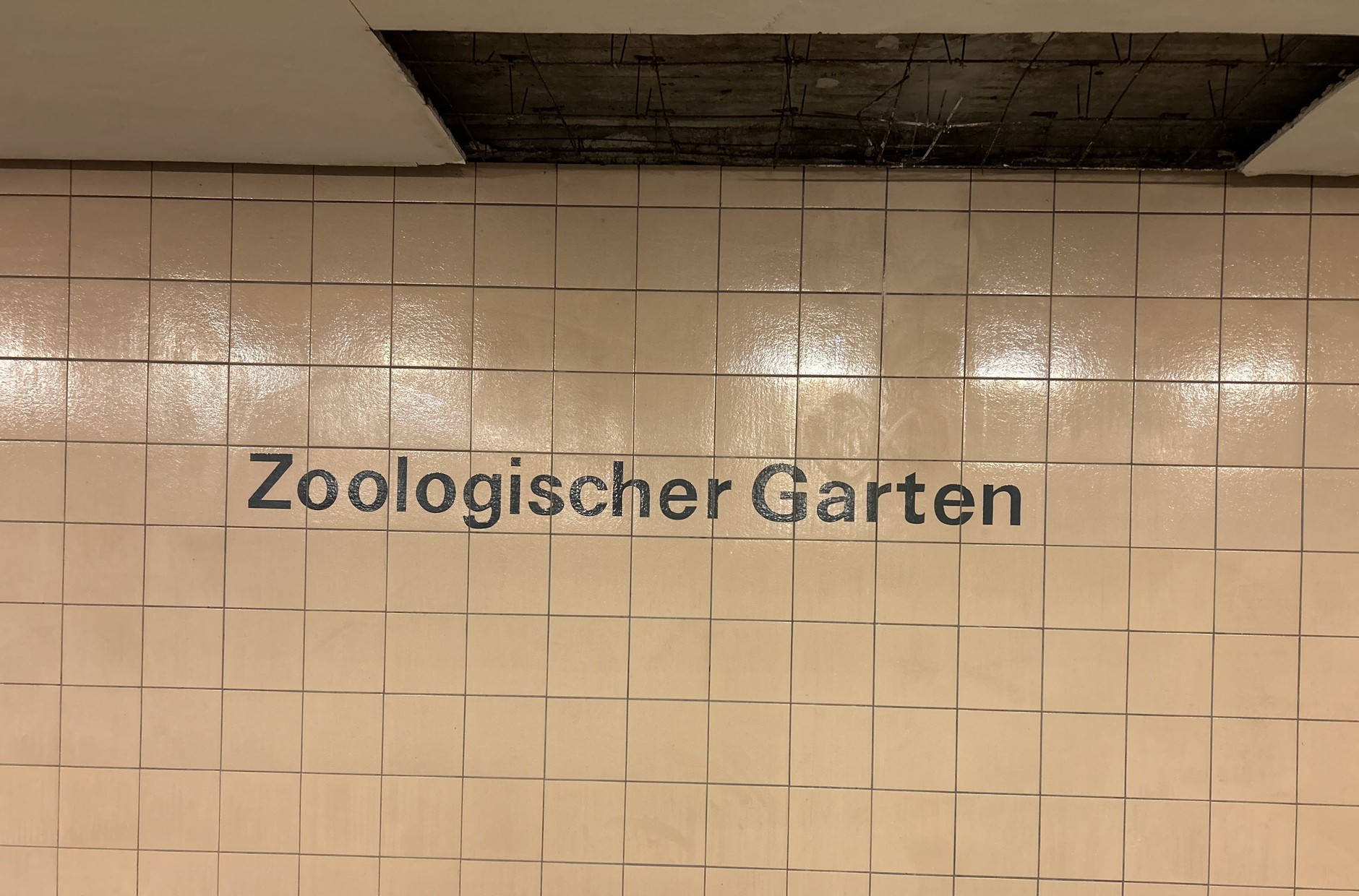
The inscription on the subway wall at the Zoo StationAlicja Staszak / Onet
People pass by them without saying a word. They don't even look in their direction, as if they were avoiding an obstacle. Pole, garbage can. Something that stands but doesn't require attention. Just bypass it. I stop for a moment and try to hear what they are talking about. However, in the street chatter I only hear “schwein” (pig) and “scheiße” (shit). When the man with the hat and the old woman stand up, their feet catch my attention. They walk barefoot towards the lights, arm in arm. A moment later, the short-haired girl smiles at the others, takes off one shoe and goes on all fours to the nearest manhole. She kisses the cast-iron manhole and returns to the conversation as if nothing had happened.
I would later learn from Milena that they were German, heroin addicts. They are what he fears the most.
– They are ready to do anything for a plot of land – I will hear.
At first glance, they are difficult to recognize. However, there are signs. Like this quilt in the middle of summer. Chills, runny nose, watery eyes. Restless hand movements, nervousness. These are all signals that the stage of drug ecstasy has ended, and every centimeter of the body demands another share. There is a slowdown earlier. Everything becomes heavy and limp, as if the muscles suddenly stopped working. The body slowly falls onto a bench, a sidewalk, and the station wall. Your eyelids become heavy and your gaze stares into emptiness. Once I know how to look, I see them at the station and in the nearby park.
They work as if in slow motion. Hand movements, head nodding slightly to the rhythm of your own shallow breathing. As if the body was extinguishing, but not dramatically, but slowly and gently. To an outsider it looks a bit like half-sleep, but it's what it's called nodding. A state of relief and indifference, typical of opioid drugs, i.e. heroin and morphine.
It is estimated that there are up to 165,000 people addicted to heroin in Germany (official data for 2021). The situation worsened during the pandemic, when help for addicts was significantly limited due to lockdowns. Now in Berlin itself, not only needle and syringe exchange points, but also DCRs (English: drug consumption rooms). These are places where addicts can take drugs under controlled conditions, under the supervision of medical staff. Sterile needles and syringes are also provided here. There are over 30 of them across the country, and in 2023, over 18.5 thousand addicts used them.
However, the problem is growing and the authorities are reaching for new solutions.
“Just don't bother people yourself. The woman is not entirely safe here.”
Kreuzberg – currently the most fashionable and expensive district in Berlin – had a bad reputation at the beginning of the 21st century. Today it is a place of many contradictions. On the one hand, there is a metropolitan atmosphere with artistic spaces that students like to visit. On the other hand, it includes Görlitzer Park, which has been a problem for the German authorities for years. Although here too two worlds collide.
Walking through Görlitzer Park, you can meet families with children, seniors and tourists. An equally large group are drug dealers who offer marijuana, hashish, speed or cocaine on virtually every corner. You don't have to look for them. They offer party utensils from the entrance.
In 2019, the park authorities tried to control the situation in a rather unconventional way. So-called pink zones have been designated on walking paths. The places painted on the ground with pink spray were supposed to be accessible to dealers.
The park authorities then explained that they did not accept drugs, but this method was supposed to be a way to separate dealers from ordinary walkers, including families with children.
Ultimately, the idea was rejected, and in 2025 the construction of a fence around the park began. The area is to be monitored and closed at night, which sparked waves of protests. Construction companies even received threatening letters. Some residents are afraid that after the park is fenced, the drug problem will not disappear and dealers will move to other places. In fact, you can already see them at train stations and metro stations.
At the Zoo Station, no one bothers the group sitting in front of the building. Neither passers-by, nor policemen, nor station security. Apart from them, in the main part I also meet a man in a wheelchair wearing hospital pajamas. His ulcerated leg emits a characteristic rotten smell. He tries to pick on people in front of the cafe. A young boy in a light jacket puts a few coins into his open hand and quickly leaves.
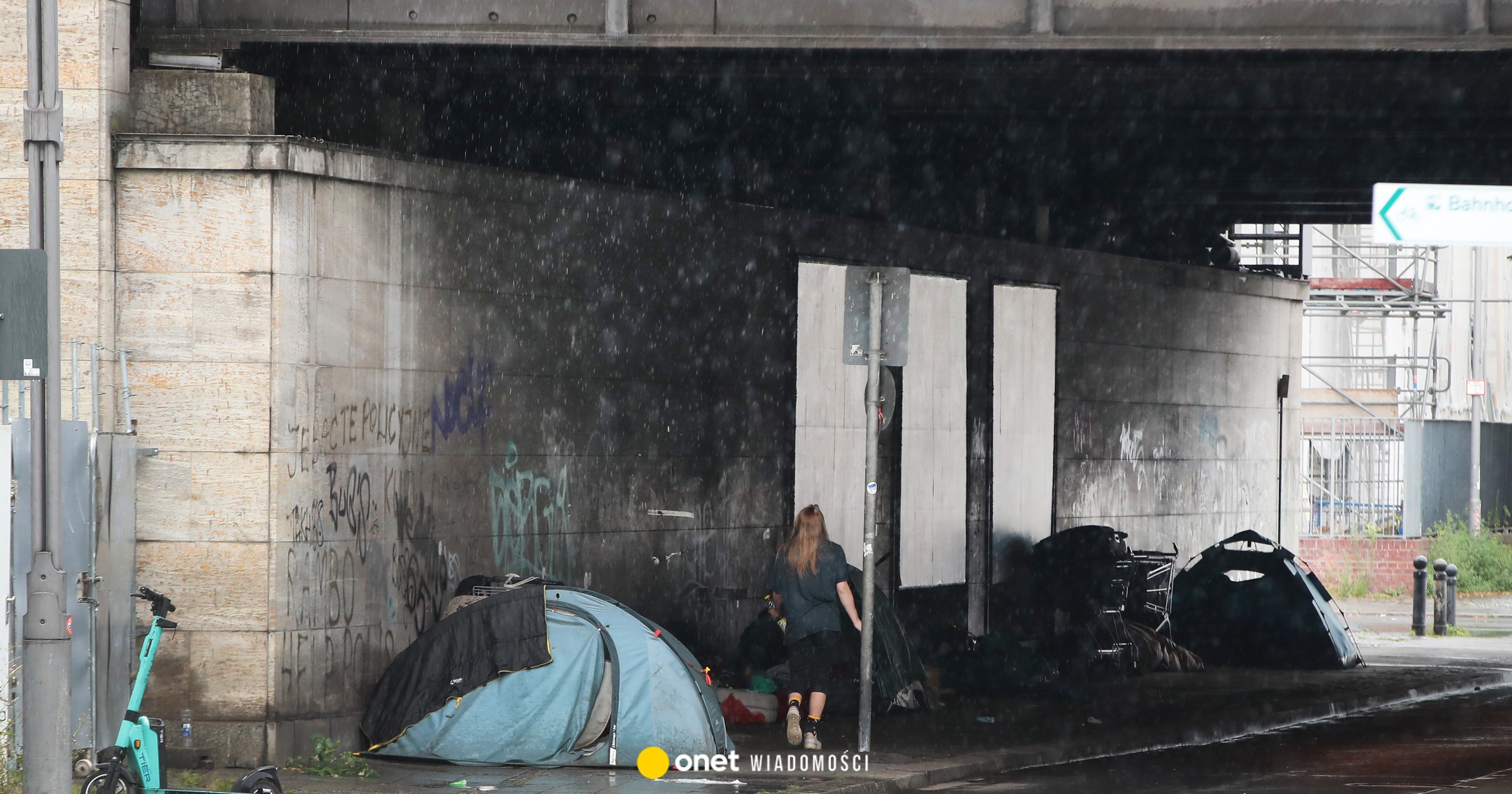
And that's pretty much it. There are no large camps, no tents, no dozens of homeless people wandering around the station. At least at first glance, in the main part. The real Zoo Station starts a few dozen meters away. You just need to know where to go.
I pass an elderly woman with a shopping cart filled to the brim. There is also an Asian woman. He looks like he's maybe 35 years old. Pretty, wearing a brown tracksuit. With a can of Coke from a distance, she looks like just another tourist waiting for a train. As I get closer, however, I see that her clothes are dirty and her face is dusty. He laughs to himself in his characteristic way as he sips his drink.
Several people fell asleep in sleeping bags in the tunnel near the wall. They are passed by travelers coming down from the platforms. As I pass by a group with a dog sitting at the end of the tunnel, I feel curious eyes on me. Few people go in this direction. Jebensstraße is a small street behind the station, where there are several help points for people experiencing homelessness.
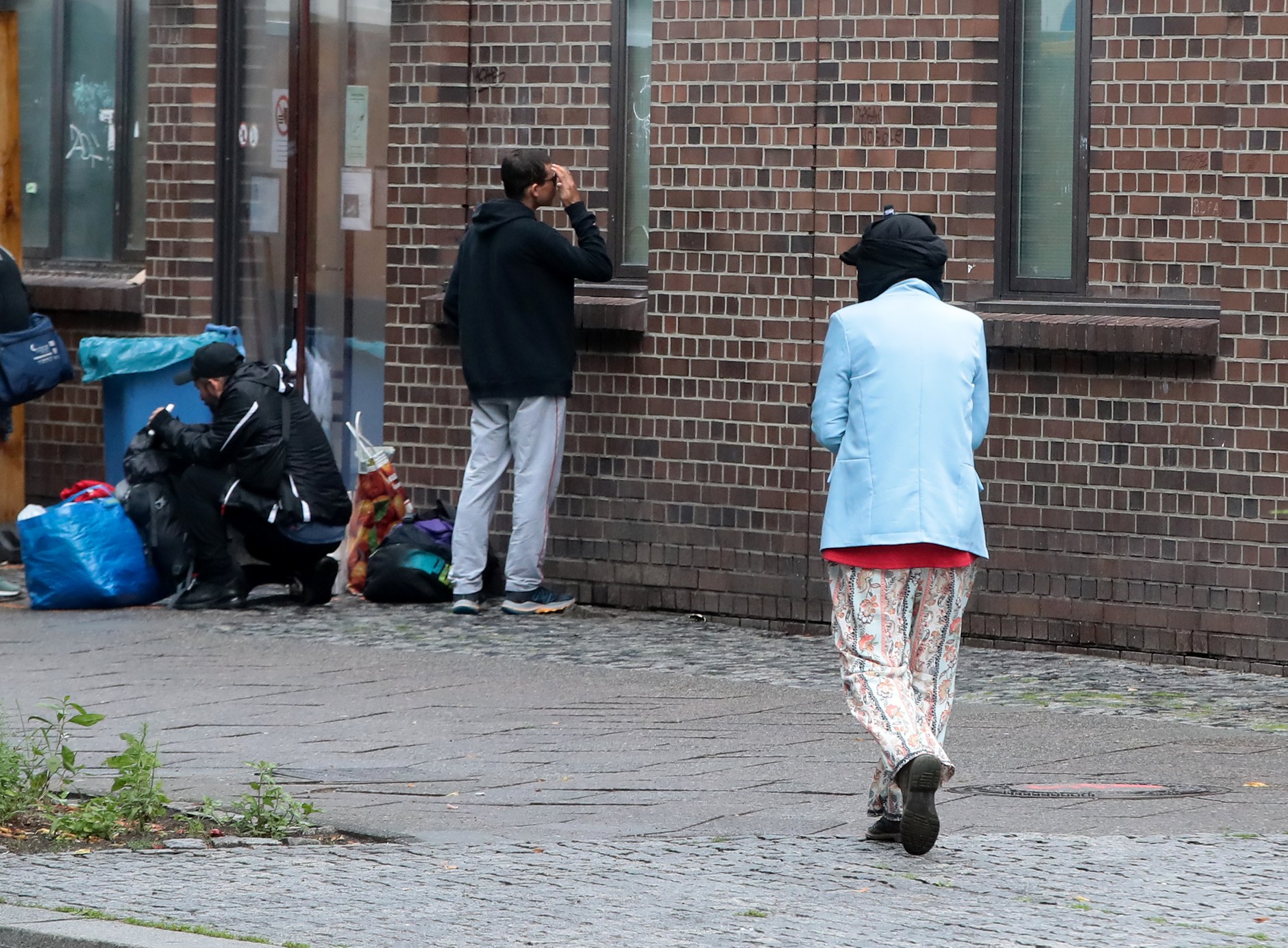
Jebensstraße – a street that has become a center for helping homeless people at the Zoo StationAndrzej Scotland / newspix.pl
It's 12 o'clock, so a larger and larger group is gathering right at the exit of the tunnel. They start handing out sandwiches. A few meters away is the second point. It's a bathhouse. A volunteer wearing a face mask and gloves invites another person inside from time to time.
Here I meet Milena and Arek. They stand with Haribo, a medium-sized black-gray dog with short legs. They are waiting for their turn.
– I hope they let me wash it, because it drips terribly. – Milena laughs.
He is 30 years old and has been living on the streets in Berlin for four years. He is 13 years older and went to Berlin to escape a sentence for theft and robbery.
– Stupid man. I would like to arrange my life and obtain documents, but it is what it is.
– And you don't live on the street, do you? – another man asks when I talk to Milena and Arek.
Also Polish. They call him Fat. He is tall and portly. He is no more than 40 years old. In his hand he holds a bottle of hand disinfectant, which we know from the times of the pandemic. He pours a little onto the back of his hand and brings it to his face. He inhales deeply, as if smelling the finest perfume. From time to time he takes out a half-liter bottle of vodka from his black backpack and takes a few sips.
— Just don't bother people yourself. The woman is not entirely safe here, Milena warns me. – I know what I'm saying.
I spend a total of two days with her and Arek. They are my guides through homeless Berlin.
We start by looking for items. It's actually about drink bottles and cans. Deposit for not this pfand (German: deposit), but Poles in Berlin quickly found their own term. Anyway, it fits. Although at first I have some concerns because the term “fancy” reminds me of theft. However, Milena and Arek emphasize many times that they do not steal. It happened to them at first. It was easier that way when they didn't know what and how.
– But now it's better to look for things or sit on a cup or on a fishing rod. You can get up to 20 euros a day, so it's enough for food and something to drink.
Milena hasn't drank at all for two years.
– Well, sometimes I'll have a beer on the weekend – Arek says quietly when Milena leaves for a moment with the dog. — But she drank three bottles of vodka earlier. How we met. I took drugs, I don't hide it.
— Arek drinks beer like a typical peasant, but he doesn't drink vodka or heroin anymore. It's good though – I hear from Milena.
We walk along Bikini Berlin again, but this time I pay attention to different things. There are many treasures to be found in street garbage cans. Deposit per can is 25 cents. Likewise for the bottle. We look into more garbage cans. You can even organize a paper bag when there are so many items that it is difficult to carry them in your hand. Milena looks into one of the garbage cans and announces that it is empty, but Arek checks it himself anyway.
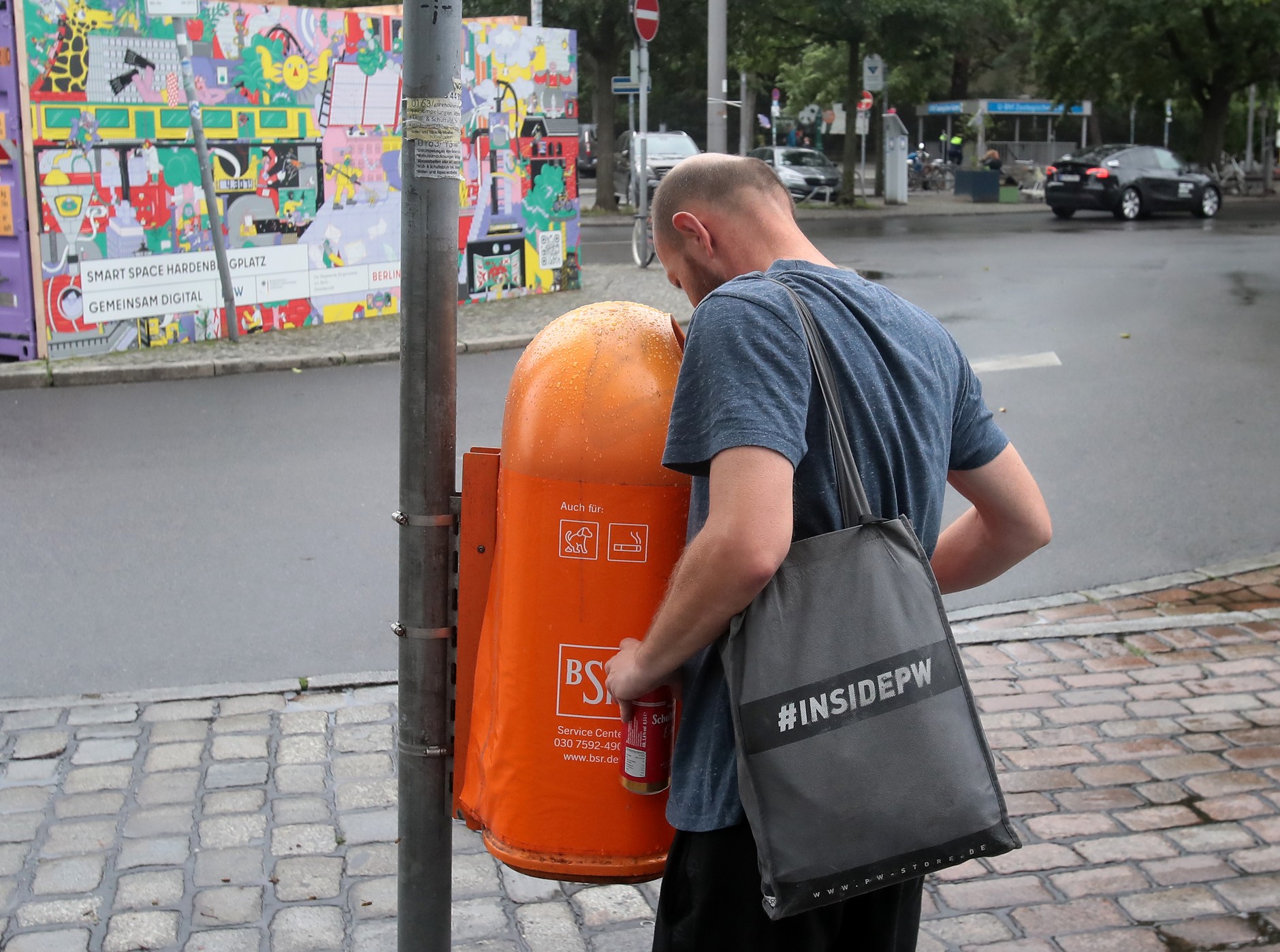
Arek usually looks for items in garbage cans on the streets of BerlinAndrzej Scotland / newspix.pl
– Hey, how empty! You missed the can – he calls after her and pulls out a can of a popular energy drink. – And tick, 25 cents.
He shows his teeth in a smile. After a while, he is significantly ahead of us.
— This is what it usually looks like: Arek collects and I go behind with Haribo.
We sit down on the steps in front of a luxury hotel. Next to us, at the tables, elegantly dressed people sit and look at us suspiciously. We definitely do not fit their vision of metropolitan Berlin. However, no one bothers us, no one chases us away.
Milena takes out a silicone dog bowl from a rag bag and pours water from a bottle into it. When Haribo refuses one treat, he reaches for another.
— He's like a child to me. I have him and I have to strive for him. Because, you know, you have to take care of your dog.