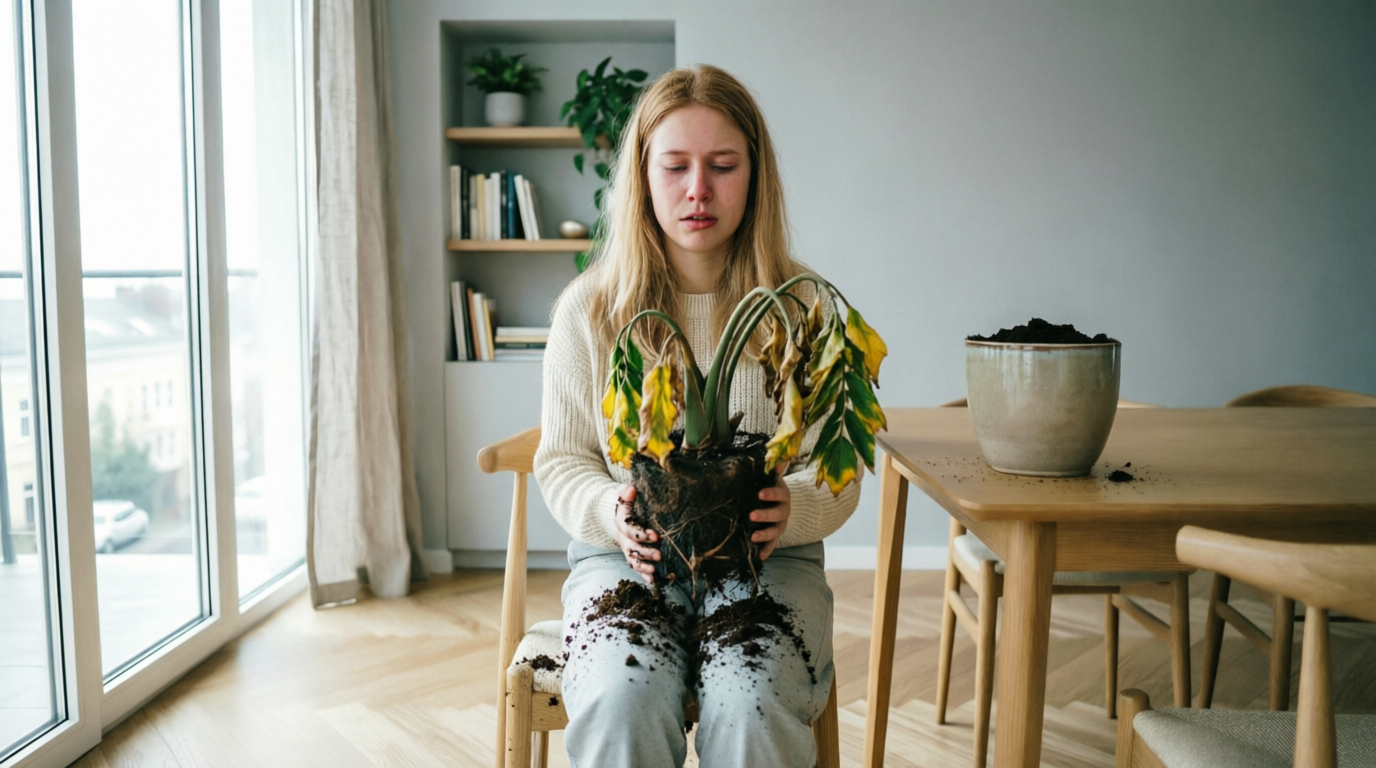
Root rot is one of the most dangerous conditions for a houseplant. An expert from the Zen channel “Exotica – an encyclopedia of house plants” told us how to understand that it is rotting without having to dig it up.
#1: The soil is wet and the plant is lethargic
If the leaves look as if the plant has never been watered, but the soil is moist, then the roots are rotting and cannot absorb moisture from the soil.
No. 2: Leaves are yellow and limp
It’s one thing when 1-2 old leaves at the bottom of the plant turn yellow. Quite another thing is the pale, yellow and soft leaves that are found both below and above. It would be a mistake to water the plant even more abundantly, since it already lives in a “swamp”.
No. 3: The soil is heavy and wet 10 days after watering
This means that the plant's roots do not absorb moisture and water consumption is minimized. Most often this is noticeable in winter, in a dark and cool room. Normally, the pot dries out in 4 days.
#4: Sour, musty swamp smell
If the soil is healthy, then it smells like earth, and if the roots are rotting, then the “aroma” of rot becomes thinner. The musty smell with sourness should immediately alert you – you don’t even have to sniff.
#5: Looseness
If the plant used to sit firmly in the ground, but now it wobbles, it means that the roots are rotting and weakening – now they are not able to hold it firmly. This is especially noticeable in orchids, anthuriums, succulents and spathiphyllums – their trunk becomes unstable.
#6: Soft, watery and translucent leaves
In succulents, when the roots rot, the leaves become thin and puny; in decorative deciduous ones, they become black at the edges. In flowering plants, flowers and buds begin to fall off – the plant tries to shed everything it can.
No. 7: Unplanned growth arrest
Usually in the spring, a healthy plant grows sharply. If this is not the case, then together with wet soil, yellow and limp leaves, this condition indicates rotting of the roots.
If you suspect that the plant is suffering from rotting, stop watering and place the pot in a warm, well-lit and ventilated place. If this does not help, you will have to dig up the roots and remove all the rotten hollow “threads”. Then disinfect the remaining roots and replant it in a new airy, sterile substrate.