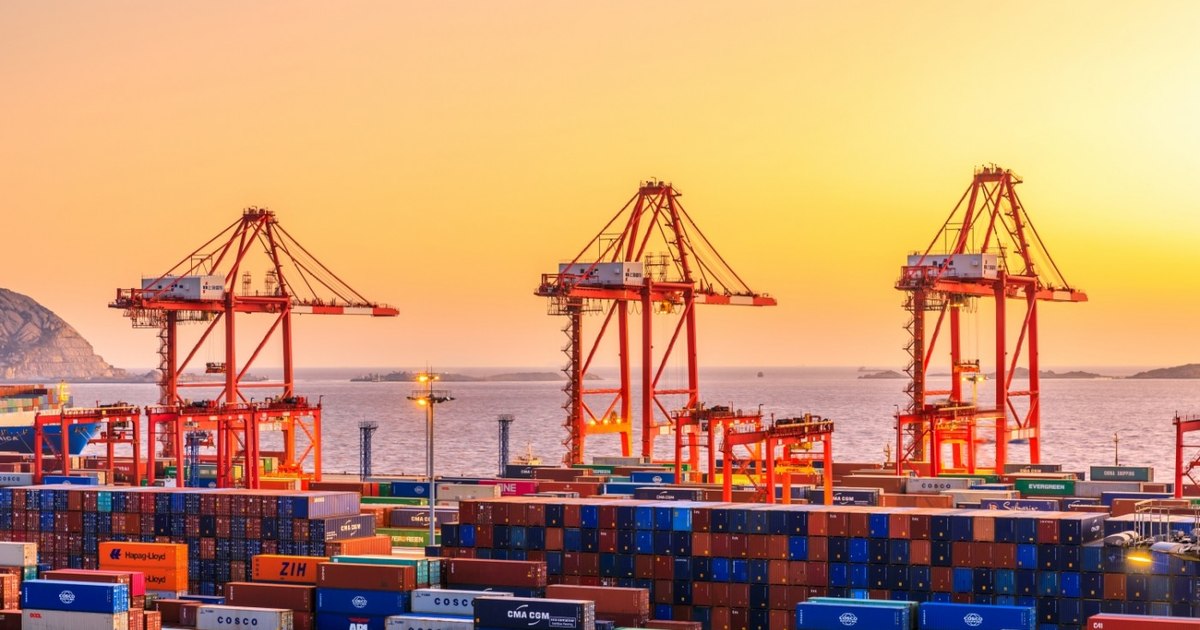
The EU is drawing up plans to force European companies to buy critical components from at least three different suppliers in a bid to reduce the bloc's dependence on China.
The EU is trying to reduce its dependence on China. Photo by Shutterstock
The new rules would affect businesses in a number of key sectors, such as chemicals and industrial machinery manufacturing, which have complained about an increase in cheap imports from China, according to two EU officials familiar with the situation, the FT writes. The proposals come in response to Beijing's export restrictions on critical technologies.
The new legislation could set ceilings, estimated at around 30–40%, for the share of single-supplier purchases. The rest of the components should come from at least three different suppliers, which could not belong to the same country.
EU Trade Commissioner Maroš Šefčovič wants to tackle the Union's trade deficit, estimated at around €1 billion a day, and protect European companies from “arming trade” practiced by China, officials said. Some European car production lines were shut down last year after Beijing imposed controls on the export of rare-earth magnets and other critical components.
Šefčovič is also planning a series of punitive tariffs on imports of chemicals and machinery from China in an attempt to counter a sharp increase in competitive pressure that has hit European manufacturers, according to the same sources.
“In many areas we are gradually becoming dependent on exports from China“, said a senior official of the Commission. “These dependencies come at a cost, and so we need to step up our diversification efforts.”
The official added that China's massive investment in industry, supported by significant subsidies reported by the IMF, poses a serious threat to the EU's industrial base. The Chinese government has rejected these allegations, arguing that the scope of its industrial policy is often exaggerated and that the European Union “pursues protectionism under the guise of fair competition”.
The plans will be presented on May 29
EU officials have warned that the plans are at an early stage, but are due to be presented at a Commission meeting on relations with China scheduled for May 29. If approved at commissioner level, the proposals could then be discussed and validated by EU leaders at a summit at the end of June.
A second official stressed that the measures would not target China exclusively, as certain raw materials and industrial inputs come from a limited number of countries, such as helium from the United States and Qatar or cobalt from the Democratic Republic of Congo and Indonesia.
The European Commission did not immediately offer an official comment.
The EU also plans to use its network of free trade agreements with more than 70 countries to diversify supply chains and boost investment in manufacturing.
In parallel, last year the European Union proposed increasing steel tariffs to 50% and halving preferential tariff quotas, as a protection measure for an industry in structural decline.
However, officials have indicated that they could grant more generous import quotas for partners deemed reliable and reduce them disproportionately for others, which would magnify the impact on China.
They said traditional anti-dumping and anti-subsidy tools are slow, requiring complex investigations that can take up to two years under WTO rules. During this time, affected companies may lose competitiveness as Chinese manufacturers may absorb the tariffs and continue to sell profitably due to lower costs.
The Commission's trade defense teams are also under pressure due to the high number of complaints. According to some reports, the chemical sector has recorded a record level of notifications, and industry representatives have warned that the situation is “at the critical limit”.
“We will have neither the time nor the human resources to investigate them all“, said one of the officials. “If we don't act fast, in two years we could lose an entire industry.”
The safeguards are activated in the event of a sudden increase in imports and last for up to five years, giving the industry time to adjust and increase competitiveness. The top official added that the steel measures have generated strong negative reactions from exporting countries.