Dr. Andrei Piontkovsky is a Russian scientist, publicist and political analyst, and author of books about Vladimir Putin. In 2016, he was forced to leave Russia.
Anton Eremin is the founder of a Washington-based civic and non-political community focused on human rights, the rule of law and the democratic future of Russia.
The talk show “The Big Game. Part Three” broadcast by Channel One in Russia is an unusual creation in Russia's political snake nest. Its host, Dmitry Konstantinovich Simes, is a legendary Soviet intelligence agent who spent some 50 years in the United States under the guise of an independent American political scientist of the conservative-realist school.
Regular guests include Dmitry Trenin, Karen Shakhnazarov, Mikhail Khodarenok and Yevgeny Buzhinsky. They are all convinced imperialists, absolutely loyal to the current regime, who see themselves as part of it and never miss an opportunity to emphasize their devotion to the man at the peak of power.
They are clearly trying to use this program to suggest (as respectfully and carefully as possible) steps a supreme leader could take to counter the rising tide that is currently threatens not only his personal power, but also the imperial idea that they all hold dear.
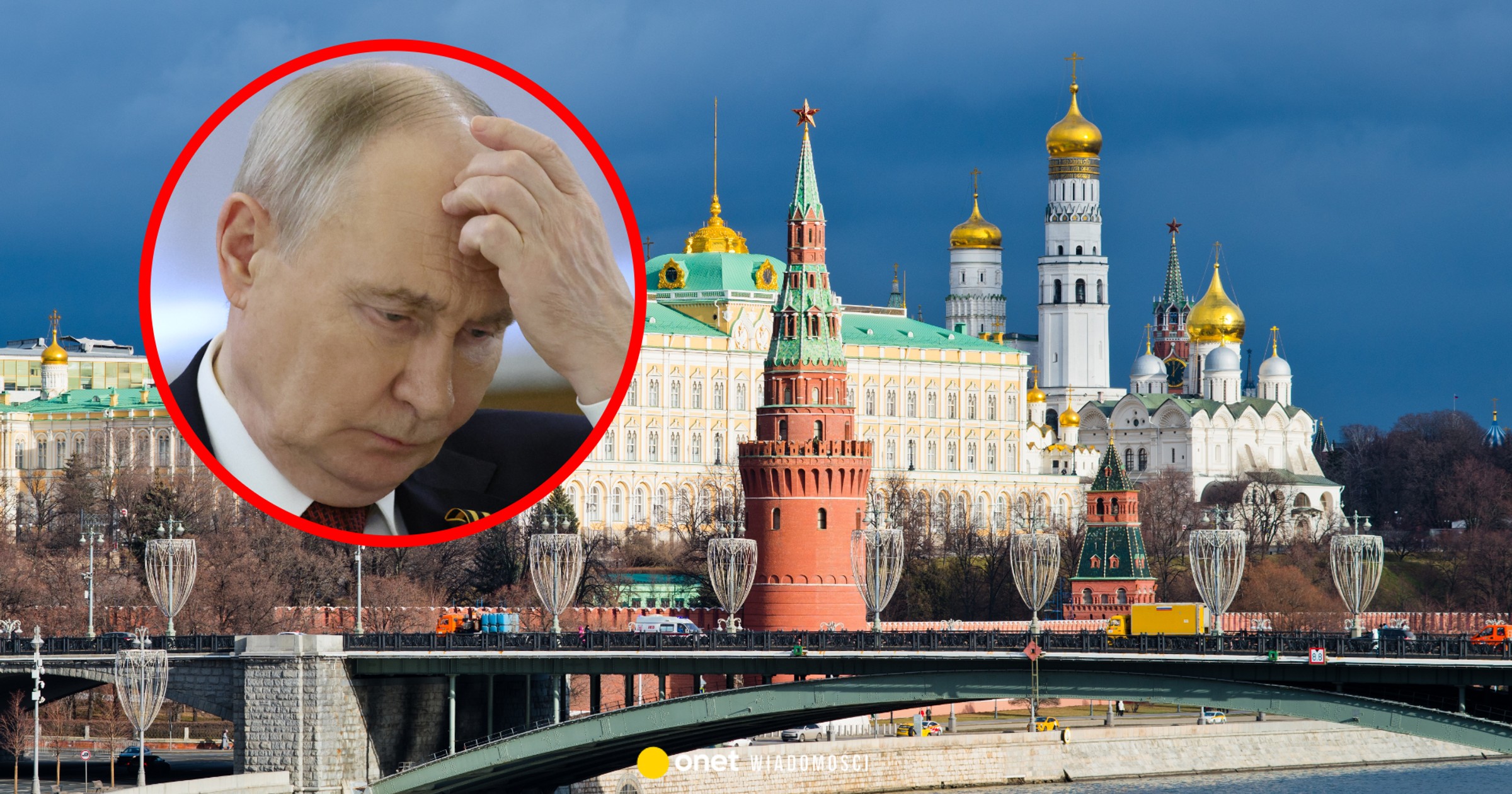
In this new situation, the program becomes an invaluable source of information about the moods and fluctuations at the very top of Russian power, where between April 19 and 22, something serious seems to have happened. Already on April 23, quite a wide group of observers noticed the consequences of the clearly abnormal behavior of this “mountain”.
Behind the scenes, Putin, as a modern Russian tsar, must struggle with factional disputes in the Kremlin and among the oligarchic elites and security services, who constantly fight for power, waiting for his fall like hungry vultures.
The article continues below the video
Let us return once again to the April 19 episode of “The Great Game”, recorded a few days after the Ministry of Defense published ominous list of targets on NATO 2.0 territory — 27 arms plants cooperating with or on behalf of Ukraine. This broadcast became a loud, emotional call to carry out these attacks. A few characteristic fragments:
“We can't just make threats; the limit of verbal threats has been exhausted”, “Wars are only won by those who are willing to take risky actions.” And finally: “Let them collect the burning wrecks.”
The sovereign emperor responded to his loyal servants with a very cool answer, which the faithful old butler Simes read in the April 22 program:
“Carrying out attacks without considering the consequences is, to put it mildly, a sign of a lack of state wisdom.”
As a consolation prize, the “influencers” were allowed to dream of shooting down Ukrainian drones flying over the Baltic countries – a fantasy into which they plunged with great gnashing of teeth.
Putin has shown that he is not ready for risky actionsespecially when they involve any threat to his own life. He didn't have a bunch of little kids just so he could die prematurely; in his imagination, they constitute a genetically perfect pool of spare parts – young, healthy organs ready for transplant – that will allow him to live to at least 150 years, as Xi once boasted to his colleague.
At the same time, he is equally categorically reluctant to end the war, and this paralysis of will takes a heavy toll on his mental state – and regardless of his fantasies about organ transplants, no one can give him a new head.
His first two public appearances on April 23, apparently after a difficult week of meetings with various groups of “brothers in arms”, leave a deeply disturbing impression.
Putin is the third last Russian tsar, and his state and behavior in the last months of his rule are uncannily reminiscent of his two predecessors. All three drifted passively towards disaster – for themselves and the systems they ruled – unable to make any clear decisions.
The first last Russian tsar was Nicholas Romanov; with its fall, the centuries-old Russian Empire died.
The Soviet Union was a 70-year shock to the Russian Empire. We never tire of quoting the brilliant Andrei Amalrik: “Just as the adoption of Christianity extended the life of the Roman Empire by three hundred years, so the adoption of communism extended the life of the Russian Empire by several decades.”
Mikhail Gorbachev was the penultimate Russian tsar. His departure marked and confirmed the death of the communist experiment.
Putin's empire, which has lasted more than a quarter of a century, has proven to be the most unsustainable and grotesque structure of all, a shock of shock, and is now crumbling before our eyes under the weight of the monstrous crime it chose to commit – a crime that even Stalin's Soviet Union did not dare to commit.
I’m Ashley Davis as an editor, I’m committed to upholding the highest standards of integrity and accuracy in every piece we publish. My work is driven by curiosity, a passion for truth, and a belief that journalism plays a crucial role in shaping public discourse. I strive to tell stories that not only inform but also inspire action and conversation.