
The story of Foxconn, which is talked about a lot in Poland due to its connection with the Polish electric car project, resembles a Hollywood movie script. It begins in 1974 in Taiwan in Tucheng, a place commonly described as “Dirty City”. Terry Gou was 23 years old then, 7.5 thousand years old. hole. capital largely borrowed from his mother, and the company he named Hon Hai Plastics. She produced simple plastic elements to black and white TVs, which in the evenings into your own hands delivered by the founder himself on a bicycle. Gou quickly understood the principle on which he later built his empire: if you can make one component cheaper and faster than the competition, you can learn to make another. And then take over an increasing share of the product produced.
It was the logic of vertical integration in its simplest form. Gou didn't just want to mold plastic. He wanted to understand what a given part was for, what it was connected to and what else could be produced with it. As the electronics market began to shift away from TVs and towards personal computers, Hon Hai followed the trend. The company specializes in connectors and sockets — hence the ending “conn” in its international name, derived from the word “connector”. Crossing the Taiwan Strait was also of great importance for its development. In 1988 Foxconn launched its first plant in mainland China, near Shenzhen. There, Foxconn's model based on vertical integration was given space to grow into an industrial city.
Terry Gou – founder and until 2019 head of Foxconn.
|
VCG/Getty Images
As a result, the company made increasingly complex components, and its customer list began to include larger companies such as Compaq, Intel and Dell. In a relatively short time a small plant in Taiwan began to turn into a production base for the global PC industry. This was helped by Terry Gou's aggressive sales style. To acquire American clients, he traveled to the United States and, according to one account, traveled through 32 states, sleeping in cheap motels and showing up at many companies unannounced – and without a good knowledge of English.
Apple teaches Foxconn important lessons
This entrepreneurship also largely contributed to closer cooperation with the company that was to turn out to be Foxconn's most important client – Apple. In the 1990s, the Cupertino company already knew Hon Hai, but primarily as a “connector company”. This changed at the end of the decade when Apple, after the return of Steve Jobs, began to rebuild its business around products that were supposed to look different from all PCs on the market. The most important symbol of this change was the iMacdesigned by a team led by Jony Ive. The colorful, translucent computer became a dream for users and a nightmare for those responsible for its production.
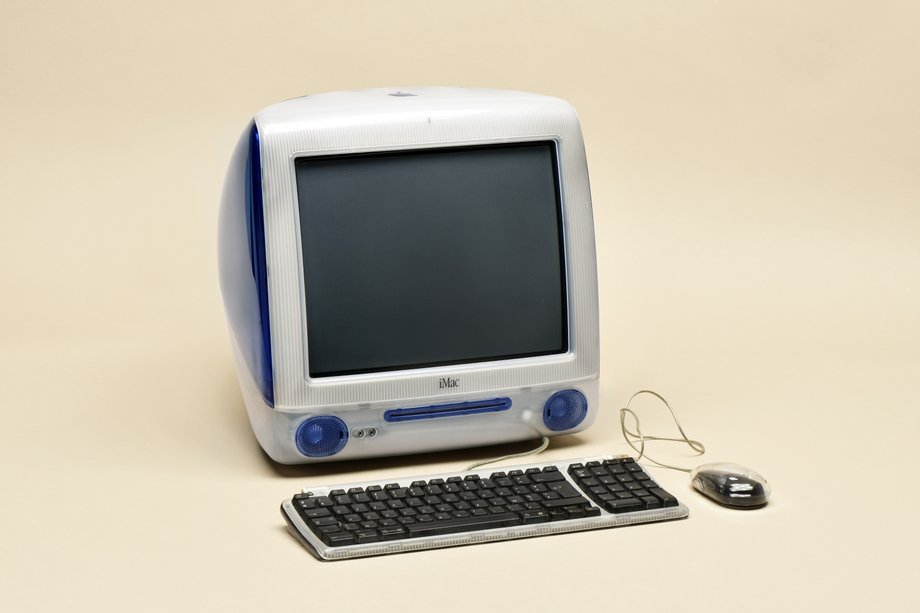
The iMac G3 was a breakthrough product for Apple and for Foxconn's fortunes.
|
Photography1971 / Shutterstock
Apple initially tried to produce the iMac with the help of other partners – most notably LG, which was also a supplier of CRT monitors. However, Apple was not satisfied with this cooperation and Terry Gou saw an opportunity for himself. According to Patrick McGee – author of the book Apple in China, which describes the situation in detail – Foxconn's boss contacted Tim Cook, then newly hired head of Apple operations, with a simple message: Foxconn can solve your problems. Moreover, he promised that he would do it cheaply.
It was a risky proposition for Apple. Foxconn was still not an industrial iPhone giant, just an ambitious component manufacturer that was just learning to work at the level required by Cupertino. However, Cook believed that the missing competencies could be built, and Foxconn had something that Apple badly needed: readiness to learn, aggressive approach to costs and the ability to quickly scale production.
This conversation began a collaboration that largely shaped Foxconn as we know it today. Apple did not commission the Taiwanese giant to simply produce a design it had developed. Engineers from Cupertino were sent to his factories: people from design, quality, purchasing and production itself. They worked alongside Foxconn teams, setting up lines, correcting tooling, keeping an eye on tolerances, and making sure the product coming off the line looked exactly as Apple's designers intended. Hon Hai factories also received advanced machines purchased by Apple and intended exclusively for the production of devices of this company. Foxconn received not only orders, but also something much more valuable: a practical lesson in production at a level it had not had before.
All these lessons, the founder's entrepreneurship and the company's philosophy of cost discipline led Foxconn to go from a maker of knobs to $7,500 TVs. capital and several employees to one of the largest industrial giants in the world. In 2025, its revenues reached approximately USD 260 billion, and in the peak season the company employs approximately 900,000. people.
The human cost of impressive efficiency
However, life is not a fairy tale, but a story Foxconn is not just a story of incredible success. This success also has a darker side. In 2010, the world media described a series of suicides of employees of Foxconn's Chinese plants, after which the working conditions at the supplier began to be checked by the giant's largest clients, including Apple, Dell, HP and Sony. Subsequent inspections by the Fair Labor Association indicated serious violations of labor standards and Chinese law, including: in the area of working time and safety. Foxconn then became not only a symbol of industrial efficiencybut also the price that global electronics paid for cheap, fast and mass production of devices.
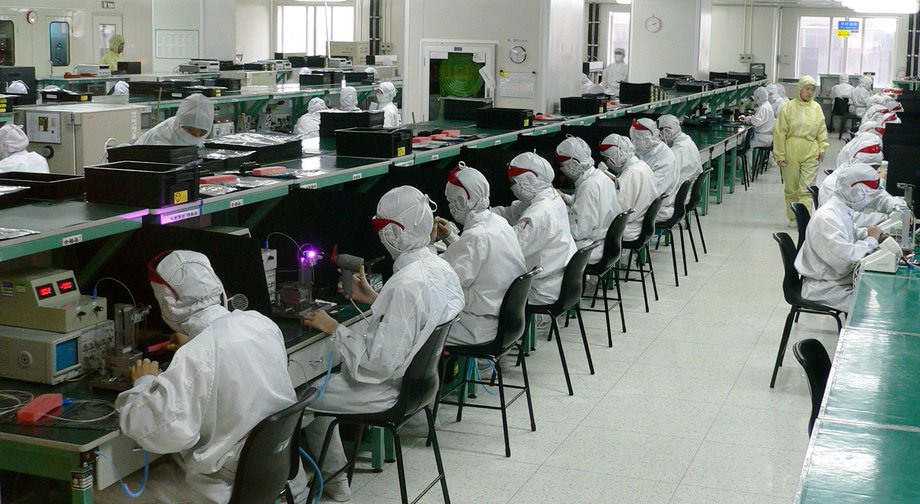
Foxconn factory in Shenzhen
|
Steve Jurvetson/CC BY 2.0 / Wikimedia Commons
Although there are many indications that the situation of employees has improved since then, allegations regarding working time, remuneration, recruitment and safety did not completely disappear and surfaced during audits. They did it not only in Asia – objections to Foxconn's labor practices also appeared in our southern neighbors, because the giant has factories in the Czech Republic.
Foxconn is looking for a new iPhone on wheels
Foxconn is currently the undisputed leader in the electronics manufacturing world, and now it has an appetite for new markets. A few years ago, the electric car market appeared in his sights. However, Hon Hai does not want to become the next Tesla or BYDbut become for the automotive industry what it has been for years for electronics – a partner who takes someone's vision, adds technology, organizes the supply chain and turns the project into a serial product. This is served, among others, by Foxtron Vehicle Technologies, a company developed by the group, operates in the model of contract design and production of electric cars. In 2025, Foxtron signed an agreement with Mitsubishi Motors to develop and deliver an electric model, which is expected to hit the Australian and New Zealand markets in the second half of 2026.
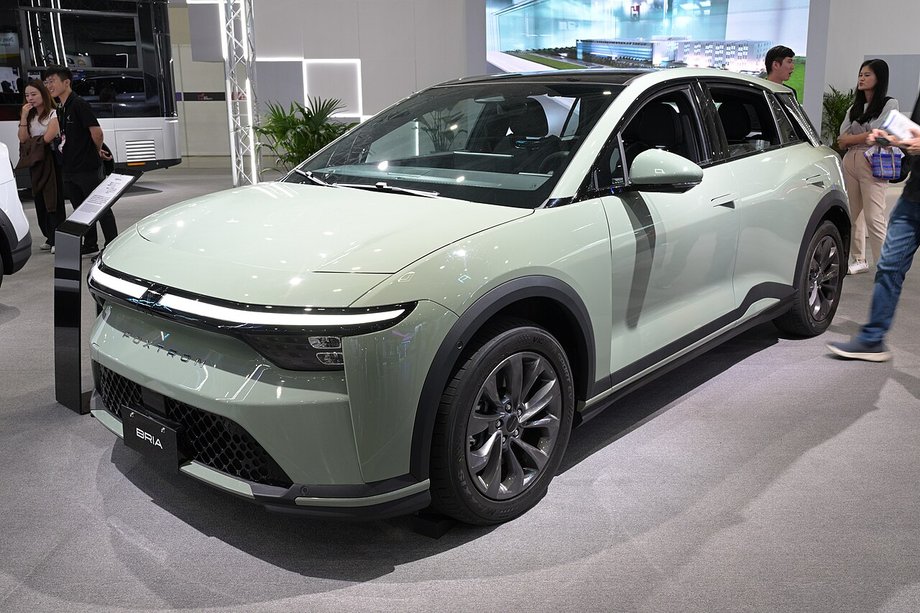
Foxtron Bria – one of the cars from Foxconn.
|
4300streetcar / Wikimedia Commons/Creative Commons Attribution 2.0
In this context, the Polish project is not an exotic exception for Foxconn, but another test of the same strategy. ElectroMobility Poland has the ambition to build a production and development hub in Jaworzno, and the Taiwanese partner is to bring technology, know-how, experience in scaling complex projects and – at least according to current declarations – also capital. If everything goes according to plan, in 2029 we will see the first Polish electric car. Also because about 30 years earlier, Apple helped the Taiwanese learn how to mass produce the iMac.


