The film that Sir Anthony Hopkins didn't even want to hear about, even though the role won him an Oscar

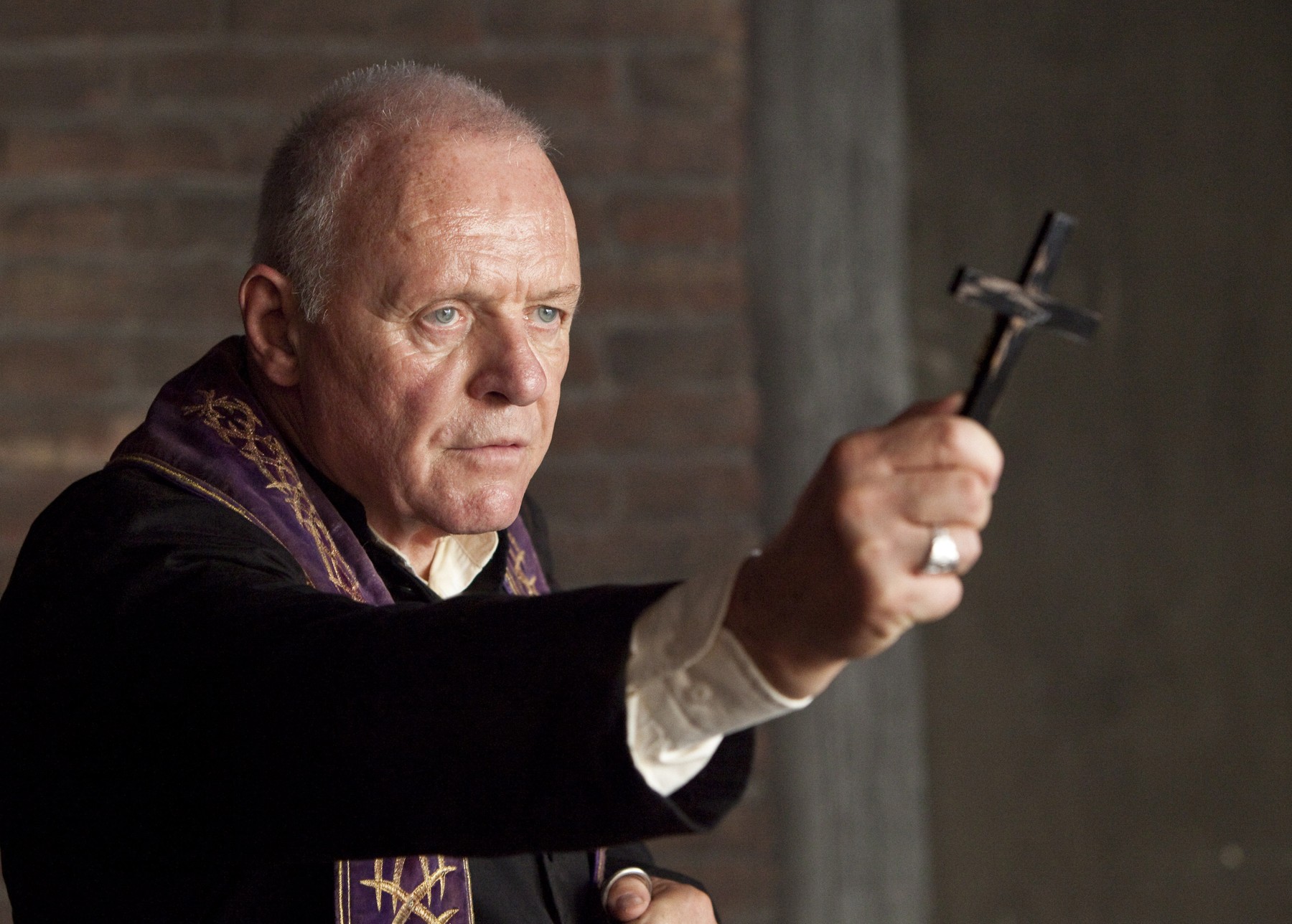
Like countless other veteran actors, Sir Anthony Hopkins has had ups and downs throughout his career, regretting making two films that followed the success that earned him his first career Oscar. With the third, on the other hand, he didn't even want to help in any way, reports Far Out Magazine.
The legendary actor, now 88, was nominated twice for the Academy Award after turning 80 and made history when he won in 2021 for his performance in 'The Father'. The role in the drama about a father dealing with dementia made him the oldest actor to win an Oscar. Despite an illustrious career, it was only Hopkins' second career Oscar and came nearly three decades after his first.
More recent performances in “One Life” and “Freud's Last Session” have shown he's by no means ready to throw in the towel, with him also starring in the Netflix original “Rebel Moon” after already breaking into the Marvel Cinematic Universe as Odin in the “Thor” films.
Hopkins doesn't accept everything, however. And returning to the most iconic role of his career, even as a voice actor, was one of the things he drew the line at.
Even though he had been acting for over 20 years at the time, Hopkins only became an A-list star in Hollywood after his unforgettable performance as Hannibal Lecter in 1991's The Silence of the Lambs. The performance earned him his first career Oscar a year later. Alongside him, Jodie Foster, his co-star, and Jonathan Demme, the director of the film “Silence of the Lambs”, were awarded the Oscar.
Sir Anthony Hopkins regretted making the 'Hannibal' films in the 2000s
Hopkins returned to the role for 2001's Hannibal and Red Dragon, released just a year later.
The former was eviscerated by critics, while the latter Hopkins found so disappointing that he declared years later that he should not have taken part in either. In retrospect, he felt that the cannibalistic killer would have been much better suited as a one-shot appearance.
Even so, both movies were solid box office hits, and this being Hollywood, it was almost inevitable that a new Hannibal novel would also get a movie adaptation.
“Hannibal Rising,” the prologue novel for the character by American writer Thomas Harris, hit bookstores in January 2006, and by February 2007 its adaptation was already in theaters, starring the late French actor Gaspard Ulliel.
Hopkins' refusal, revealed by the actor who took over the role of Hannibal Lecter from him
Since Harris' new novel and the film based on it deal with Hannibal's youth, there was no way Hopkins could play him.
But when the big screen film was officially announced in late 2006, it was announced that Anthony Hopkins was expected to return as Lecter in an off-screen role as the narrator. Somewhere along the way, these plans changed. It was Gaspard who finally revealed that Hopkins had even turned down a meeting to discuss the film.
“I discussed it with the producers and they said they would arrange a meeting between Anthony Hopkins and me,” he explained in an interview at the time.
“We didn't get to do it. I don't think it would have helped me anyway, because every actor has his own way of working and I don't know if Mr. Hopkins would have told me how he works on his character, I don't know if he wants to reveal things like that,” added Ulliel, who died in 2022 aged just 37 following a skiing accident.
The movie “Hannibal Rising” was a major financial failure
Without Hopkins but with Harris on board as screenwriter, “Hannibal Rising” grossed $82 million worldwide against a production budget of $75 million, becoming the first commercial failure of the film franchise based on the American writer's books.
Given that movie theater operators typically keep half of the proceeds from ticket sales and that many millions more are spent promoting a blockbuster movie, the setback was one of epic proportions for the Metro-Goldwyn-Mayer studio, which has since become Amazon MGM.
As for Sir Anthony Hopkins, last year he published “We Did Ok, Kid”, a volume of memoirs about his life and career that was translated by the publishing house that brought him to Romania under the title “Come on, kid”.