The great fortresses of Romania, rebuilt from the ruins. Monuments neglected in the past have become emblems of cities again


Impressive sums have been invested in recent years, with the support of the European Union, in the restoration of dozens of medieval fortresses in Romania, but also of smaller fortifications, emblems of some historical towns in Romania.
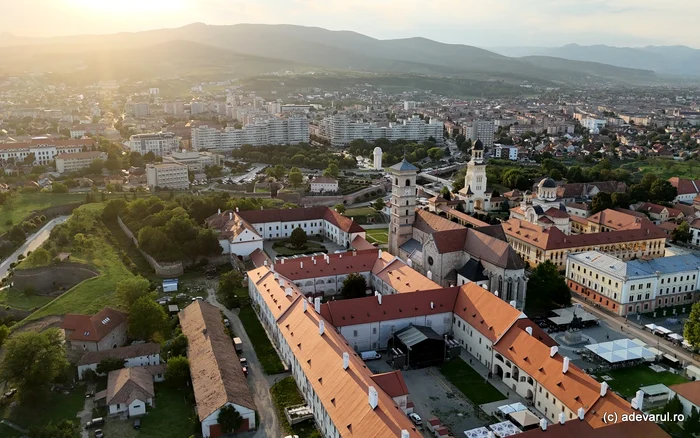
Alba Carolina Fortress. Photo by Daniel Guță. TRUTH
Extensive programs to rehabilitate historic monuments have given a boost to tourism, and numerous cities in the country with medieval fortresses and castles have benefited from European heritage funds. The restoration works have radically changed the appearance of some places that, during the communist period, were completely neglected.
Some restoration works have started since the mid-2000s, with European funding, and in cities such as Alba Iulia and Hunedoara, the construction sites are currently continuing with a more delicate stage of detailed restorations.
In the Alba Carolina citadel in Hunedoara, meticulous works are being carried out on the monumental gates, at Corvinilor Castle, restorers are trying to recover the mural paintings from the 15th century. Following rehabilitation, some historic centers deserted in the 90s have become animated areas again, and “sleepy” cities are once again on the list of tourist destinations.
More than 100 million euros, mostly drawn from non-refundable European funds, were invested in total for the five most extensive restoration works of medieval fortresses and castles in Romania.
Alba Carolina, revived with over 50 million euros
Built at the beginning of the 18th century, the Alba Carolina Fortress in Alba Iulia preserves important vestiges from the ancient and medieval period. In the 80s, it had reached a disastrous state, recognized by the authorities and the press of the time.
“The stone of the Alba lulia fortress has grown old, it is sick, it is rotting! After approximately two and a half centuries since its construction (1714—1738), the largest medieval fortress in Romania (surface area 70 hectares, perimeter of the walls 12 kilometers) is painfully endangered”, informed the publicist Valentin Hossu Longin, in the magazine România Pitoreasca from 1984.
In the 2000s, the three-century-old settlement began to be reborn, after more than 50 million euros, drawn from European funds, were invested in the restoration of the historical complex. Both the fortification and many of the historic buildings within its premises have gradually regained their luster, becoming increasingly attractive to tourists.
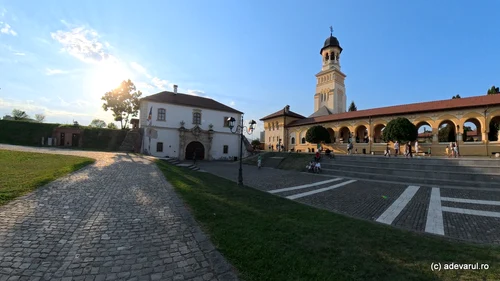
Image 1/22:
Alba Carolina Fortress from Alba Iulia Photo Daniel Guță THE TRUTH (14) jpg
Restoration work continued in the following years, and today, other monuments and historical buildings in the citadel are still under construction. Recently, the monumental Gates I, II, III and IV of the Alba Carolina Fortress entered the construction site. They are currently in a process of consolidation, conservation and restoration, through an investment of 1.9 million euros, financed by the National Heritage Institute.
Investments of 17 million euros in Cetatea Deva
The medieval fortress of Deva was built in the middle of the 13th century, on the summit of a prominent volcanic cone, which rises above the Mureș Valley. It has been besieged several times throughout history and completely ruined in August 1849, following a powerful explosion in the ammunition depot.
In the 1990s, the ruins of the medieval fortress were avoided by tourists not only because of the difficult climb up the Citadel Hill, but also because of the “nests” of vipers hidden among its rocks. A cable car was built in 2003 to facilitate visitor access, but extensive restoration projects would not begin until a decade later, with the help of European funds.
In the first stage, approximately nine million euros were invested in the works that concerned the outer enclosures of the medieval complex. The investment, financed by the European Regional Development Fund, included archaeological research, the restoration of the walls and gates, the restoration of the bastion's Artillery Chamber, the development of the access road and was completed by the construction of a wooden bridge between enclosures II and III, achieved through additional investments by the local administration.
From the summer of 2022, Precinct I of the Deva Citadel, located at the top of the volcanic cone on which the settlement was built, and which includes the Prince's Palace and the oldest monuments of the complex, also entered the construction site. The works cost almost five million euros and were completed in 2024. In the same period, the old elevator on Cetății Hill was replaced by a new cable car, for which the municipality of Deva spent four million euros.
The Cetății Deva cable car has sparked controversy both for the amount invested from the local budget and for its shortcomings.
“The elevator's failure to function properly is due both to the way the design and execution services are provided, as well as to the way the maintenance services are provided during the operation period”, it showed a recently achieved technical expertise.
Despite problems with the cable car and those related to the quality of the restoration work, the medieval fortress, reopened to the public in 2024, began to attract tourists again.
The Citadel of the Seat of Suceava, consolidated with 12 million euros
The Suceava Fortress was part of the fortification system built in Moldova at the end of the 14th century, and for almost two centuries it was the main residence of the Moldavian lords.
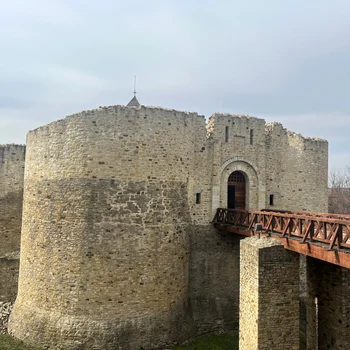
Image 1/3:
Suceava Citadel Photo National Museum of Bucovina (2) jpg
In the 1990s, experts were pointing out the deterioration of vaults and walls, as well as the safety risks they entailed. In the 2000s, the funds allocated by the Romanian state for the preservation of the historical ensemble were considered insufficient for the necessary consolidations.
In 2011, the citadel was included in an extensive rehabilitation project financed by European funds, worth over 13 million euros, of which eight million were accessed through the Regional Operational Program 2007–2013.
“The foundation of the Cetății de Caun was strengthened in order to ensure the stability of the structure and a unique access point was created in the space of the monument. Landscaping works were carried out on an area of 2,500 square meters, pedestrian and road access ways were opened and parking spaces were arranged”, informs the European Commission.
The works saved the fortress from collapsing, being stabilized including the sliding slope, but the historical ensemble continued to deteriorate, which made necessary new investments to consolidate and rehabilitate the fortification, estimated at around 20 million lei, according to a project of the National Museum of Bucovina.
The most recent intervention was announced in November 2025 by the Suceava County Council. The authorities promise a “transparent restoration”, whereby the original shape of the walls will be suggested through a special metal mesh, mounted on top of the structure without touching the historic masonry.
“The National Commission of Historical Monuments has approved two pilot projects: a pilot section with a length of 10 meters for the enclosure wall with semicircular bastions and the construction of a light roof in the Moldavian style on the Petru Mușat fort, which would protect the walls from water infiltrations”, sent CJ Suceava.
The medieval fortress of Severin, rebuilt from the ground up
The medieval fortress of Severin was built in the middle of the 13th century on the banks of the Danube, near the Roman fort Drobeta and the ruins of the ancient bridge built by Apollodorus of Damascus during the Daco-Roman wars.
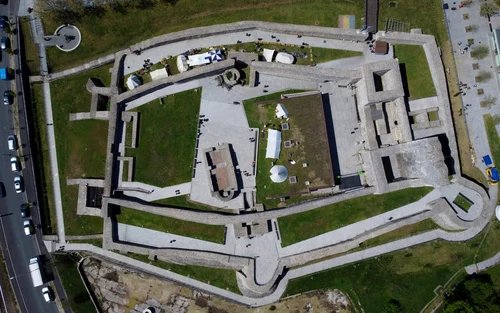
Image 1/5:
Citadel of Severin Photo Town Hall Drobeta Turnu Severin (4) jpg
In the Middle Ages, the fortress had an important military role, defending the area from Ottoman incursions, but also an economic one, being located at a crossroads of commercial roads and naval routes. In 1524, following a devastating attack by the Turks led by Suleyman the Magnificent, the fortress was destroyed, leaving only one tower standing, popularly known as the “Tower of Severus”.
Since the 1980s, specialists have been signaling the advanced degradation of the medieval complex, along with other monuments and vestiges in the city on the banks of the Danube. After 2010, the situation changed, when the municipality of Drobeta-Turnu Severin obtained European funding for a project of 58 million lei, aimed at restoring the fortress and the “Theodor Costescu” Cultural Palace.
“With the European funds, the walls of the fortress were restored, a tourist pavilion, the two pavilions in the courtyard, the entire fence of the fortress, the bridge and the park were built. Both the Severin Medieval Fortress, the Castle of the Arts (not the old water tower in the city) and the “Theodor Costescu” Cultural Palace entered the national and international tourist circuit”the local authorities informed.
Recently, two other important monuments in the vicinity of the medieval complex have been included in new restoration and enhancement projects. The Mehedinți County Council obtained European funds for a project of almost 35 million lei, intended for the conservation and development of Trajan's Bridge and the Roman amphitheater discovered in 2010 in the courtyard of the Museum of the Iron Gates Region.
“The investment creates the prerequisites for the inclusion of Trajan's Bridge and the Roman Amphitheater in the UNESCO World Heritage List”, announced CJ Mehedinți.
Corvinir Castle, with frescoes restored after five centuries
The Castle of the Corvins in Hunedoara was built in the middle of the 15th century by the powerful medieval family of the Huniazis. In the time of John of Hunedoara, the castle was built for military purposes, on the site of an older fortress. After the death of the medieval hero, it was transformed into a luxurious residence, and in the following centuries it went through new stages of restoration, which left their mark on its architecture.
In the 90s, the appearance of the Corvinor Castle was seriously affected by pollution from the Hunedoara steel plant. The Corvinor Castle, surrounded by the factories of the industrial complex, had taken on a rust-gray appearance, being covered with the dust, rust and ash constantly released over the city.
In the 1990s and 2000s, the Ministry of Culture annually financed the necessary repairs to the medieval castle, but the dilapidated roof allowed rainwater to accelerate its deterioration. Since 2019, Corvinilor Castle has entered the construction site and is being restored with European funds, through projects totaling almost 12 million euros.
All of the approximately 40 halls and rooms in the castle, along with the medieval walls and towers, were included in the designs. Some have been rehabilitated and returned to the tourist circuit, while the castle facades have been cleaned of the soot that covered them in the last century.
Currently, the complex is in the second stage of restoration. “It covers no less than 27 work objectives, among which are the restoration of the frescoes in several areas of the medieval edifice, the replacement of the flooring in the Hall of the Knights, the restoration of the access bridges, the cleaning of the fountain in the inner courtyard, the restoration of the Knight at the top of the Buzdugan Tower, as well as the necessary works for the opening of several spaces in the imposing medieval monument”informs the Corvinor Castle Museum.
Investments in recent years, mostly financed with European funds, have restored the value of other valued medieval buildings, among which are the fortresses of Făgăraș (video), Rupea, Poenari, Orăștie, Enisala, Râșnov and Oradea.