
INTERVIEW with the actors of one of the most popular series in the history of Netflix. “When we were in Paris, people asked us: “Did you steal?””

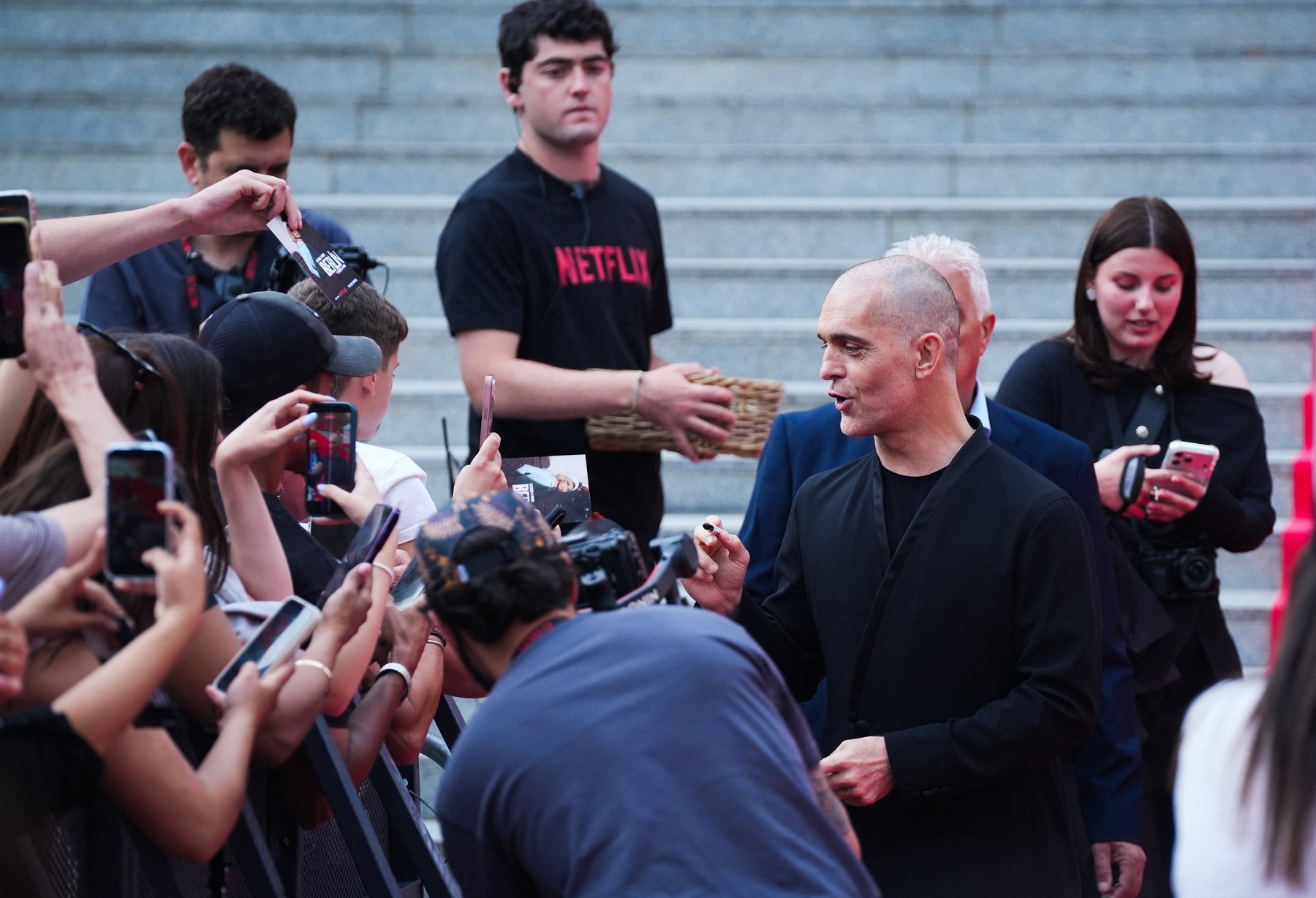
“Berlin,” the popular Netflix series that continued the phenomenon of “La casa de papel” (The Money Factory), is back streaming with its second season. Three of its actors, Pedro Alonso, Joel Sánchez and Julio Peña Fernández, revealed to the HotNews audience what to expect, but also how they explain the huge popularity enjoyed by the heist productions.
- “We live in a world where it has been proven that power structures, at the level of power, steal. And the ordinary citizen has to pay for these thefts. The feeling that the world is divided, that it is not in balance (…) is like a kind of recurring thought”, said in an interview given in Bucharest to the HotNews audience Pedro Alonso, who played the jewel thief Andrés de Fonollosa, better known by his nickname, for almost a decade “Berlin”.
- “When I was in Paris, people asked us: 'Did you steal?'. I was told quite a lot,” he said, referring to the robbery at the Louvre Museum, in the interview given to HotNews alongside Joel Sánchez and Julio Peña Fernández, the “lieutenants” Bruce and Roi of “Berlin” in the new series.
- The second season of “Berlin” premiered on Netflix on Friday, May 15, when all 8 of its episodes were released simultaneously.
Years before series like “Squid Game”, “Bridgerton” or “Wednesday” set audience records for Netflix, the series “La casa de papel” was the reference title of the streaming platform in many countries, including Romania, and remains to this day one of the most watched in its history.
The “Stranger Things” series, launched just a year before “La casa de papel” premiered on Netflix, eventually became the streaming platform's most popular production, thanks in part to its huge success in the United States and North America.
But the international popularity of “La casa de papel” helped Netflix solidify its status as a competitor to traditional television in the early days of streaming.
Netflix announces 'Berlin' series shortly before 'La casa de papel' ends
The Spanish-language series created by filmmaker Álex Pina ended in 2021. But shortly before the release of the final season, Netflix announced that it had ordered a “spin-off” series it called “La casa de papel: Berlin.” The new series was also created by Pina, who also returned as writer and executive producer. And Pedro Alonso is back in the role of the iconic thief who gives the name of the new series.
It premiered on Netflix in December 2023 and immediately became the platform's most watched series worldwide. In a separate ranking by Netflix of its most-watched series in a language other than English, it remained in the top 10 for 7 weeks.
The new season, officially named “Berlin and Lady with Hermine”, after a famous painting by Leonardo da Vinci, will be released this Friday in streaming. For Alonso, now 54 years old, the moment is special. He revealed in an interview last week with major Spanish daily El Pais that he has decided to say goodbye to the character of Berlin after almost a decade of playing him.
In fact, this was the first thing he wanted to talk about in the interview given to HotNews before a preview broadcast in Bucharest of the first episode.
What the actors who give life to the characters in the Netflix series say
HotNews: Ever since “La casa de papel”, fans have gotten used to the fact that every robbery is special and unique in its own way. How would you describe the one in the new season of the series “Berlin”?
Peter Alonso: I'm at a point where I'm doing a recap because I'm breaking up with this character. Basically, I'm parting with a piece of my life. And I measure everything in perspective.
I have gone through several paradigms. After traveling all over the world, both physically and fictionally, after doing marketing, the final filming took place in Seville. I'm basically back home. Just as I had romance in Paris, I would associate the robbery in Seville with the iconography of the Carmen myth: passion.
In a gang of thieves, absolute trust is needed, but we see at the very beginning of the new season how interpersonal tensions test this very strongly. How explosive can the situation become and even jeopardize the planned heist?
Joel Sanchez: Considering that it's a theft of this caliber, I think that the trust must also be commensurate. And stealing aside, I think the table can wobble a bit. But I think we managed to resolve things in an acceptable way.
Regardless of the personal situation, the personal relationship, you have to put everything aside when you're working and everything should turn out very well. The relationship, I could say, was nurturing. We put aside the ego, we solved everything, because on a personal level we have a very good relationship.
And then things went well.
Julio Peña Fernández: I think that something of the magic of Berlin and the fact that an individual like him is our boss made us infected, infected us with his madness. And sometimes with the lack of professionalism in terms of theft, I could say, Berlin has this ability. For him, stealing becomes something passionate. And beyond the theft itself, it needs a component of passion, of love, something to complete it, to complete the adventure. And I think in one way or another, being our leader, he puts us all in the same movie.
And after that, whether we resolve it among ourselves or not, that remains our business. Create a little chaos. There's an instability that could jeopardize the theft, but precisely because we're in this environment, I think the magic is that in the end things work out, move on.
Pedro Alonso, on the popularity of productions about robberies
One of the defining features of the success that 'La casa de papel' enjoyed was that it had a very broad appeal, regardless of gender or age, something that continued with 'Berlin'. What do you think attracts audiences to heist productions so much?
Peter Alonso: Throughout the entire film there were some traits of Robin Hood, the prince who steals from the rich. At first, I would have said to give to the poor, although that is not the case, but he steals with passion. There was a slightly anti-system attitude. The producer always told us that what we do is entertainment. And I was coming from a time when, and I really believe that, I'm convinced, given the economic crisis we had been through, it was like a discharge. I would love to steal the system and I think that's what I conveyed.
And obviously we live in a world where power structures, at the level of power, have been proven to steal. It proved. Or, at least, in many places it is stolen. And the common citizen has to pay for these thefts. This feeling that the world is divided, that it's not in balance, the idea of stealing from people who have a lot of money, it's like a kind of recurring thought, like a fantasy. If you see this from the couch of your house, covered with your blanket, you can consider it a download.
From the end of the first season of “Berlin” until now we have had a spectacular robbery at the Louvrelast year, even Romania's treasures were stolenfrom a Dutch museum, and last week we had a hostage-taking at a bank in Germany. I know the writers are the ones who write the story of the series, but I'm curious, do you guys follow the news like this?
Pedro Alonso (laughing): We don't know anything. No, it wasn't us.
Joel Sanchez: I watch the news quite a bit to stay abreast of the changes going on in society, but I don't follow the robbery news a lot.
Peter Alonso: Álex Pina, the producer, comes from journalism, he was a journalist. And I think he has a fine sense of reality, and I'm sure he's aware of all these things. He always listens, he is attentive and sometimes I wonder if we inspired him or he inspired us. I wonder if the people who stole were inspired by our actions or not. And when we were in Paris, people asked us: “Did you steal?”. I was written quite a lot. Me, no, I always deny everything.
A message for Romanian fans of the two Netflix series
“La casa de papel” and “Berlin” enjoyed as much success in Romania as they did globally, even more than in some countries. Do you have a message for the fans in Romania?
Peter Alonso: We were a fictional story made to be broadcast in Spain, but we broke every border. We even made it to the Balkans. My partner is from the Balkans and therefore I have a close connection with the Balkans.
I had never been to Romania, but thank you for this complicity, for the way I was received in so many places. And here, when I see that our fiction has been so successful, it's very emotional.
It's a miracle that things have taken this scale. To the entire public in Romania: “I love you, thank you! Gracias!”.


