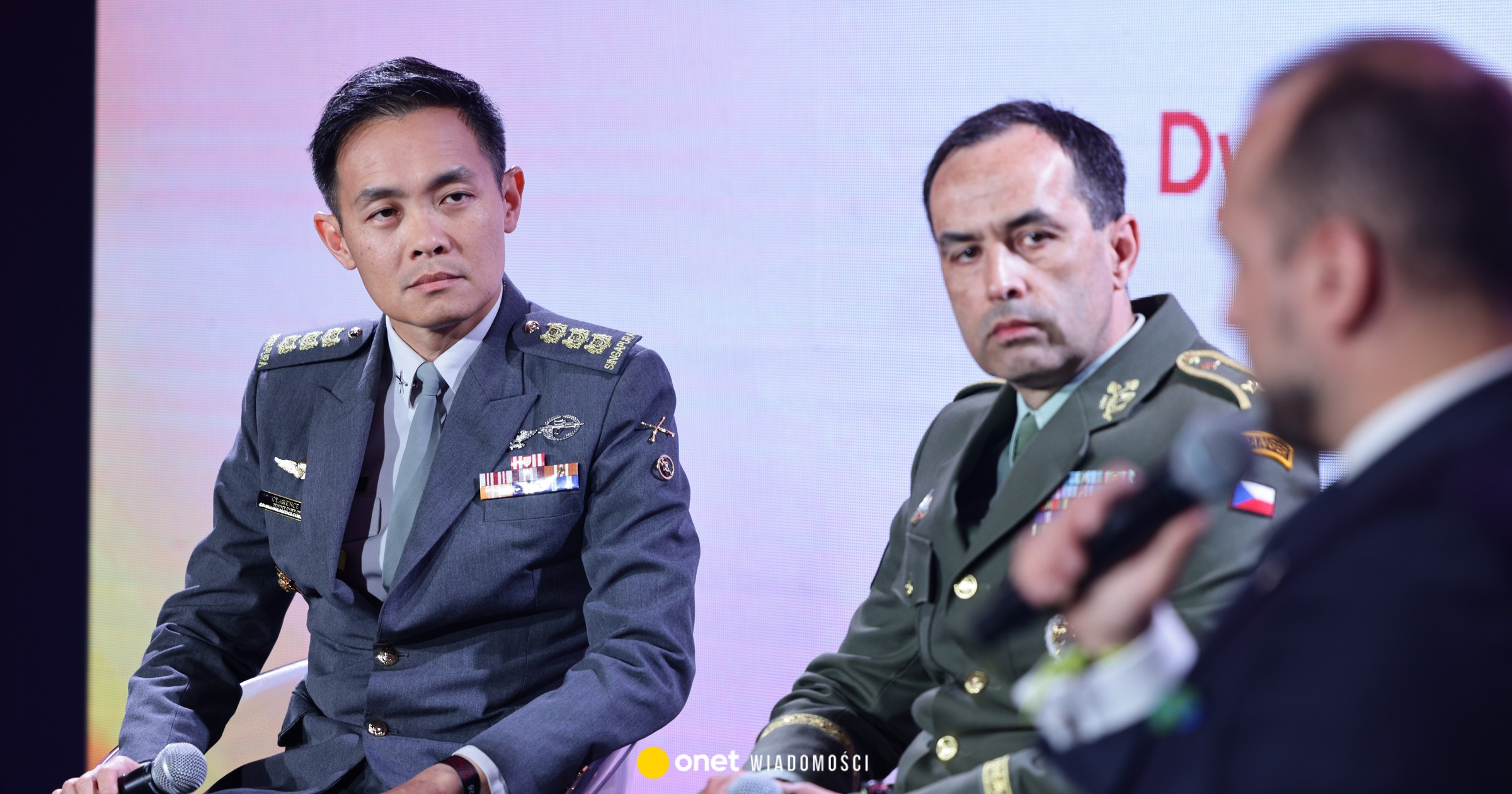
Bartosz Oleszko-Pyka: How do you cooperate with Poland in the field of cybersecurity?
Clarence Cai: The cyber defense community is very active and based on sharing best practices and experiences. The Polish Cyberspace Defense Forces Command plays a key role in this cooperation.
I heard about the experiences and journey of the Polish Cyber Defense Command. I think it's impressive.
Over the years, Polish troops have grown stronger and gained knowledge. This is a role model for many other emerging cyber commands around the world.
“This has huge consequences”
What infrastructure can be the target of attacks? Attacks on civilian infrastructure play a key role in conducting offensive operations.
In the digital realm, dependencies are ubiquitous. It would be naive to think that some sectors are immune to attack. In Singapore, we recently introduced the concept of sector cyber defense teams. As part of our national service, we engage talented soldiers. They secure various sectors: energy, transport, public services.
The article continues below the video
An important part of Singapore's strategy is building resilience and testing and experimenting in cyber defense. The experimental center is an important part of it. Could you tell us about this institution?
Thank you for this question. Sci tech, i.e. the Center for Cybernetic Tests and Experiments, is part of the digital intelligence services to which I proudly belong. This is the workplace of our best young talents – conscripts and soldiers performing compulsory military service.
These people come to us with very unique skills. At the center, they are responsible for developing many of our latest cybersecurity artificial intelligence solutions to revolutionize the way we conduct national cyber defense.
What role does artificial intelligence play in cyber defense?
You might ask: what role does artificial intelligence not play? Pioneering models bring an unprecedented level of capability to many cyber challenges. They improve the ability to identify security vulnerabilities within minutes and hours. This is a big change.
Cyber defense [czasów przed AI] is accustomed to the opponent's slower pace of operations. This has huge implications for the field. It is all the more important that, firstly, we become better organized in terms of cyber defense. And second, they have partnered across continents and nations to build shared resilience to threats in cyberspace.
In the discussion you participated in, the topic was building a digital immune system. The panelists discussed, among others: about the need to cooperate with the private sector. What is its significance?
We are seeing a convergence of cyber interests in both the military and civilian spheres. The dependencies are manifold. In Singapore, this cooperation is used in both military and civilian agencies. This is something we place great emphasis on. We are creating comprehensive national defense against new threats.
Do you count on deepening cooperation with Poland?
Yes, for sure. We have found a partner in Poland whom we respect greatly and from whom we eagerly want to learn a lot. It would certainly be very beneficial for us if we could exchange experiences more often with soldiers of the Polish Cyberspace Defense Component Command.
I’m Ashley Davis as an editor, I’m committed to upholding the highest standards of integrity and accuracy in every piece we publish. My work is driven by curiosity, a passion for truth, and a belief that journalism plays a crucial role in shaping public discourse. I strive to tell stories that not only inform but also inspire action and conversation.