The Balkans at the energy table: between the gas pipelines of the future and the end of patience with Brussels

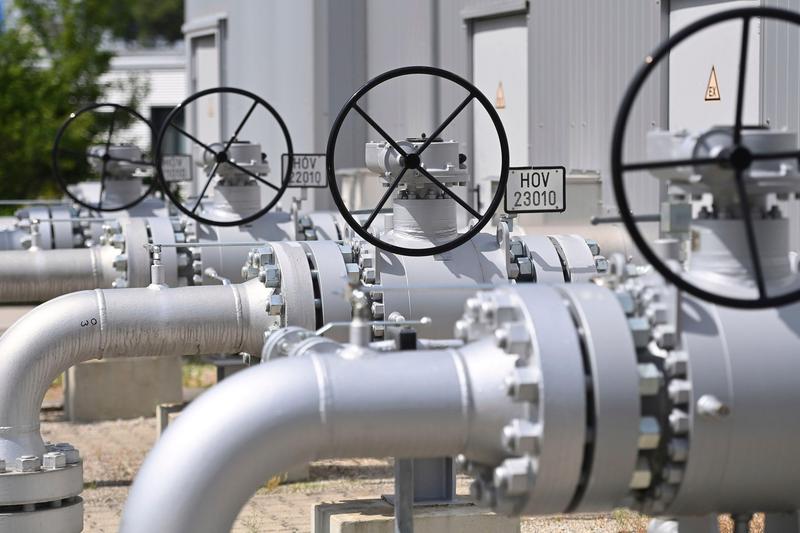
The Vertical Gas Corridor represents a “huge historical paradigm shift” for Southeast Europe, being a project that “means much more than its economic size” and “has huge effects” for the culture of a region that has been divided over centuries by wars and the West-East separation. This is the assessment made by the Greek Minister of Energy and Environment, Stavros Papastavrou, at the conference entitled “Energy Transition Summit”, organized on Thursday in Athens by the Financial Times and the newspaper “Kathimerini”.
According to Papastavrou, energy has the magical dimension to unite countries that have not learned to cooperate.
The need for “energy pragmatism”
Papastavrou also emphasized the need for “energy pragmatism”, because – as he said – despite the attachment to the green transition, we cannot ignore the need for energy security, which fuels such as natural gas can ensure. He added that Europe has been approaching the transition to clean energy for years from an ethical perspective, but this is not a question of ethics.
“Obviously, the direction and goal of clean energy exists for all of us. And Greece, despite ten years of unprecedented economic crisis, has reduced its CO2 emissions by almost 50% in the last twenty years. So, we are fully committed to this (…). At the same time, however, we cannot ignore the fact that the intermittent nature of renewable energy creates a risk to the energy security of the region, of the country. So, we need baseload energy energy).And for Greece, this is represented by hydrocarbons”, declared the Greek minister.
Papastavrou expressed his hope that the “Asopos” area in the Ionian Sea could become the third in Europe to provide, from an EU member state, hydrocarbons (ie natural gas) for the continent's energy mix, recalling at the same time the “Neptune” project in Romania (“will be operational in 2027”) and the “Aphrodite” field in Cyprus.
Regarding renewable energy sources, he pointed out that Greece has seen rapid growth, and now more than 50% of electricity comes from renewable sources.
Finally, the minister spoke about the need for the EU to achieve the integration and inclusion of the Balkans both in the European structures in general and in particular in the energy market. “All countries have made great efforts to harmonize with EU regulations (in the energy sector). Therefore, it is completely unacceptable that now, after the first country (Serbia) has reached the end, the Commission says 'well, we are not ready to assess you'”, added the Greek energy minister.
Bozinovska (North Macedonia): Interconnector with Greece will be ready in summer 2027
The natural gas interconnector Greece-North Macedonia (IGNM) should be ready in the summer of 2027, according to the assessment of the Minister of Energy, Mines and Mineral Resources of North Macedonia, Sanja Bozinovska.
“We started the construction of the interconnection with Greece last year with the first 1.2 bcm (billion cubic meters) and it looks like we will reach 2.8. The good part is that these pipelines will be hydrogen-ready. We have very good communication with our Greek colleagues. I think by the end of the month we will invite representatives of the DESFA company to see how things are going on site. And next year, by June or July, we plan let's finish the project. We hope that it will be ready next year, even if it will be delayed by a month or two”, said Sanja Bozinovska.
Handanović (Serbia): Delays are costly
Serbia's Minister of Mines and Energy, Dubravka Đedović Handanović stressed the need to speed up energy market unification processes, as delays are costly, both for the Balkans and the EU. “The Balkan Peninsula cannot be isolated from the rest of Europe. (…) We must ensure that these obstacles are removed. (…) Therefore, we all – including the EU – must be faster collectively, because waiting three years for market integration is too long,” the Serbian minister said, adding that fragmented markets do not benefit Europe, which needs to be much more determined and clear in its goals.
“The EU wants to achieve decarbonisation, all right. But not at the expense of energy security, which is currently under threat. (…) Everyone – EU members and non-members – agrees that we need to interconnect, reduce prices, become more competitive – and this is not happening. (…) Steps have been taken, but we need to be faster. We cannot get lost in excessive bureaucracy,” Handanović emphasized.
She announced that Serbia plans to invest 14.4 billion by 2035 in energy infrastructure, while aiming to increase cross-border capacity from 4,000 MW to 6,000 MW. “With three future interconnections, we will have about 4bcm (billion cubic meters) of gas, which will be enough for Serbia's needs.
But with regional infrastructure and gas pipelines passing through Serbia, we will ensure that we can transport a total of 20-25 billion cubic meters through Serbia, from south to north.” The Serbian minister also said that the country is also advancing in the nuclear energy sector, with the prospect of starting construction of the planned projects in 2032-2033.
Karakaçi (Albania): We do the “works” that the EU asks of us, but we don't see the benefits
The long-term agreement signed at the end of April with a Greek company for the supply of US LNG (liquefied natural gas) to Albania and the transformation of the south-eastern part of the country into a gas hub are beneficial developments primarily for Albania's energy security, but also for the wider region, said Enea Karakaçi, Albania's Minister of Infrastructure and Energy (referring to the recent 20-year trade agreement between AKTOR Group's subsidiary – AKTOR LNG USA – and ALBGAZ, a 100% state-owned Albanian natural gas company).
“Albania is also a pretty good symbol of what the EU wants to achieve, which is to have 100% renewable energy. Do we benefit from this? Unfortunately, no. Why? Because if we look at the EU's CBAM (Carbon Border Management Regulation) directive, Albania has a zero carbon tax. Theoretically, we should be the lucky ones at this table.
However, what we see is that because the rules have not yet been implemented, we are not benefiting from this. (…) So, we try to do all the “tasks” that the EU assigned us, we do them with pleasure. But on the other hand, you see a counterpart not embodied by any person who is very strict with the rules, but does not give you even a “candy”, he said, while emphasizing the need for further integration of the energy market.
Junghietu (Moldova): Cross-border connections are a lifesaver in times of crisis
The importance of cross-border energy connections in times of crisis was underlined by Moldovan Energy Minister Dorin Junghietu, noting that his country has been exposed to energy crises and the use of energy as a weapon against it for three decades.
“The most recent event took place on March 23, when Russia targeted the infrastructure of Moldova, the main high-voltage interconnector line with Romania, located on the Ukrainian side,” he noted, adding that this event demonstrated how important it is to strengthen cross-border interconnections, because thanks to international cooperation with the five Transmission System Operators in the region – Romania, Ukraine, Poland, Slovakia and Hungary – his country managed to avoid a blackout. Junghietu made extensive reference to the three major energy projects his country has underway to limit its structural energy dependencies and increase its interconnections.
Kvrivishvili (Georgia): Georgia's role in Europe's energy security is crucial
Mariam Kvrivishvili, Minister of Economy and Sustainable Development of Georgia, “sees” Georgia as an inseparable link in Europe's energy security, noting that the country plays a crucial role in supporting the EU's energy sector and its energy independence, through a series of pipelines and infrastructure that pass through its territory. “We have launched a flagship project, the Black Sea submarine cable, for which we are particularly pleased to have received PMI status – Project of Mutual Interest – from the EU at the end of 2025. This means that the electricity produced in Georgia will be directly connected to the markets of the European Union, with a capacity of 1,300 MW”, noted the Georgian minister, adding that this submarine cable is also part of the Green Energy Corridor.Material produced with the support of Rador Radio Romania)