A decade ago, the scenario was simple: the office building was alive from morning to afternoon, and in the evening it was empty. Today, commercial property owners increasingly treat this approach as untapped potential. In the face of hybrid work, rising building maintenance costs and new tenant expectations, the key goal has become the maximum use of space – not only during working hours, but throughout the day and week.
This is a change of fundamental importance for the commercial real estate market. An office building is no longer just a place of work. It becomes a service, social and business platformwhich generates value in many dimensions – financial, image and social.
Importantly, this trend also has a social dimension. In many countries in Western Europe and North America, commercial spaces are periodically used as places to support local communities. In Poland, such initiatives are just beginning, but both property owners and social organizations see great potential in them.
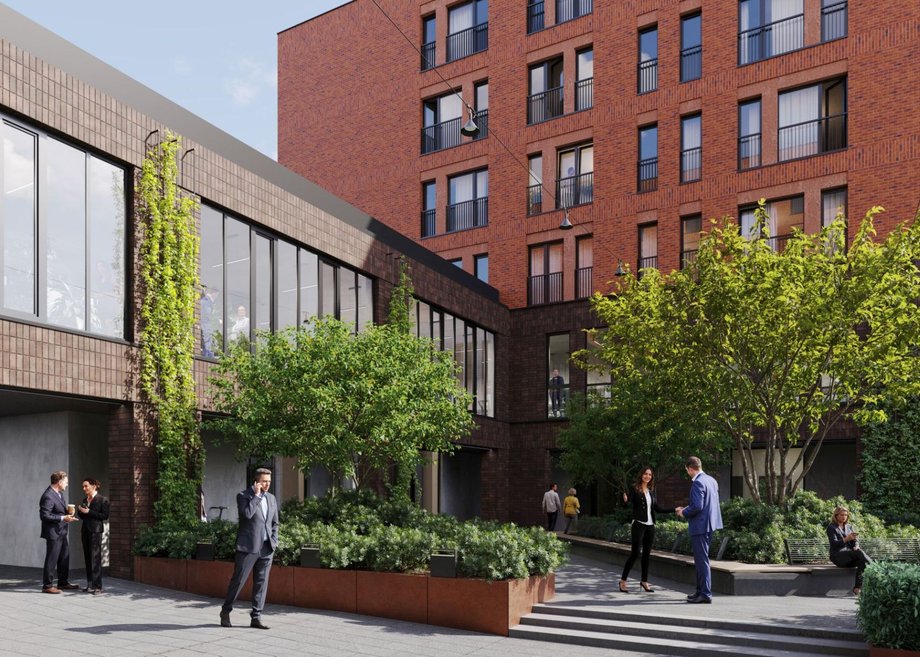
Soho by Yareal, Soho Hub, Budynek Mińska 39
|
Yareal
Read also: Buying an apartment in Poland. What influences the real costs of maintaining the premises
Commercial real estate after hours. A new source of revenue and value
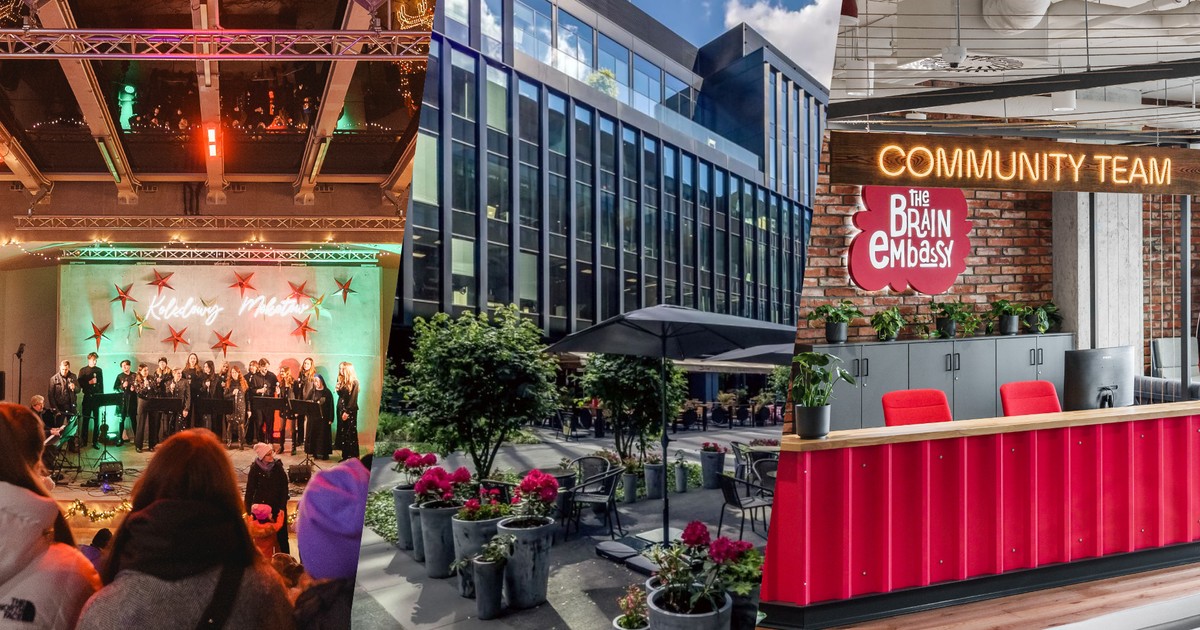
The biggest change in recent years is the departure from the office model as a space operating only during certain hours. As Maciej Grabowski, founder of Blue Bolt, notes, offices are increasingly active in the evenings and weekends, organizing workshops, sports activities, community events and business meetings.
— Property owners are looking for new sources of value. It is no longer just about renting space, but about making the most of all resources — rooms, desks, parking lots and event spaces. The scale of such activities is growing from month to month, he says.
Technology plays a key role in this transformation. Digital access and reservation systems allow you to manage the building almost unattended, even outside standard working hours. Users can reserve space, invite guests or participate in events without the participation of the reception desk.
From the owners' point of view, this means the possibility of monetizing spaces that previously remained unused for a significant part of the day.
— The same space can serve different functions during the day. In the morning it is an office, in the afternoon an event space, and in the evening a place for workshops or community meetings, Grabowski points out.
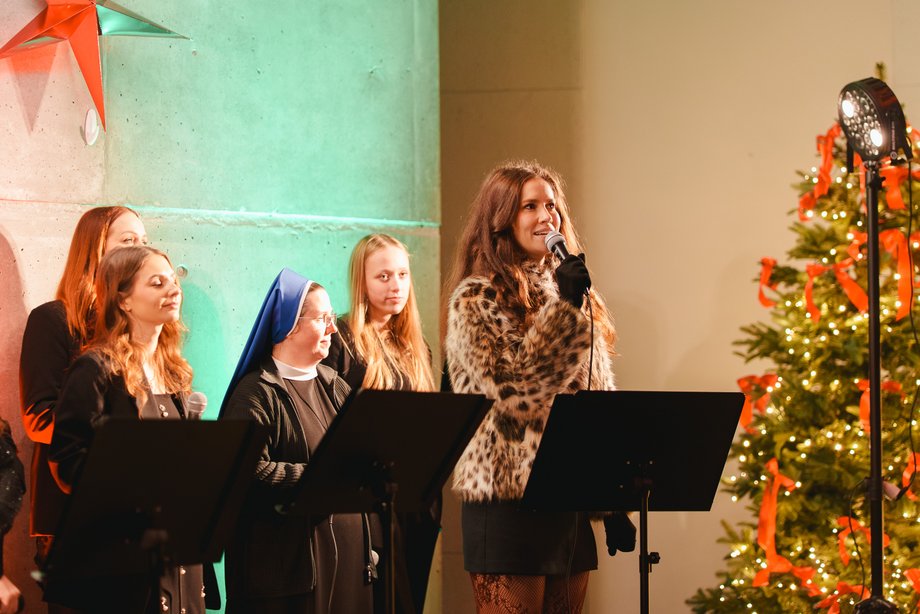
Adgar allows you to organize various types of events in your spaces
|
Adgar
See also: The availability of apartments for rent is decreasing. What do current regulations change?
Office buildings as an ecosystem. Community building and mixed-use are changing the market
The changing role of an office building is especially visible in modern projects and real estate management strategies.
— The 9-5 is becoming a thing of the past. Coworking, event spaces, recreation and fitness areas make the office an extension of your lifestyle – says Daria Stefaniak, Sales Strategy Manager at Brain Embassy owned by Adgar Poland.
Community building, i.e. the so-called community building has become one of the key elements of real estate owners' strategies. Office buildings organize sports events, workshops, networking meetings and family initiatives.
As Martyna Czarnota, Senior Asset Manager at Adgar Poland, emphasizes, users are increasingly returning to office buildings after working hours.
— We see a clear change in the expectations of tenants, who treat the office building not only as a place of work, but also as a place of work a multifunctional space supporting everyday needs. More and more often, users live nearby and use the infrastructure even after hours, he says.
This is also confirmed by market data. As Jan Szulborski, Business Development & Insight Manager at Cushman & Wakefield, points out, office buildings are becoming an integral part of the urban fabric.
— Instead of talking about empty buildings after hours, it's better to talk about business model evolution. An office building is no longer a hermetic structure, but becomes an active element of the city – he emphasizes.
Mixed-use projects that combine office, residential, commercial and entertainment functions are playing an increasingly important role. Such complexes live practically around the clock.
Paulina Petynka, director of commercial space leasing at Yareal Polska, points out that modern facilities are designed with 24-hour operation in mind.
— The life of an office building increasingly does not end at 5 or 6 p.m. It and its surroundings function until late in the evening, offering catering, medical and recreational services also to residents of the area – says.
An example is the Lixa complex in Warsaw, where approx. m2, a service space was created, operating both during office hours and in the evenings and on weekends.
ESG and social functions. Can office buildings help those in need?
The new model of operation of office buildings also opens up opportunities for cooperation with social organizations.
Examples of such actions already exist. Adgar Poland provided pro bono space to the Zachód Wschód Foundation for the needs of a school for refugee children from Ukraine. Other initiatives include organizing charity events or providing space to social organizations.
Foundations confirm that the potential of cooperation with property owners is very large.
— Office buildings offer huge potential for NGOs to cooperate, organize conferences, record educational programs or provide psychological assistance. Currently We are looking for premises for another psychological emergency service and we are in talks with companies regarding the provision of space – says Anna Morawska-Borowiec, president of the Faces of Depression Foundation.
However, not all forms of support are easy to implement. As Patrycja Drożyńska from the Daj Herbatę Foundation emphasizes, initiatives such as providing underground garages to people in a homelessness crisis require huge organizational expenditure.
— These are beautiful concepts, but very difficult to implement. Infrastructure, staff and volunteers would be needed. In Poland, such activities need to start with smaller steps, he says.
One such step could be providing space for eating places or organizing educational workshops.
– If the owner of the facility was open to it, we would be delighted with the cooperation – adds Drożyńska.
Cushman & Wakefield experts emphasize that The social function of office buildings is already developing, especially in crisis situations. After the outbreak of the war in Ukraine, some office spaces were temporarily transformed into shelters for refugees.
Commercial spaces of the future. Buildings operating 24/7
The change in the operating model of office buildings results from several key factors: hybrid work, growing competition on the real estate market and new expectations of tenants.
As Grzegorz Dyląg, Partner and Head of Asset Services Business Space at Cushman & Wakefield, points out, office occupancy in Poland is currently approximately 60 percent, which is a much better result than in many Western European countries.
Simultaneously Real estate owners are increasingly actively looking for new ways to increase the value of their buildings. This does not always mean direct monetization. Increasing the attractiveness of a facility in the eyes of tenants often plays a key role.
Coworking spaces, events and community amenities increase the prestige of the building, improve tenant retention and allow for higher rental rates. In the long run, this approach may determine the success of commercial real estate.
Buildings that remain closed to new functions may lose their attractiveness. Those that open up to users and communities have a chance become centers of urban life.
This is a fundamental change in thinking about commercial real estate – from a work infrastructure to a multi-functional platform.
And this is just the beginning of this transformation.