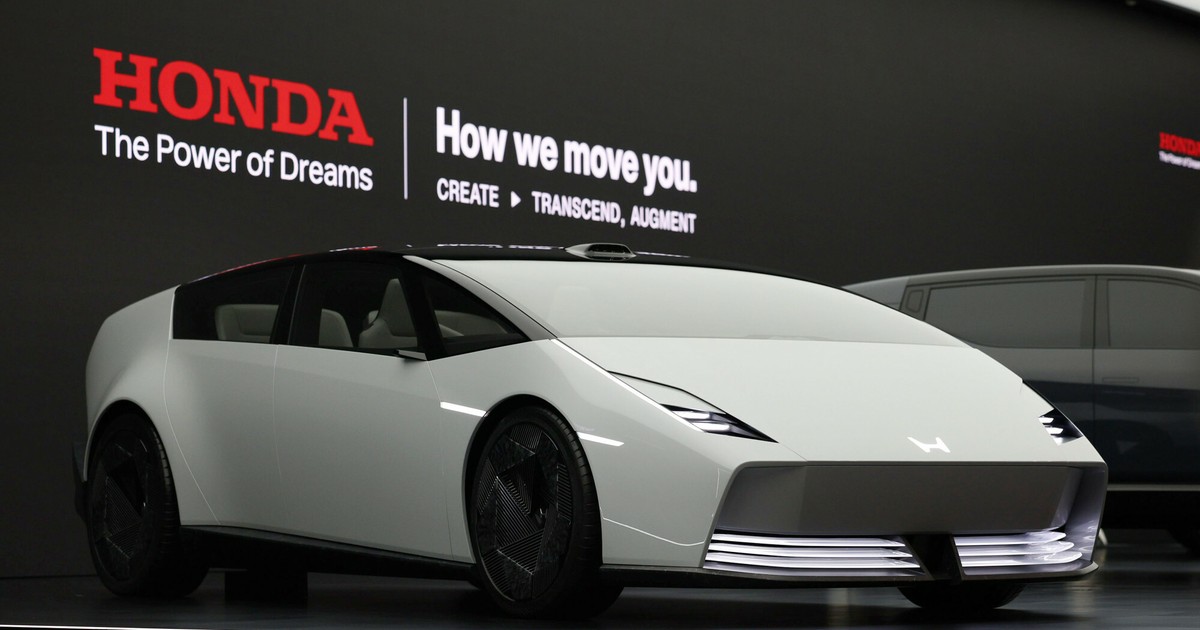
Honda posted an annual loss for the first time since its IPO in the 1950s.
For the financial year ended in March, the company reported a net loss of 423.9 billion yeni.e. approx 2.7 billion dollars — which is a symbolic and breakthrough moment for the second largest car manufacturer in Japan, as the Financial Times writes.
Cost of the electric strategy: $10 billion
The main reason for such a poor result were huge write-offs related to the failed electric car development strategy.
In total, Honda had to bear costs of approx $10 billionwhich shows how expensive it can be to try to catch up with the market leaders.
- Read also: The crisis of Japanese companies in electromobility. They are losing to China
Tesla and BYD set the pace
Honda's ambitious plans were a response to the growing dominance of companies such as Tesla and BYD.
However, the slowdown in sales in the US – partly resulting from the Donald Trump administration's decision to limit subsidies for electric cars – has hit the entire segment.
- Read also: This is what the “new race” in the automotive industry is all about. There is no talk about electric cars
Honda boss: the problem is deeper
CEO Toshihiro Mibe admitted that the difficulties go beyond the EV market itself.
“The basic problem of our automotive business is not only the slowdown of the electric car market” – he said, quoted by the Financial Times.
In his opinion, the company is also losing cost competitiveness and has problems with the development of new models.
In response to the problems, Honda began to withdraw from its previous assumptions. The company canceled three electric models planned for North America and suspended an investment worth as much as $11 billion into a car and battery factory in Canada, and also abandoned the ambitious goal of completely moving away from combustion cars 2040.
Instead, the company intends to adopt a more conservative strategy and introduce… By 2030, as many as 15 new hybrid models.
Potential losses: up to 2.5 trillion yen
The scale of the problems may be even greater. Honda previously warned that the consequences of changing its strategy could be as high as 2.5 trillion yen of losses in two years (approx. USD 16 billion) which further shows how deep the company's transformation is.
Despite the difficult situation, Honda looks to the future with moderate optimism. The company forecasts a return to operating profits of approx 500 billion yen(approx. USD 3.2 billion), counting primarily on the development of the motorcycle business and growing sales in markets such as India.
Decline in car sales. The market reacts… positively
Honda's problems are also visible in sales data. Back in 2019, the company was selling 5.34 million cars per yearwhile in 2025 it was only 3.6 million vehicleswhich means a decrease of approx 30 percent
Despite poor financial results, investors welcomed the report with surprising optimism.
Honda shares rose almost on the Tokyo Stock Exchange 8 percent although later some of these increases were corrected. This is a signal that the market positively assesses the change in direction and the attempt to stabilize the situation.