

— However, China does not pay or pays to a much lesser extent. Therefore, they can somehow “sit comfortably on the hill”, try to win this case in terms of image, presenting themselves as a superpower, and focus on what is most important to them, i.e. Taiwan – adds Onet's interlocutor.
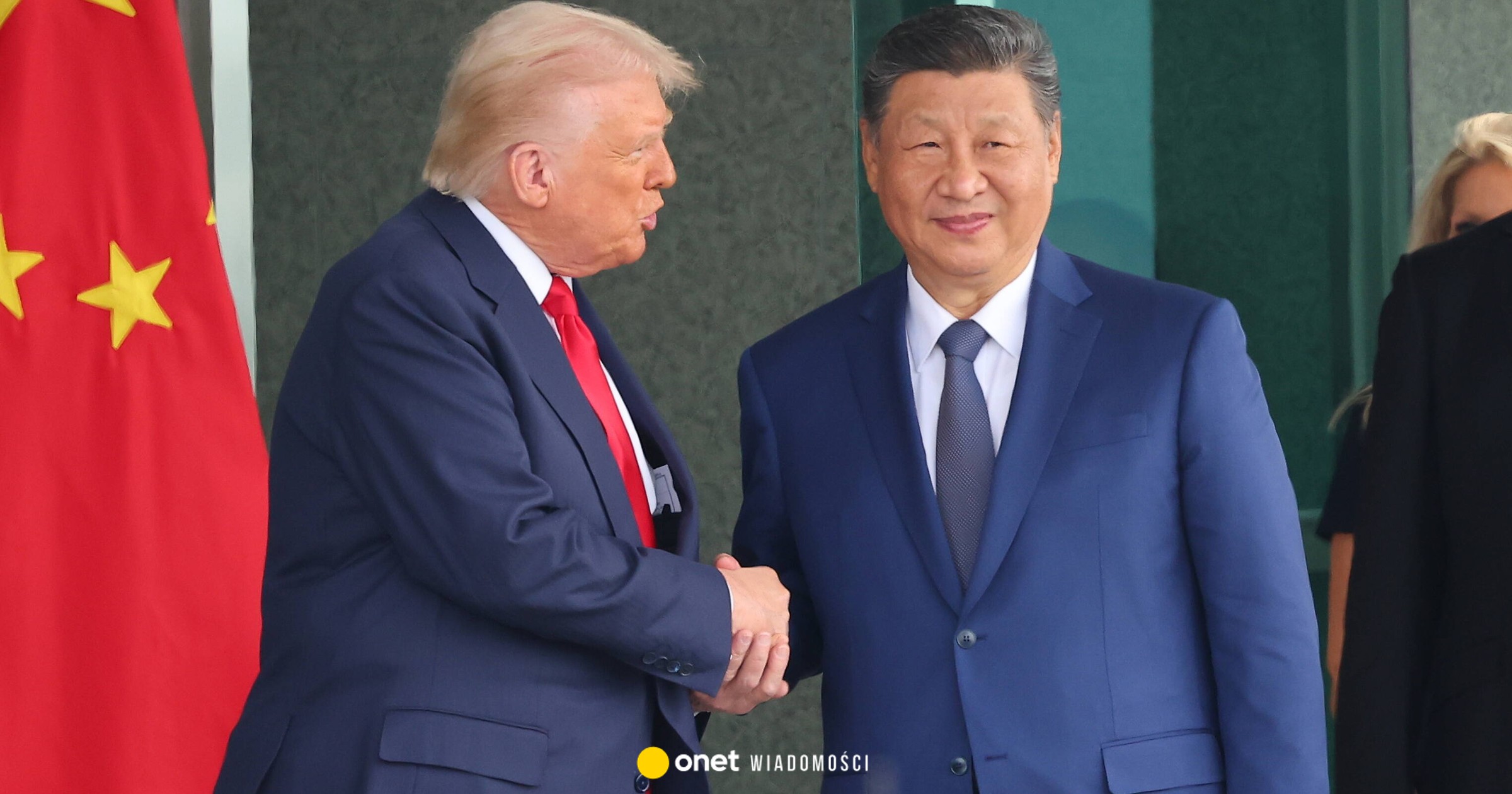
It is in such political circumstances that US President Donald Trump's visit to China begins on Wednesday.
However, the tension began to ease after Donald Trump's direct meeting with Xi Jinping in South Korea last October. Additionally, the Supreme Court's February ruling, which limited the president's ability to unilaterally impose tariffs, curbed his short temper.
Nevertheless, the list of topics to be discussed at the Beijing summit remains long.
“Be careful not to make a mistake”
— Both sides realize that the situation is very tense, but at the same time they approach it in a pragmatic way. Therefore, I don't think there are any particularly high expectations. The most important thing is to be very careful not to make a mistake. This comes to the fore. In such a tense and even situation, any mistake could be very costly – says the expert in an interview with Onet.
I ask my interlocutor what this error could be. – I think, first of all, some overreach – and this has been happening to Trump in recent weeks. If one of the parties “moved forward” too much and announced success in some matter, and the other party clearly denied it and showed that it had stronger cards, this would be something that could be perceived as a mistake, he explains.
Radosław Pyffel points out that there are many levels on which the “shaky balance” between the two countries may be disturbed. — From Beijing's point of view, the most important is, of course, Taiwan. In this sense, the US president's official and completely direct announcements that he will talk about arming the island must significantly increase the pressure in Beijing before this meeting, he says.
— From Trump's point of view, these levels are, in turn — commercial and technological issues, or even the sale of Boeings. He wants to sell 500 machines, while the Chinese have favored the European Airbus in the last two years and introduced their Comac plane to the market. Trump will want to show his agency and his ability to “deliver” deals. If the Chinese, for example, get irritated by the announcements of arming Taiwan and ostentatiously refuse to buy anything, it will be a signal that the talks went worse than they could have, my interlocutor points out.
Game for Taiwan
At the end of last year, the Donald Trump administration announced the largest ever arms sales package for Taiwan – worth over $11 billion. It was to include, among others: HIMARS systems, ATACMS missiles, drones and modern artillery, i.e. weapons that could significantly increase the island's defense capabilities against the threat from Beijing.
China's reaction was immediate and extremely harsh. Beijing has imposed sanctions on 20 American arms companies and a group of high-ranking defense managers, freezing their assets in China and prohibiting cooperation with Chinese entities. Those punished included, among others: entities related to Boeing, Northrop Grumman and L3Harris.
Beijing was supposed to signal that further arming Taipei may threaten the organization of the Trump-Xi Jinping meeting, which both sides treated as an attempt to stabilize relations after months of trade war and mutual sanctions.
Another element that my interlocutor draws attention to is the visit of Cheng Li-wun, the head of the opposition – the chairman of the Kuomintang – on the continent. — This is an element of the game before Trump's visit to Beijing. A signal that the Chinese can get along with each other – Beijing and the opposition, which has a – small but still – majority in the parliament on the island and won the most seats – says an expert on China.
Cheng Li-wunANDRES MARTINEZ CASARES / EPA / PAP
— All this sets up the entire conversation: the Taiwan issue is crucial for Beijing. However, I don't think Trump will give up – there are arms contracts, Americans are selling weapons and will continue to sell them. They won't back down from this easily. Leaving Taiwan would be virtually tantamount to leaving Asia. And this is too important from the US point of view, he emphasizes.
— For Beijing, Taiwan is an absolute priority. And this is where they will start the talks – depending on their possible moves, including those that could help Americans in other parts of the world, for example in the Middle East – I hear from my interlocutor.
American sphere of interests
— The Americans want to limit China's presence there, the Chinese, on the other hand, are already there and do not intend to withdraw. Therefore, they will be very careful about what these arrangements look like. Any move that is too strong could trigger an escalation sequence and thus be perceived as a mistake, adds the China expert.
Onet's interlocutor points out that although there are many of these “minefields”, they are already mapped so well that both sides know exactly where they are. “The American and Chinese teams talk to each other all the time, so everyone knows what boundaries they can move within,” he says.
Onet's interlocutor points out that the scenario of concluding some great “mega deal” – for example, that the Chinese would agree to influence Iran and solve the Hormuz issue, and Trump in return would recognize Taiwan as China's internal matter – is unlikely to be realistic.
What about Ukraine?
— Rather, we will be dealing with maintaining balance and talking about trade, technological and geopolitical issues, as well as issues such as fentanyl and combating organized crime. This will probably dominate – at least in official communications.
I ask the expert whether the issue of the war in Ukraine may also be discussed during Trump's meeting with Xi. — Of course, we would like this topic to come up. And in fact, various announcements before the visit include information that this may be one of the issues. However, I don't think it will come to the fore – says.
— When it comes to Ukraine and Russia, not much is happening here. Trump tried to get Russia on his side – I have the impression that this process is ongoing somewhere – but Russia does not react to it in any particular way. This is an element of another game, taking place somewhat apart from these main conversations. China consistently says the same thing about Ukraine: that it is not a party to the conflict and that diplomacy should be the solution. So I don't think Trump is trying to play this issue with Beijing. He will rather talk about it directly with Putin, looking for a solution along these lines, concludes Radosław Pyffel.


